





 Portuguese
  English
  Spanish
  5 min of reading
  0 comments


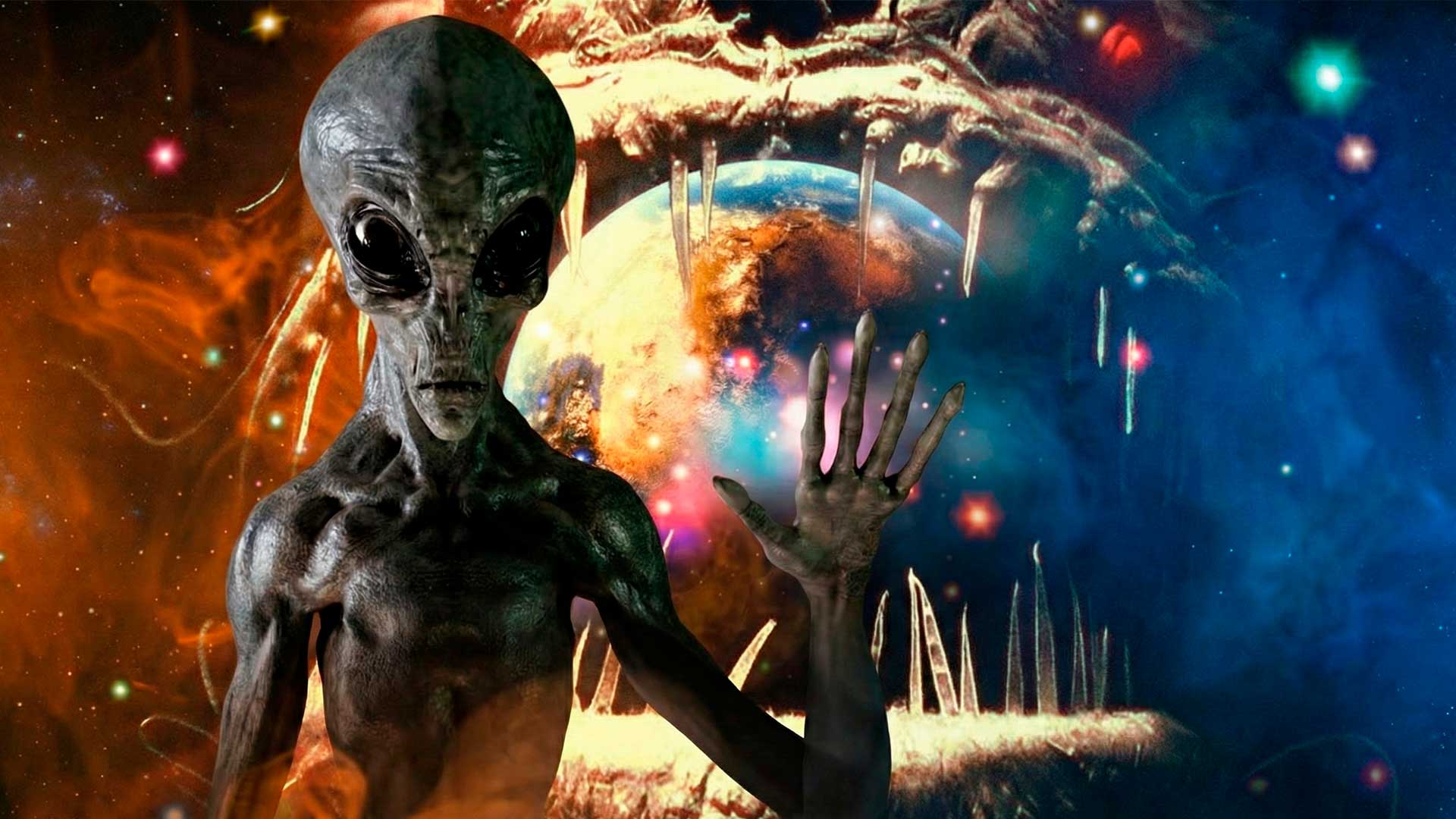
A popular theory linked to the Fermi Paradox says the universe may be full of intelligent life, but in silence out of fear. The debate reignited after recent articles on the subject and places SETI at the center of the conversation.
The dark forest hypothesis, linked to the Fermi Paradox, attempts to explain why the sky remains silent despite decades of searching for signals. What stands out most in this explanation is that it does not start from the idea that the universe is empty. It starts from the opposite, that there may be many advanced civilizations out there, but none wants to be the first to turn on the light.
The discussion gained a new wave of curiosity in December 2025, when an entertainment article once again popularized the comparison of the cosmos to a dark forest full of hidden “hunters,” suggesting that no one responds precisely to survive.
The hypothesis is alluring because it seems to simply answer an age-old question. If the universe is so old and so vast, why do we still lack a confirmed “hello” from outside Earth?
-
Friends have been building a small “town” for 30 years to grow old together, with compact houses, a common area, nature surrounding it, and a collective life project designed for friendship, coexistence, and simplicity.

-
This small town in Germany created its own currency 24 years ago, today it circulates millions per year, is accepted in over 300 stores, and the German government allowed all of this to happen under one condition.

-
Curitiba is shrinking and is expected to lose 97,000 residents by 2050, while inland cities in Paraná such as Sarandi, Araucária, and Toledo are experiencing accelerated growth that is changing the entire state’s map.

-
Tourists were poisoned on Everest in a million-dollar fraud scheme involving helicopters that diverted over $19 million and shocked international authorities.


At the same time, experts remind us that the idea is just one among various proposals to explain the so-called “great silence” and that there is still no direct evidence of extraterrestrial civilizations to validate any of them.
What The Dark Forest Hypothesis Says And Why It Became A Topic, See This Video:
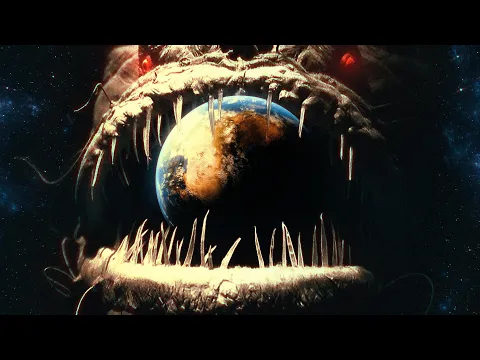

The so-called dark forest hypothesis proposes that intelligent civilizations would avoid revealing themselves because they cannot know the intentions of whoever is listening. In this scenario, the fear of encountering a hostile neighbor would be high enough to turn silence into a survival strategy.
The name became popular due to science fiction, especially from the novel “The Dark Forest,” by author Liu Cixin, originally published in 2008. The metaphor describes the universe as a forest at night, where any signal can disclose someone’s position.
In practice, the theory directly relates to the Fermi Paradox, raised in 1950 and summed up in the question “where is everybody?” The math seems simple; the cosmos has had ample time to produce advanced life, but our “inbox” remains empty. (National Geographic)
What Science Observes About Cosmic Silence And How SETI Measures This Vacuum
From a scientific standpoint, silence does not mean that life does not exist; it simply means that a confirmed and reproducible signal has not yet appeared. It’s the difference between absence of evidence and evidence of absence, which often confuses the public when a case goes viral on social media.
SETI, short for the Search for Extraterrestrial Intelligence, has been around for decades and has tested different strategies, mainly listening to the sky in radio waves and, more recently, considering laser pulses. The idea is to look for patterns that seem artificial, such as narrow and repeatable signals.
An example of a robust effort was Project Phoenix, described by the SETI Institute as one of the most sensitive and extensive radio searches of its kind. Over about a decade, the project observed approximately 800 stellar systems up to 200 light years away and found no confirmed signals.
Another important point is that catching a “hi” is not easy even if someone is transmitting. According to the SETI Institute’s explanation, detection depends on power, beam direction, and distance, and many scenarios would require very powerful transmitters if there is no intention to target Earth.
Even so, the idea that “no one responds” also bumps into the fact that Earth has been emitting signals for a long time. National Geographic itself reminds us that our radio transmissions have spread through space and cites the message sent from Arecibo in 1974 as an example of active communication.
Criticisms And Limits Of The Theory When Hiding A Civilization Is More Difficult Than It Seems
Researchers interviewed by National Geographic point out a central problem with the dark forest; it is unlikely that all civilizations reach the same conclusion and act as a unified block, without curious, reckless, or simply different groups. In complex societies, there is always diversity of decisions.
The report also highlights another obstacle; hiding a technologically advanced civilization can be much more difficult than the metaphor suggests, as signals and “leaks” can occur in many ways. Moreover, the interstellar distances are so vast that preemptive strikes may not make practical sense in many scenarios.
The Practical Debate: Sending Messages Into Space Makes Sense Today
The discussion is not just about curiosity; it touches on real decisions about whether to transmit or just listen. The SETI Institute itself describes revised protocols from 2010 that recommend confirming signals and making discoveries public, in addition to not responding without international consultation.
At the same time, the idea of “cutting” our signals to remain invisible is seen as unrealistic. Experts cited by National Geographic observe that humanity has never treated radars and communications as something to be turned off out of fear, and that this would be extremely difficult to implement in practice.
In the end, the dark forest serves more as a mental alert than a scientific conclusion. It reminds us that, without data, any explanation should be treated as a hypothesis, and that the Fermi Paradox may have “boring” answers, such as rare life, rare technology, or short transmission windows.
Do you think humanity should continue trying to “talk” to the universe or would it be more prudent to just listen? If this theory makes sense to you, tell us in the comments whether we are being courageous or reckless and why, because this dispute between curiosity and caution is where the real controversy begins.










-

Uma pessoa reagiu a isso.