





 Portuguese
  English
  Spanish
  4 min of reading
  0 comments


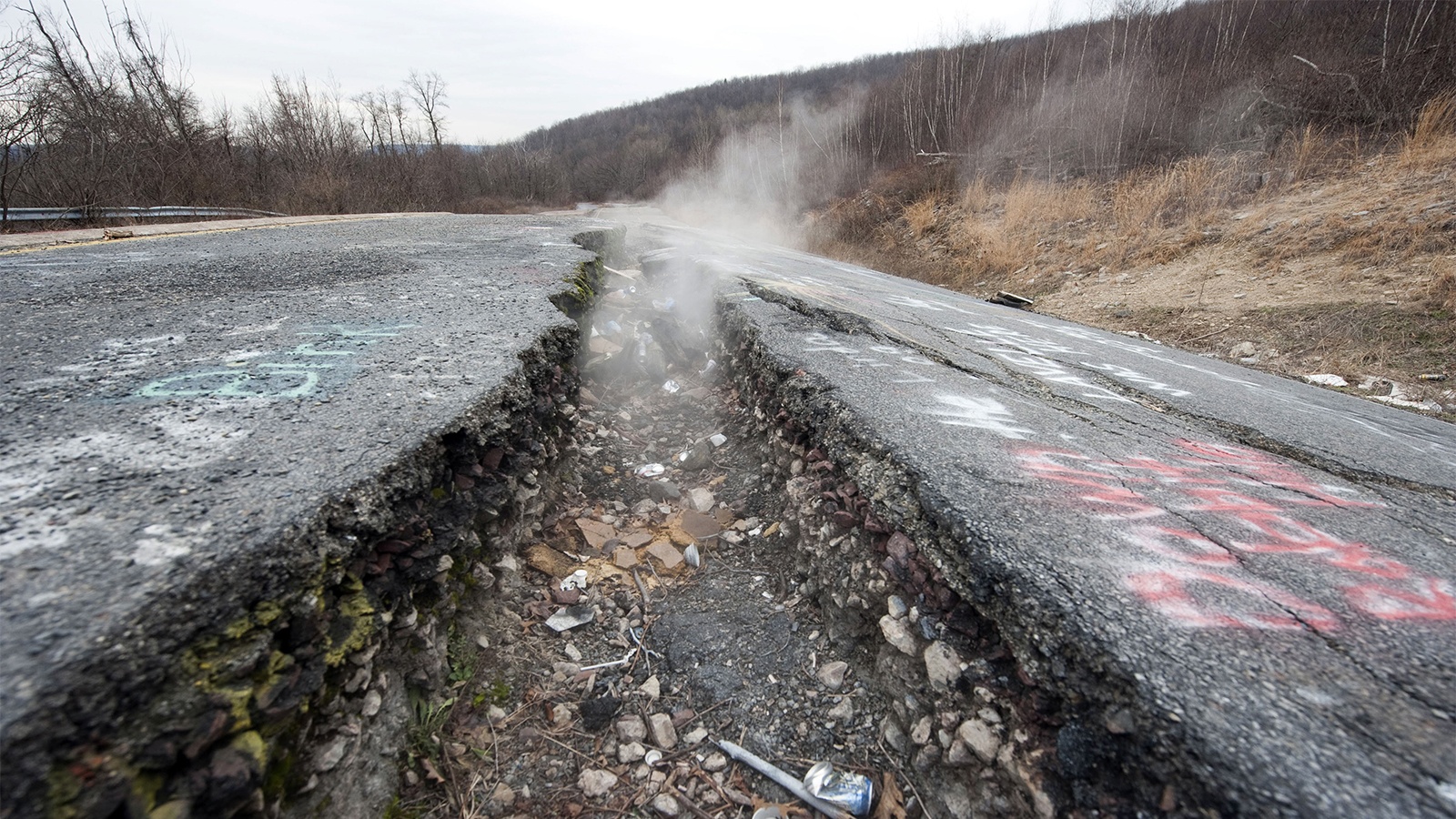
In Centralia, In The USA, An Underground Fire That Began In 1962 Burns Coal To This Day, Releases Toxic Gases, Sinks The Soil And Led To The Nearly Total Abandonment Of The City.
Since 1962, the small town of Centralia, in the state of Pennsylvania (United States), has been living on an extreme and rare phenomenon: an underground fire in coal seams that has never been extinguished. The fire has been continuously burning for over six decades, releasing toxic gases, heating the ground to dangerous temperatures, and making human occupation practically impossible.
Centralia has become one of the most documented cases of underground coal fire in the world, studied by universities, environmental agencies, and mining engineers. The event not only destroyed the town but also turned into a global warning about the risks of abandoned mining and inadequate subsurface management.
Where Is Centralia And Why Was There Coal Beneath The City
Centralia is located in the heart of the Pennsylvania coal region, one of the richest coal areas in the United States since the 19th century. The town was built directly over extensive anthracite seams, a type of mineral coal with high calorific power.
-
Friends have been building a small “town” for 30 years to grow old together, with compact houses, a common area, nature surrounding it, and a collective life project designed for friendship, coexistence, and simplicity.

-
This small town in Germany created its own currency 24 years ago, today it circulates millions per year, is accepted in over 300 stores, and the German government allowed all of this to happen under one condition.

-
Curitiba is shrinking and is expected to lose 97,000 residents by 2050, while inland cities in Paraná such as Sarandi, Araucária, and Toledo are experiencing accelerated growth that is changing the entire state’s map.

-
Tourists were poisoned on Everest in a million-dollar fraud scheme involving helicopters that diverted over $19 million and shocked international authorities.

For decades, the local economy revolved around mining. As the mines were abandoned, kilometers of underground tunnels were left empty, poorly sealed, and interconnected — creating the perfect setting for a disaster.
How The Fire Started In 1962
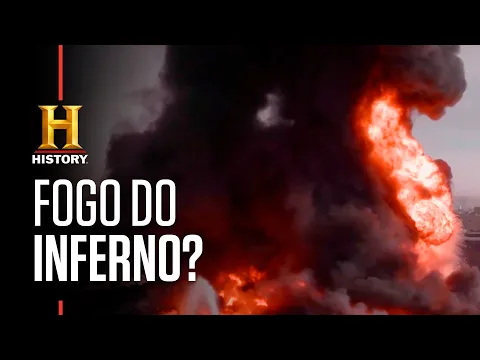

The fire began in May 1962, during a burning of garbage at an old municipal dump, a common practice at the time. The fire, seemingly controlled, eventually reached a fissure that connected to the underground coal seams.
From that moment on, the fire ceased to be superficial and began to feed directly on the coal, spreading through the abandoned tunnels. Unlike a regular fire, the underground fire:
- cannot be fought with regular water
- moves horizontally for miles
- can descend dozens of meters deep
- reappears in points far from the initial focus
Why The Fire Could Never Be Extinguished
Over the decades, various technical strategies were attempted, including:
- digging containment trenches
- injecting clay and ash to smother oxygen
- flooding tunnels
- isolating critical areas
None of them worked definitively.
The main problem is that the fire is connected to an extensive system of coal seams, with a natural air circulation. As long as there is fuel and oxygen, the fire remains active.
Studies by the U.S. Geological Survey indicate that the fire may last more than 100 years, due to the enormous amount of coal still available underground.
Extreme Temperatures And Unstable Soil
In various parts of Centralia, measurements recorded:
- temperatures above 400 °C just below the surface
- continuous emission of carbon monoxide, carbon dioxide, and methane
- cracks in the ground and sudden collapse craters

The intense heat alters the structure of the terrain. As the coal burns, voids form underground, causing unpredictable subsidence. Roads literally gave way and opened holes, forcing the permanent closure of thoroughfares.
Toxic Gases And Risk To Human Life
The greatest danger is not visible. The fire releases odorless and lethal gases, mainly carbon monoxide. At high concentrations, it can cause:
- dizziness and confusion in minutes
- loss of consciousness
- death by asphyxiation
Sensors installed over the years detected levels capable of killing a person quickly in enclosed spaces. This factor was decisive in classifying Centralia as a permanent risk zone.
The Gradual Abandonment Of An Entire City
In the 1980s, the federal government concluded that there was no viable technical solution to extinguish the fire. The alternative became to remove people from the area.
Residents received compensation and relocation. Houses were demolished, schools closed, and public services ended. In 2002, the city’s ZIP code was officially terminated, a symbolic milestone marking the end of Centralia as a functional municipality.
From a population that once exceeded 1,000 inhabitants, today fewer than 10 people remain, living in isolation amid empty streets and abandoned lots.
Centralia As A Global Symbol Of Underground Fires
The case gained international attention and has been cited in academic studies, environmental reports, and engineering books. It illustrates a problem that also occurs in other countries, such as China, India, and Australia, where coal fires have been burning for centuries.
Centralia has become a living laboratory, showing that certain human errors can lead to consequences that transcend generations.
A Fire That Nobody Has Been Able To Conquer
More than just a curiosity, Centralia is a brutal reminder of the limits of engineering in the face of nature when the subsurface is neglected.
The fire that began in 1962 remains active to this day, invisible, silent, and impossible to extinguish with current technologies.
As long as there is coal beneath the city, the fire will continue to burn.










Seja o primeiro a reagir!