





 Portuguese
  English
  Spanish
  3 min of reading
  0 comments


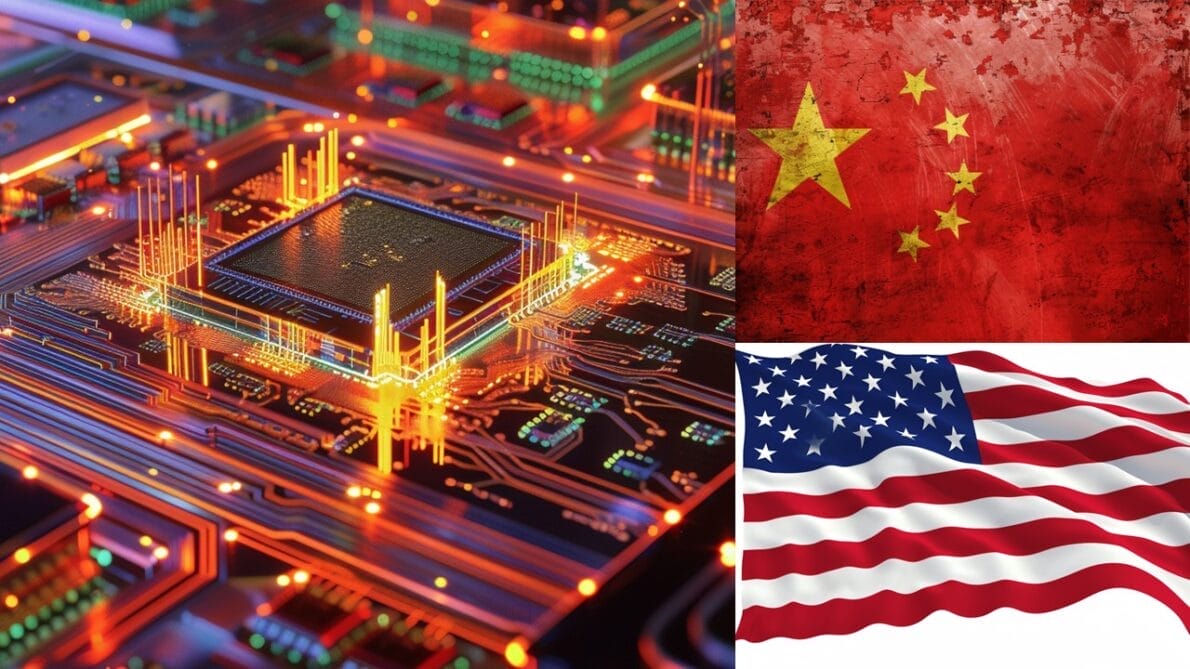
The Global Dispute of World Powers, Mainly China and the United States, Over Microchips and the Surprising Rise of an Unknown Company. Learn More!
In a world where technology dominates our lives, from turning on an LED light to making payments with bank cards, microchips are crucial and indispensable elements. Although many people are unaware of the details behind these small pieces, the manufacturing and control of these components are fiercely contested by world powers such as the United States and China. However, a relatively unknown company has emerged as a leader in this sector, threatening the major tech nations, according to the video from the Global Knowledge channel.
Microchips: The Rise of a New Power
Since the invention of diode valves in 1904 to the emergence of transistors and the creation of microchips, technological evolution has been constant and impressive. Engineer Jack Kilby, from Texas Instruments, took a monumental step in 1958 by creating the first integrated circuit, an invention that paved the way for the development of personal computers, mobile phones, and countless other devices.
However, what truly drove this revolution was the evolution of the machines that manufacture microchips. The manufacturing process begins with a simple and abundant material, silicon, which is extracted from sand and transformed into precise cylinders, later sliced into disks known as wafers. The crucial stage is lithography, where circuits are “printed” on the silicon disks using ultraviolet light.
-
A “silent skill” is allowing Brazilians to earn up to R$ 22,000 per month without a degree and become indispensable for companies that rely on millions of data to survive.

-
Researchers at the Toyota Research Institute found that if a human uses robotic arms to flip a pancake 300 times in an afternoon, the robot learns to do it on its own the next morning, and this is currently the most promising method to solve the biggest bottleneck in modern robotics.

-
Goodbye iron: a common item in households is starting to lose space to technology that smooths clothes in minutes without an ironing board and with less energy consumption.

-
Antarctica reveals an unusual clue high in the Hudson Mountains, and what appeared to be just an isolated rock began to expose a secret hidden under the ice for ages.


ASML: The Giant ‘Invisible’ Technology Company That Frightens Even China and the United States
Among the companies that stand out in manufacturing these lithography machines, ASML, based in the Netherlands, is one of the most prominent. Founded in 1984 as a joint venture between Philips and Advanced Semiconductor Materials International (ASMI), ASML started humbly in a leaking shed. In less than a year, the company launched its first lithography machine for microchip production, marking the beginning of a successful trajectory.
ASML stands out mainly for its EUV (Extreme Ultraviolet) lithography technology, which uses an extremely short wavelength to manufacture smaller and more powerful microchips. This technological advance is crucial for producing high-capacity chips used in complex devices like the latest iPhones.
In 2016, ASML launched the TwinScan NXR machine, considered the most valuable in the world, with a price of approximately 200 million dollars. This machine is so complex and sensitive that its manufacturing and assembly involve an elaborate logistical process, including transport in 20 trucks and three Boeing 747s.
ASML Supremacy: Who Are China and the USA?
ASML’s supremacy in EUV technology makes it a key player in the technological dispute between the United States and China. The company holds a vast portfolio of patents, making it difficult for new competitors to enter the market. China, in particular, has invested heavily to develop its own microchip industry, but faces significant challenges in reaching ASML’s level of technology.
The Dutch government has played a crucial role in this dispute, following US guidelines to restrict the sale of EUV machines to China. In 2018, an export license for a Chinese company was revoked after pressure from the US government, illustrating the geopolitical complexity involved.
The Future of ASML and Global Competition
With ongoing investments in research and development, ASML maintains its leadership in the global lithography market. Strategic partnerships with giants like TSMC, Samsung, and Intel, responsible for 84% of ASML’s revenue, reinforce its position.
However, global competition is far from resolved. China continues to invest billions of dollars in an attempt to create similar technology, while the United States implements policies to protect and encourage the domestic microchip industry.






Seja o primeiro a reagir!