





 English
  Francês
  Alemão
  Italiano
  Japonês
  Norueguês
  Portuguese
  Spanish
  4 min of reading
  0 comments


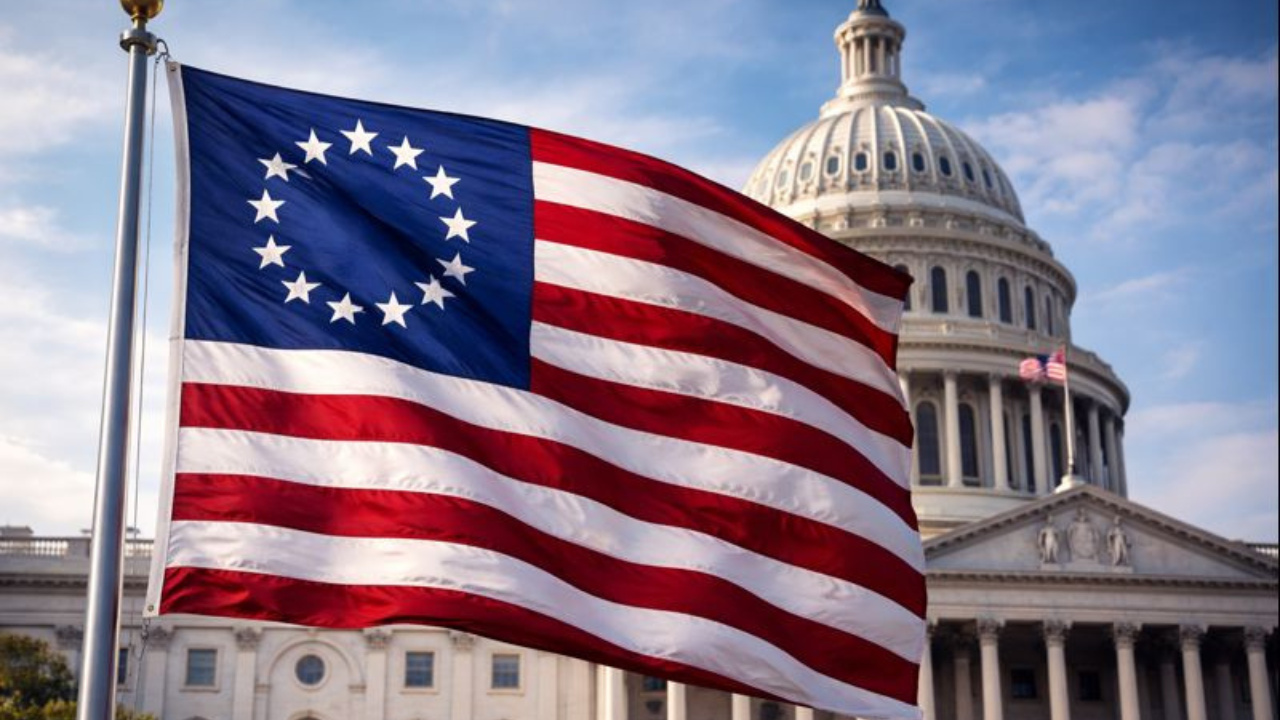
Betsy Ross Flag Reappears With America First Slogan, Reinforcing American Nationalism Amid Criticism of US Foreign Policy
Amid rising US-Europe diplomatic tensions, the United States Department of Labor published this week on its official profile on social media platform X, an image of the Betsy Ross flag, a historical symbol associated with the country’s origins.
The post occurred as European leaders harshly criticize US foreign policy, reigniting debates on American nationalism, sovereignty, and the political use of historical symbols.
The image was released in the context of direct criticism of Donald Trump’s government, reinforcing the America First slogan, widely linked to his international agenda.
-
If the USA were to go to war with Brazil, Washington’s greatest fear would not be the attack itself, but facing a vast territory, prolonged resistance, and a costly, chaotic, and unpredictable occupation.

-
In 2013, Nicaragua sold the concession for a canal to rival Panama to a Chinese billionaire who lost 85% of his fortune, disappeared, and was declared bankrupt. Now the project resurfaces with a new route, a new Chinese partner, and a cost of $64.5 billion.

-
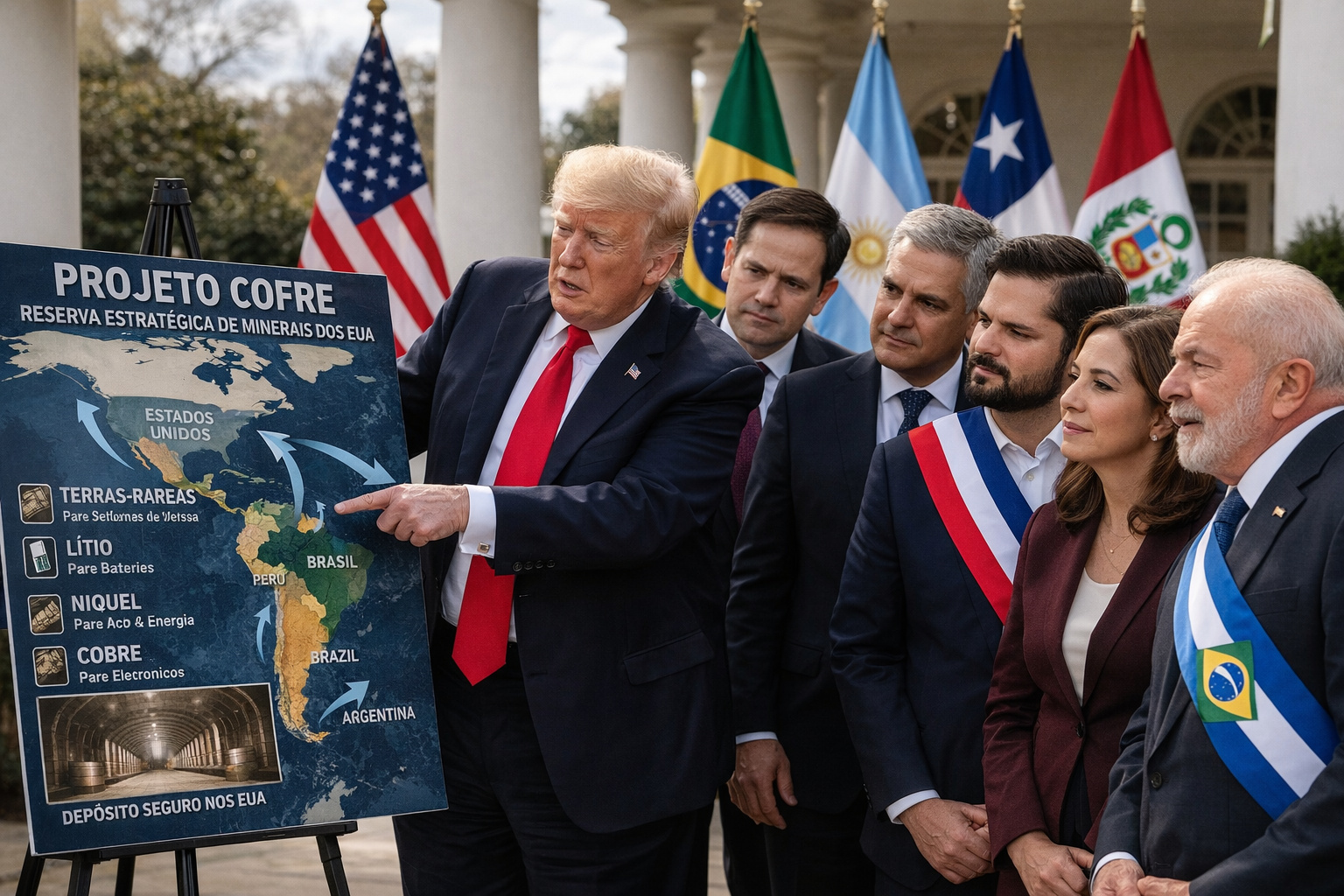
The USA announces a mysterious billion-dollar vault project to store critical minerals, but what intrigues experts is not just the plan itself, but why Latin America, including Brazil, has entered the center of this global dispute against China.
-
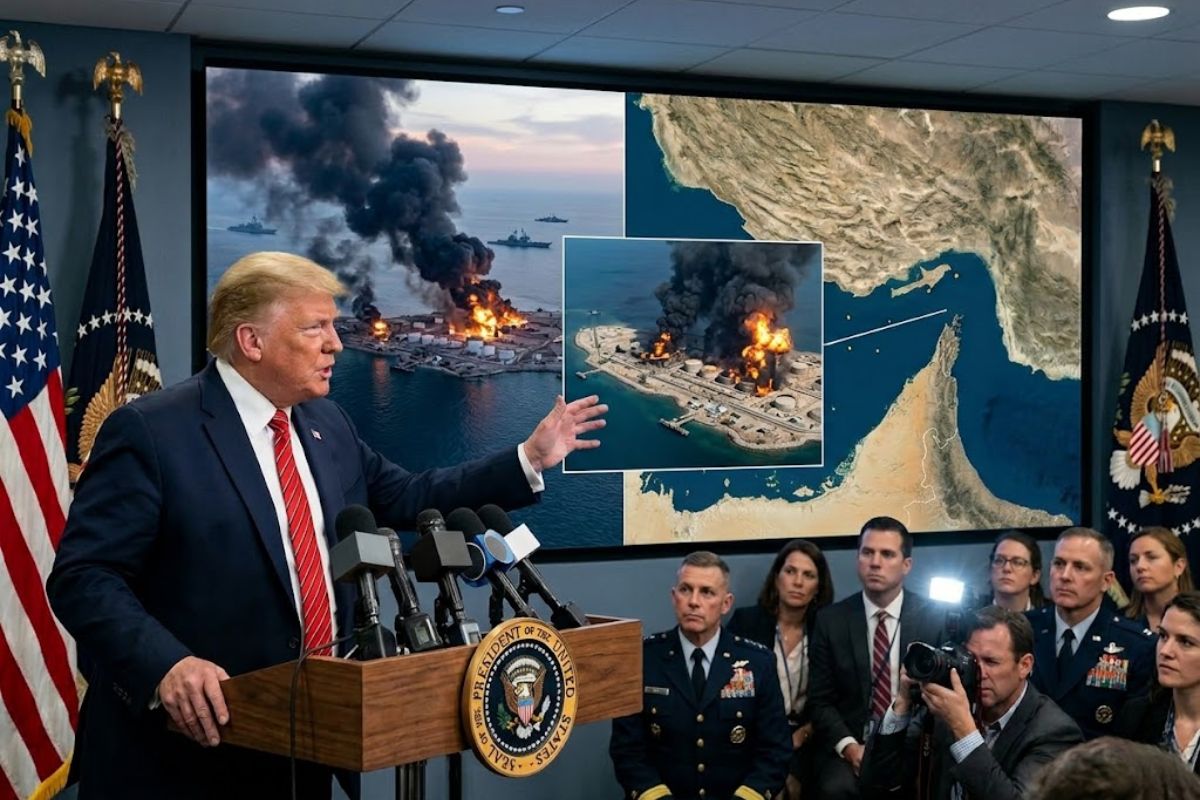
Trump Announces Bombing of U.S. Military Targets on Iranian Island Responsible for About 90% of Iran’s Oil Exports, Warns of Further Attacks if Navigation in Strategic Strait of Hormuz Is Threatened
Betsy Ross Flag and the Political Message Behind the Symbol
The Betsy Ross flag is considered one of the first versions of the national symbol of the United States.
It features 13 white stars arranged in a circle on a blue field, representing the 13 colonies that gave rise to the country in the 18th century. Historically tied to the American Revolution, the flag has come back to the center of political debate after being used in an official government communication.
In the publication, the image was accompanied by the phrase: “Patriotism will prevail. America First. Always.”
The expression America First, central to the rhetoric of Trumpism, is often used to advocate for prioritizing domestic interests over multilateral agreements and international cooperation.
Thus, analysts interpreted the gesture as a political signal directed at both the domestic audience and foreign allies.
America First and the Advance of American Nationalism
In recent years, the slogan America First has solidified as one of the main pillars of the MAGA movement’s discourse, led by Trump.
Although the flag has legitimate historical origins, critics point out that the symbol has been reappropriated by conservative and nationalist groups as an emblem of resistance to multilateralism.
This movement reinforces American nationalism at a time when international politics is undergoing profound reconfigurations.
Meanwhile, traditional partners of the United States are increasingly concerned about the direction taken by Washington, especially on sensitive issues such as security, trade, and respect for international norms.
US-Europe Diplomatic Tensions Intensify
The post occurs in a context already marked by US-Europe diplomatic tensions.
Leaders from the European continent have been publicly criticizing recent decisions in US foreign policy, accusing the country of adopting unilateral and uncooperative stances.
This Thursday, French President Emmanuel Macron stated that the United States is “disrespecting international norms” and “gradually distancing itself” from historical allies.
The president made the statements during the traditional annual speech to French ambassadors, an event that often outlines France’s diplomatic priorities for the coming year.
Macron’s Criticism and the Fragmented International Scenario
During the speech, Macron declared:
“The United States is a consolidated power, but is gradually distancing itself from some of its allies and disrespecting the international norms that it still promoted until recently.”
According to him, the world is experiencing a period of increasing “neocolonial aggression,” marked by competition among major powers.
The French president also mentioned recent episodes that have aggravated the diplomatic climate, such as US military actions, the capture of Nicolás Maduro in Venezuela, and threats related to the annexation of Greenland.
For Macron, these actions highlight a weakening of multilateral institutions and a return to a power logic based on strength.
“Multilateral institutions are functioning increasingly poorly.
We are evolving towards a world of great powers with a true temptation to divide the world,” he stated, adding that he rejects “new colonialism and new imperialism.”
Historical Symbols at the Center of Political Dispute
In this context, the use of the Betsy Ross flag takes on a meaning that goes beyond historical memory.
For European critics, the choice of the symbol and message reinforces the perception that the US government
adopts an increasingly assertive and isolationist stance.
On the other hand, supporters of American nationalism see the publication
as a reaffirmation of national identity and the sovereignty of the United States in the face of external pressures.
Thus, the episode highlights how political actors mobilize symbols from the past in contemporary disputes.
Impacts on US Foreign Policy
The international repercussions of the post show that symbolic gestures can have concrete effects on diplomacy.
In a global environment already marked by distrust and fragmentation
actions of this kind tend to deepen US-Europe diplomatic tensions and hinder consensus in multilateral forums.
Meanwhile, US foreign policy remains at the center of global debate, with allies attentive to every signal emitted by Washington.
The reappropriation of the Betsy Ross flag, associated with the America First discourse
reinforces the perception that nationalism will continue to be a key element in American political strategy, with direct repercussions on international relations.










Seja o primeiro a reagir!