





 Portuguese
  English
  Spanish
  3 min of reading
  0 comments


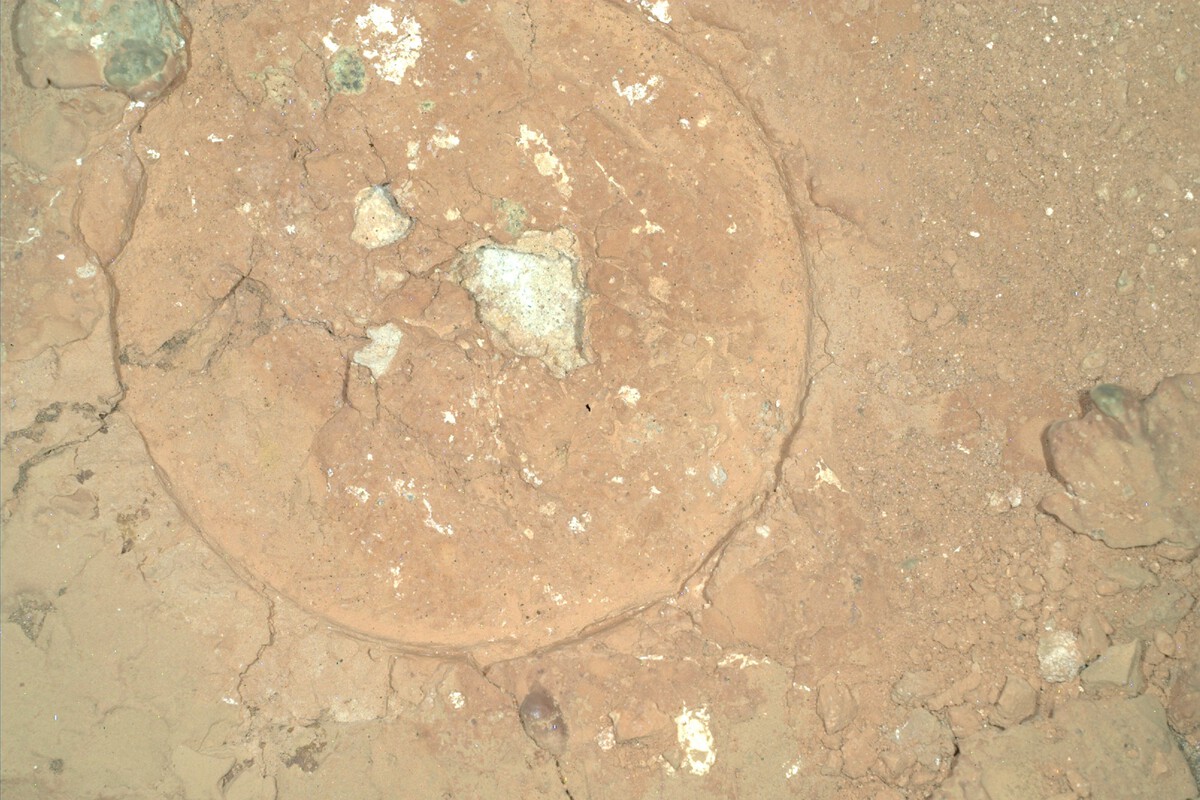
NASA Reports A Curious Discovery: A Green Spot On Mars That Could Change Everything. Shrouded In Mystery, The Mark Found By Perseverance Challenges Scientists To Explore A Possible Sign Of Extraterrestrial Life
A small greenish spot discovered on Mars by the Perseverance rover has piqued scientists’ curiosity. This is perhaps the best indication of past life that NASA has found on the red planet since the leopard spot pattern of Cheyava Falls, but the rover was unable to analyze it.
Although NASA has now revealed this discovery, it was on August 19, 2024, that Perseverance captured a nighttime image of an intriguing greenish spot on some rocks in Serpentine Rapids, a region of Mars, in the bed of the Jezero crater, where the rover was at that time.
The green spot in question, measuring only two millimeters in diameter, was discovered after the car-sized rover used an abrasion tool to scrape a rock nicknamed Wallace Butte. This action exposed a surprising palette of colors, including the greenish spot.
-
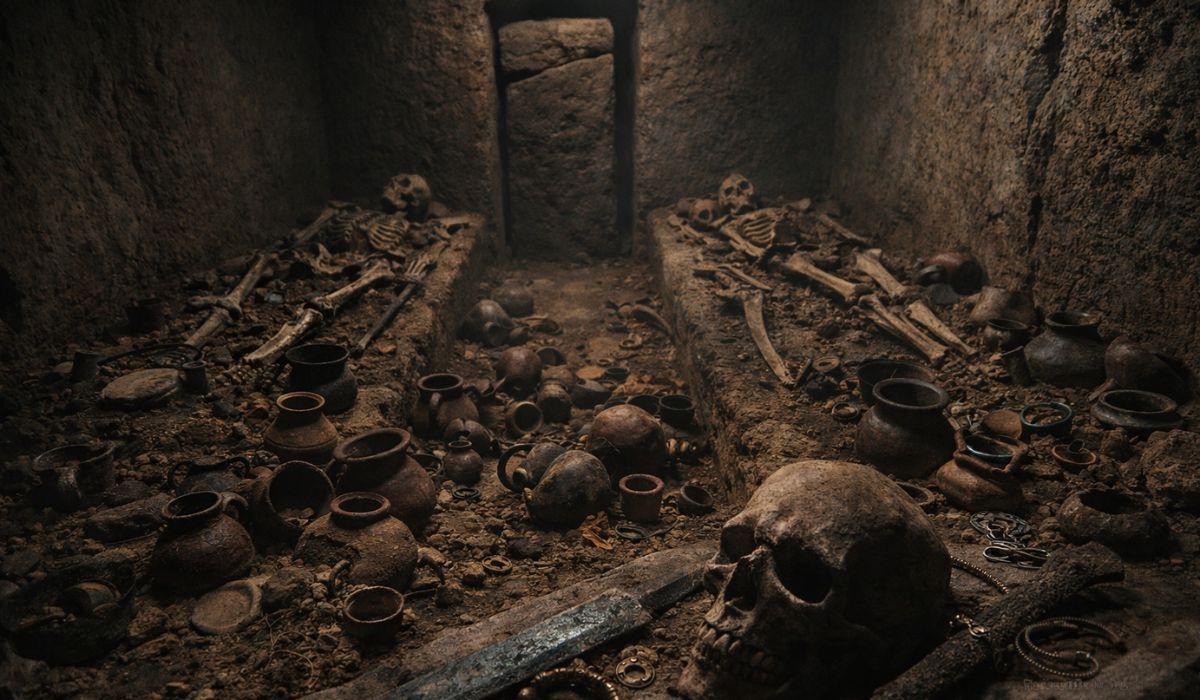
Archaeologists find an intact tomb over 2,500 years old, with more than 100 preserved objects, weapons, jewelry, and human remains never touched.
-
Volcanic lava transforms into threads as fine as human hair that travel over 30 kilometers by wind and fall like cutting rain on roofs and backyards in Hawaii and Iceland.

-
NASA issues a warning for the feared Godzilla El Niño that could change the planet’s climate in 2026 with extreme warming of the Pacific capable of causing devastating droughts in some regions and historic floods in others simultaneously.

-
Archaeologists discover a 100-meter ship graveyard in a submerged Greek city, and what has appeared on the seabed of Libya could change what was known about this ancient port.


The Discovery Of The Green Spot On Mars: An Intriguing Possibility Of Past Life
The image was captured with the SHERLOC WATSON camera, which Perseverance has on the end of its robotic arm. With a dark core and a diffuse outline, the peculiar green spot stands out in a reddish environment. These red rocks owe their color to oxidized iron.
On Earth, reddish rocks or beds can develop green spots when oxidized iron is chemically reduced, usually in the presence of liquid water. On our planet, this reduction of iron can be associated with microbial activity or decaying organic matter, although it can also occur without biological intervention through chemical interactions with sulfur.
Although NASA scientists urge caution, the presence of this anomaly in Martian soil could be evidence that life once existed on the red planet. Indeed, these green spots could be one of the first tangible indications of past life on Mars.
What other option exists? The spot could be the result of ancient interactions between soil minerals and the water in Jezero crater, which once harbored a lake, without the intervention of living microorganisms.
The complexity of the terrain prevented the rover from positioning its sophisticated chemical analysis instruments directly over the green spot. As a result, its composition remains a mystery.


NASA And The Challenges In Investigating Evidence Of Life On Mars
Perhaps Perseverance will find better opportunities at the locations to which it is heading. The rover continues its ascent along the edge of Jezero crater, facing (not without difficulties) steep and dangerous terrain to visit Pico Turquino and Witch Hazel Hill, two of the most promising regions due to their ancient hydrothermal activity and layered rocks. The search continues, and the hope of finding evidence of past life has not been abandoned.








Seja o primeiro a reagir!