





 Portuguese
  English
  Spanish
  4 min of reading
  0 comments


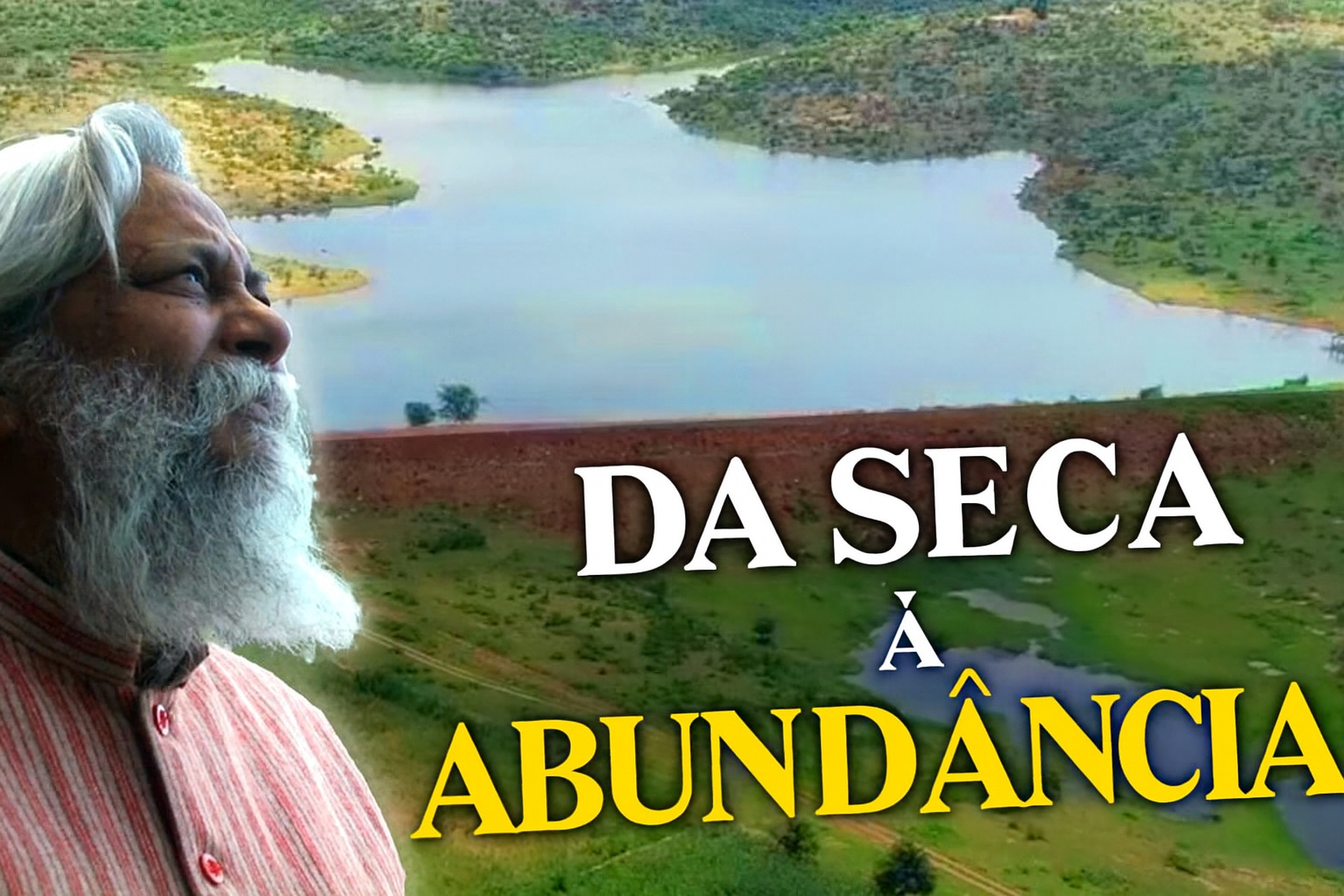
Rajendra Singh Abandoned His Traditional Career In The 1980s, Mobilized Villages In Rajasthan And Helped Recover Dry Rivers And Aquifers In The Indian Desert.
For decades, the state of Rajasthan in northwest India faced a critical water scarcity scenario. Irregular rains, deforestation, soil erosion, and mismanagement of land had dried up seasonal rivers and drastically lowered groundwater levels. In many villages, women walked kilometers daily to fetch water. Agriculture was collapsing, and rural migration was increasing.
It was in this context, in the 1980s, that Rajendra Singh, then a young graduate in Ayurvedic medicine, decided to abandon a traditional career and move to one of the driest regions of the country. Upon arrival, he found villages almost abandoned due to lack of water. Instead of proposing industrial solutions or relying solely on the government, he chose to listen to the older residents. The answer lay in forgotten ancestral techniques.
The Traditional Technique That Changed The Destiny Of The Desert
Local elders spoke about johads, small earthen dams used for centuries to capture rainwater and allow it to slowly infiltrate the soil. Over time, modernization and centralized policies had abandoned these practices.
-
Friends have been building a small “town” for 30 years to grow old together, with compact houses, a common area, nature surrounding it, and a collective life project designed for friendship, coexistence, and simplicity.

-
This small town in Germany created its own currency 24 years ago, today it circulates millions per year, is accepted in over 300 stores, and the German government allowed all of this to happen under one condition.

-
Curitiba is shrinking and is expected to lose 97,000 residents by 2050, while inland cities in Paraná such as Sarandi, Araucária, and Toledo are experiencing accelerated growth that is changing the entire state’s map.

-
Tourists were poisoned on Everest in a million-dollar fraud scheme involving helicopters that diverted over $19 million and shocked international authorities.


Rajendra Singh decided to recover this traditional engineering. The johads are simple structures made with compacted earth and strategically positioned in areas of natural drainage. During the monsoon period, rainwater is retained in these small basins, reducing surface runoff speed.
Instead of evaporating quickly or flowing into distant areas, the water infiltrates the soil, recharging underground aquifers.
The physical principle is straightforward: increasing the water retention time in the landscape enhances the recharge of the aquifer.
The first dam was built with the support of local residents using hand tools. The result took time, but it came. Wells began to recover their levels.
Community Mobilization And Reconstruction At Scale
What began as a point intervention transformed into a regional movement.
Over the years, Rajendra Singh and the Tarun Bharat Sangh organization mobilized thousands of residents to rebuild water retention structures in dozens of villages. It is estimated that over 8,000 johads have been built or restored.
With the gradual recharging of aquifers, intermittent watercourses began to reappear. Five rivers considered dead started to flow permanently again, including the Arvari River, which had been dry for decades.
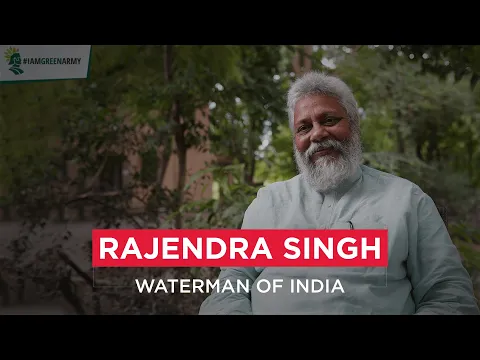
The return of surface flow was a direct consequence of the rise in the water table. When the aquifer reaches a certain level, the groundwater starts to feed the natural beds again.
There were no large machines. There was no billion-dollar funding. The foundation was community work and traditional hydrological knowledge.
Agricultural, Economic And Environmental Impact
With water available again, local agriculture recovered. Areas that were previously abandoned began to produce food again. Biodiversity began to return.
The increase in soil moisture favored native vegetation, reducing erosion and stabilizing the regional microclimate. In some areas, the local average temperature slightly decreased due to increased vegetation cover.
Studies indicate that water recovery significantly elevated the agricultural income of the involved communities.
In addition to the ecological impact, there was a social change. Villages began to collectively manage their water resources, creating local water councils to regulate use.
The Arvari River became a symbol of this transformation. After it started flowing again, communities established their own rules to prevent over-exploitation.
International Recognition And Global Award
Rajendra Singh’s work received international recognition. In 2015, he was awarded the Stockholm Water Prize, considered one of the world’s leading awards in the field of water resources management.
International organizations began to study the model as an example of community-based restoration. The case has also been cited in reports on climate adaptation, as it demonstrates how low-cost techniques can mitigate the effects of prolonged drought.
It is important to emphasize that this was not a massive government project, but local mobilization supported by a non-governmental organization.
Limits And Challenges Of The Model
Despite its success, the technique depends on specific conditions. The Rajasthan has a monsoon regime that, while irregular, provides concentrated volumes of rain during certain periods of the year. Without minimum precipitation, the system does not work.
Moreover, it requires intense social mobilization and continuous maintenance of the structures. Another critical factor is land use. If there is intense deforestation in the capture areas, the efficiency of the dams decreases.
The model does not replace large-scale water infrastructure in highly urbanized areas but shows effectiveness in semi-arid rural contexts.
Transformation Born From Local Knowledge
The recovery of five rivers in Rajasthan was not the result of futuristic technology or industrial investments. It was the result of the combination of basic hydrology, soil engineering, and social mobilization.
Rajendra Singh did not invent the technique. He revived an almost forgotten knowledge. In a global scenario where large projects dominate the debate on water infrastructure, the Indian case reveals that decentralized solutions can produce profound regional impact.
Water flowed again where the bed was once just dust. The aquifer rose where there were once only dry wells And communities that had lost hope rebuilt their landscape with their own hands.
What seemed impossible amid the desert became an international example of ecological recovery based on collective action.










-

-

-

-

7 pessoas reagiram a isso.