





 Portuguese
  English
  Spanish
  3 min of reading


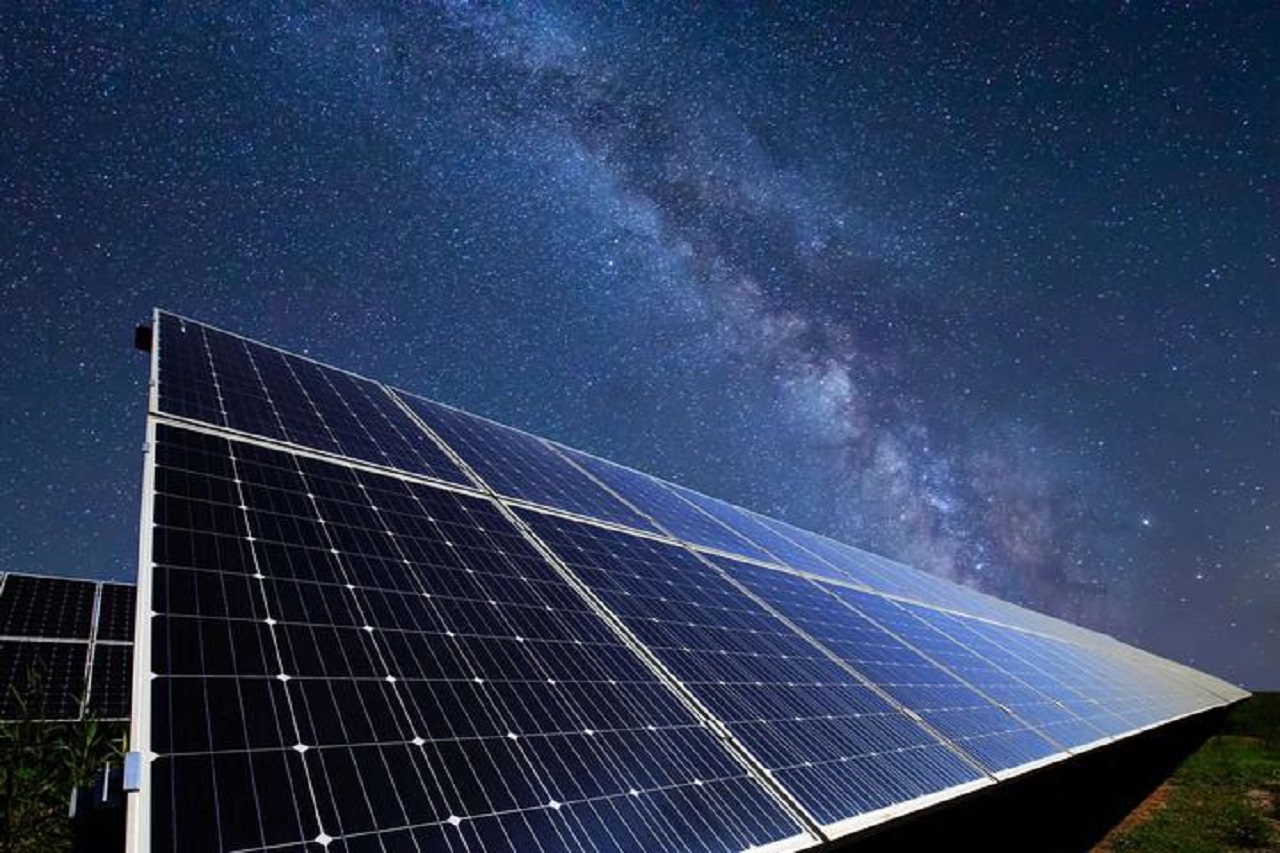
Scientists in Texas Developed a New Photovoltaic System Capable of Generating Solar Energy 24 Hours. The Panels Work at Night and Even During Winter.
Scientists from the University of Houston in the United States developed a new photovoltaic system that can capture solar energy 24 hours a day, 7 days a week, breaking all limits and restrictions set for all currently available photovoltaic devices on the market.
Scientists in Texas Develop New Technology Capable of Revolutionizing the Photovoltaic System Market
According to the scientists, this new technology for generating solar energy 24 hours a day allows for solar light capture to exceed the so-called thermodynamic limit, that is, the absolute maximum value theoretically possible for the efficiency that a photovoltaic system has to convert solar energy into electricity.
According to the co-author of the study, mechanical engineering professor Bo Zhao, the new technology reduced the limits that exist between the amount of solar energy that can be collected per day and the amount that is actually utilized, since electricity generation is limited to the daytime when the sun provides its maximum capacity to the photovoltaic system.
-
Renewable energy advances over protected areas in Brazil, and a survey by the Energy Transition Observatory reveals silent impacts that challenge environmental conservation and pressure sensitive traditional territories.

-
Rio Grande do Sul accelerates energy transition: State invests in renewable technologies and consolidates decarbonization strategies and pathways to attract billions in new industrial investments.

-
With 160,000 m² of collectors, an area larger than 20 football fields, Silkeborg, in Denmark, hosts a solar thermal plant that heats 19,500 homes and could become the largest solar heating plant in the world.

-
A study reveals the expansion of renewable energy procurement in Brazil and shows how companies are taking advantage of opportunities to reduce expenses, ensure energy efficiency, and strengthen strategic environmental commitments.


The Main Differences Between the New Technology and Old Photovoltaic Systems
In traditional thermophotovoltaic systems known as STPVs, the front facing layer towards the sun is designed to absorb all the photons present in the spectrum.
In this way, solar energy is transformed into thermal energy, raising the temperature of the intermediate layer. The problem is that the thermodynamic efficiency limit of STPVs, historically referred to as the black body, is 85.4%, a value much lower than the so-called Landsberg limit, which determines that the maximum efficiency for capturing solar energy 24 hours is 93.3%.
According to Zhao, the scientists’ approach makes non-reciprocal STPVs possible, which use an intermediate layer capable of substantially suppressing the energy that returns to the sun, channeling all the photon flow to the cell and reaching the Landsberg limit to enhance the energy efficiency of the solar panels in the photovoltaic system.
Scientists Make the Idea of Generating Solar Energy at Night a Reality
According to the scientists, the new solar power systems that generate energy 24 hours can be installed in a thermal energy storage unit, making it possible to generate clean electricity even at night or during periods when the sky is constantly overcast, especially in winter.
This would make it possible to develop much more efficient solar plants capable of collecting solar energy 24 hours to supply more remote areas or meet the energy demand in supply grids already saturated by the constant increase in consumption.
According to Bo Zhao, in addition to having much greater efficiency, this new photovoltaic system developed by the scientists promises compactness and dispatchability, that is, a generation of electricity that can be scheduled on demand based on market needs, avoiding waste of renewable energy.









Seja o primeiro a reagir!