





 Portuguese
  English
  Spanish
  4 min of reading
  0 comments


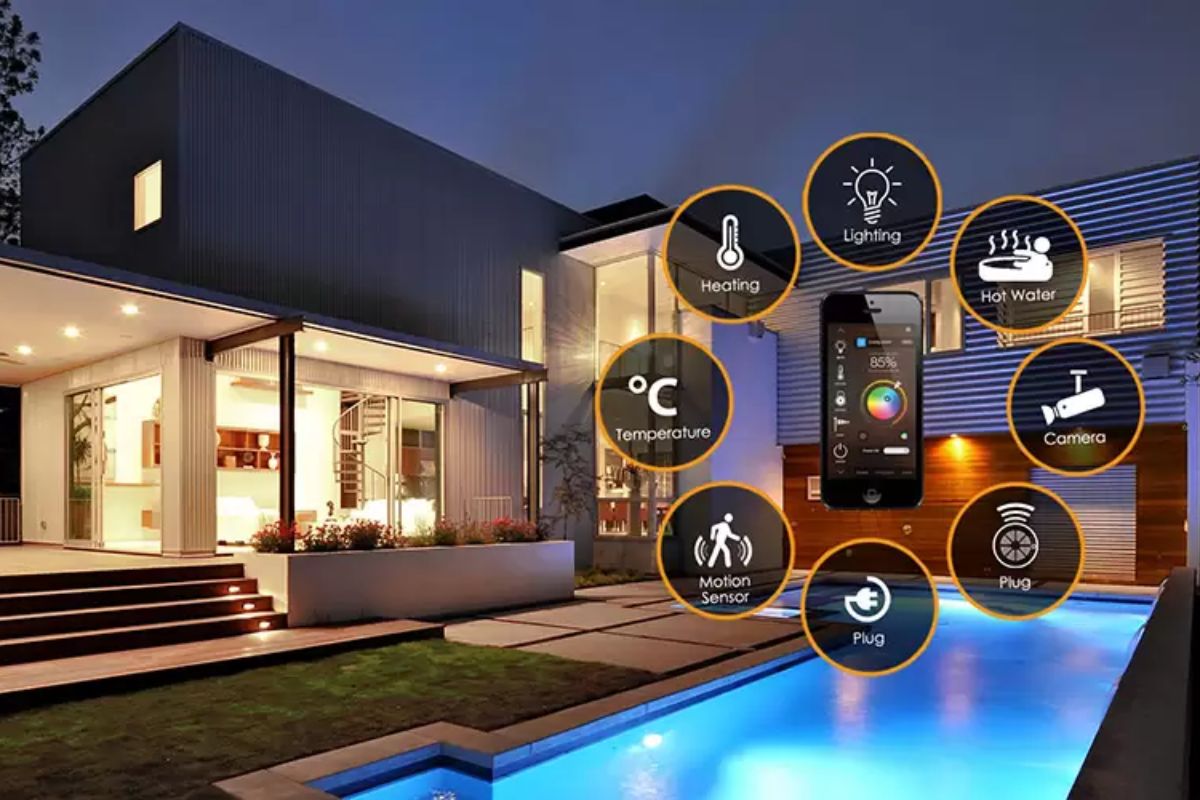
Discover How Smart Home Equipment Can Bring More Comfort, Security, and Efficiency to Your Daily Life in Brazil. Learn How to Plan, Which Devices to Choose, and How to Protect Your Connected Home.
A smart home uses internet-connected devices to allow remote control and automation of household functions, either through apps or voice commands. Unlike a home that is simply “connected,” a genuine smart home learns from the habits of its residents and autonomously performs tasks, enhancing the quality of life.
In Brazil, the smart home market is expanding, driven by the popularity of assistants like Alexa and the increasing availability of affordable devices. This article explores the concepts, benefits, and essential equipment to transform your residence.
Smart Home: What Is a Smart Home and Its Benefits in Brazil
A smart home is a residence equipped with interconnected devices that automate tasks and can be controlled remotely. The advantages are many: comfort and convenience in managing lighting, climate control, and appliances centrally; enhanced security with cameras, smart locks, and alert sensors; and energy efficiency through precise control of lights and thermostats.
-
While the world looks at oil, the war with Iran is already disrupting helium supply from Qatar, affecting car and iPhone chips, threatening AI expansion, and putting pressure on aluminum packaging at the highest value in four years.

-
Global warming will expose a treasure hidden under the ice of Antarctica and may spark an international dispute over gold and valuable minerals.

-
A street vendor from Praia Grande built a robot made of scrap from scooters and washing machines that pulls his popcorn cart on the beach, emits sounds, and interacts with customers, becoming an attraction on the coast of São Paulo.

-
The specifications of the Xiaomi 18 Pro Max have been leaked, and the highlight is a dual 200 MP camera with a new 22-nanometer technology that promises to consume less energy and capture details in shadows and bright areas using LOFIC HDR.

Automation also promotes accessibility and can increase property value. The smart home market in Brazil is growing vigorously, with voice assistants like Alexa, a favorite among Brazilians, facilitating entry into this universe.
Planning Your Smart Home: Essential First Steps for a Successful Project Anywhere in Brazil
The transition to a smart home requires planning. Define your needs and priorities by listing tasks and devices you want to automate, whether for security, energy savings, or comfort. Next, set an initial budget by researching devices, installation costs (if necessary), and potential subscriptions.
The quality of your home Wi-Fi network is crucial. Basic routers may not support multiple devices. Secure your network with a strong password (WPA2/WPA3) and keep firmware updated. For larger homes, a Mesh network can ensure stable connectivity. Consider starting with a smaller project, like lighting, and expand gradually, thinking about future scalability and interoperability, such as the Matter protocol.
Essential Equipment for Your Smart Home: Lighting, Security, and Convenience at Your Fingertips
Transforming your home involves various equipment.
Smart Lighting: Bulbs, panels, and switches from brands like Positivo Casa Inteligente, Philips Hue, Xiaomi, Elgin, and Intelbras allow app control, scheduling, color and intensity adjustments, and voice commands (Alexa, Google Assistant, Siri).
Smart Security:
- Digital/Smart Locks: Brands like Intelbras, Fortezza, Elsys, and Positivo offer access via password, biometrics, tags, app, and key. Features include automatic locking and temporary passwords. Check compatibility with voice assistants.
- Wi-Fi Cameras: Intelbras, TP-Link (Tapo line), and Xiaomi are popular. Consider resolution (Full HD, 2K), night vision (infrared or color), AI motion detection, two-way audio, storage (microSD or paid cloud), and resistance (IP65/IP66 for outdoors).
- Smart Sensors: Motion, opening (doors/windows), gas, and smoke sensors (brands like Positivo, Orvibo) send notifications and can trigger automations.
Control and Convenience:
- Smart Plugs and Adapters: Brands like i2GO, Geonav, Multilaser, Ekaza, and Positivo allow remote on/off control of devices, scheduling, and in some models, monitoring energy consumption. Check amperage (10A, 16A, 20A) according to the device.
- Smart Universal Remote Controls (IR/RF): Devices from Steck, I2GO Home, Intelbras, Positivo, and others unify the command of TVs, air conditioning, and appliances with infrared (IR) control via app or voice. Some support radio frequency (RF) for gates and fans.
Comfort, Efficiency, and Voice Command
For climate control, smart thermostats like Google Nest and Honeywell (typically for central systems, less common in Brazil) or specific controllers for split air conditioning (like those from Sensibo or native features from manufacturers like LG ThinQ and Samsung SmartThings) allow remote control and scheduling. Universal IR controls are also a popular solution for split air conditioning in Brazil.
Voice assistants are the brains of many smart homes. Amazon Alexa (the favorite in Brazil), Google Assistant, and Apple Siri control devices, set reminders, play music, and provide information. Alexa excels in the number of “Skills” (third-party apps), Google Assistant in integration with Google services, and Siri in the Apple ecosystem (HomeKit). The preference for voice interaction is high among Brazilians.
Protocols, Purchases, and Installation
Communication between smart home devices occurs via protocols. Wi-Fi is common but can congest. Zigbee and Z-Wave are low-consumption mesh networks that require a hub, with Z-Wave experiencing less Wi-Fi interference. Bluetooth Low Energy (BLE) is for short-range connections. Matter, operating over Wi-Fi or Thread (another low-consumption mesh network), is a new standard aimed at unifying the ecosystem, ensuring interoperability.
Smart home equipment can be purchased from major online retailers with national delivery (Amazon Brazil, Magazine Luiza, KaBuM!, Fast Shop) and from manufacturers’ online stores (Intelbras, Tramontina). Physical department, construction material, and electronics stores in various cities also offer these products. For installation, look for authorized resellers and installers of well-known brands (such as Intelbras) or companies specialized in home automation, available in various urban centers.
Security, Privacy, and the Future of the Smart Home in the Brazilian Landscape
The convenience of a smart home requires attention to security and privacy. Risks include intrusions, malware, and weak passwords. Protect your Wi-Fi network with a strong password and WPA3/WPA2 encryption. Keep firmware and software updated. Use strong, unique passwords for each device and enable two-factor authentication (2FA). Review app permissions and monitor for suspicious activities.
The journey to a smart home is a process of learning and adaptation. Start small, prioritize your needs, and research device compatibility. The future of the smart home in Brazil is promising, with technologies in constant evolution, aiming for greater integration, intelligence, and an increasingly fluid and secure user experience.








Seja o primeiro a reagir!