





 Portuguese
  English
  Spanish
  3 min of reading
  0 comments


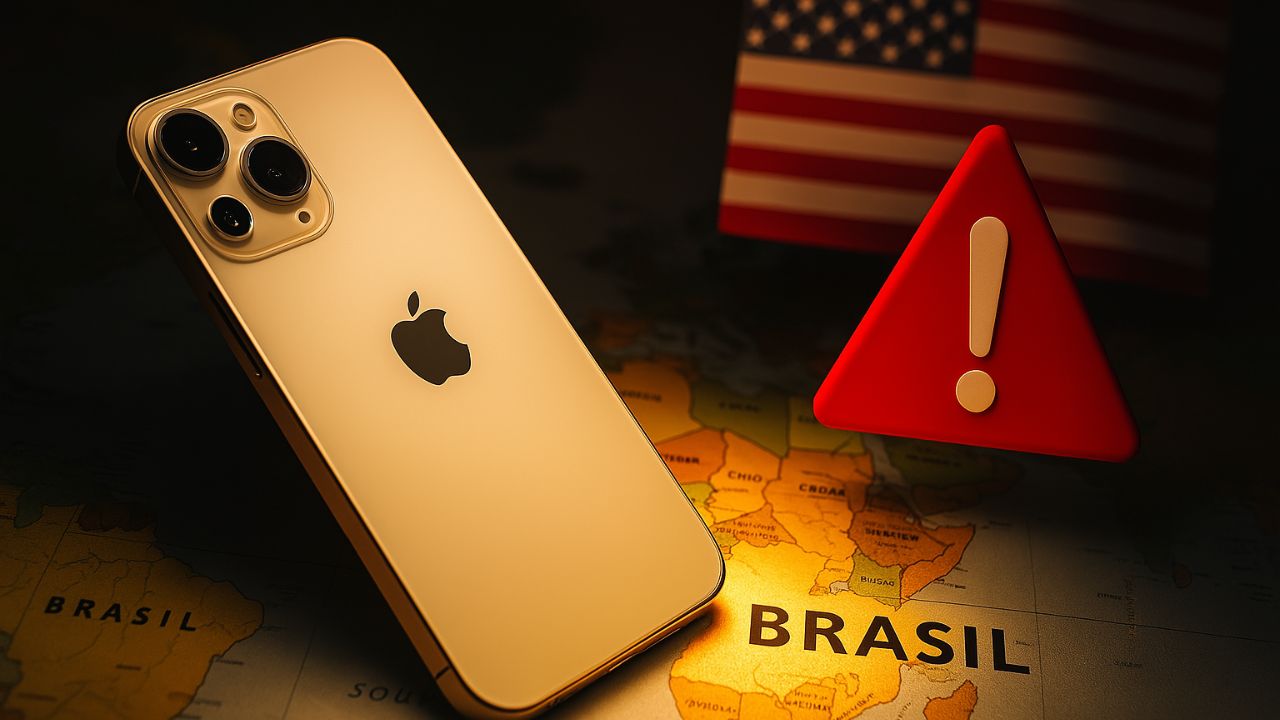
With Tariffs of Up to 43% in the U.S., Tech Giant Considers Jundiaí as an Alternative Route to Maintaining Competitiveness
Apple is considering expanding iPhone production in Brazil in response to new import tariffs announced by the U.S. government, which could significantly increase costs for models manufactured in China and India. According to information from Exame magazine, the idea is to enhance operations at the Foxconn factory in Jundiaí (SP) to supply the U.S. market with less tax impact. The measure aims to mitigate the potential price increase of devices and protect the brand’s competitiveness.
U.S. Tariffs Could Raise iPhone Prices by Up to 43%
According to estimates from Rosenblatt Securities published by Reuters, the new taxes on products from China (34%) and India (26%) could raise the prices of iPhones like the 16 Pro Max from US$ 1,599 to around US$ 2,300 in the United States. Given this impact, Apple feels compelled to seek productive alternatives in countries with more friendly tariffs. The decision comes in the context of a more protectionist economic policy adopted by former President Donald Trump, who returned to the American political scene in 2025 with strict measures against Asian imports.
Brazil Gains Strength as a Productive Alternative for Apple
Currently, the Foxconn factory in Jundiaí already assembles models like the iPhone 13, 14, and 15. The recent approval of the iPhone 16 by Anatel reinforces the possibility of expanding local production. As highlighted by Exame magazine, Brazil offers a strategic advantage: the U.S. import tariff for Brazilian products is only 10%, well below the rates imposed on China and India. This makes the country a viable alternative to reduce costs without sacrificing quality.
-
Friends have been building a small “town” for 30 years to grow old together, with compact houses, a common area, nature surrounding it, and a collective life project designed for friendship, coexistence, and simplicity.

-
This small town in Germany created its own currency 24 years ago, today it circulates millions per year, is accepted in over 300 stores, and the German government allowed all of this to happen under one condition.

-
Curitiba is shrinking and is expected to lose 97,000 residents by 2050, while inland cities in Paraná such as Sarandi, Araucária, and Toledo are experiencing accelerated growth that is changing the entire state’s map.

-
Tourists were poisoned on Everest in a million-dollar fraud scheme involving helicopters that diverted over $19 million and shocked international authorities.


Capacity and Logistics Still Present Challenges in Jundiaí
Despite the logistical potential, industry sources point out that Foxconn’s structure in Brazil still faces challenges in terms of productive capacity and integration with Apple’s global supply chain. Producing on a large scale for export to the U.S. would require adjustments, such as increasing the assembly line, more skilled labor, and fiscal incentives. The distance from American distribution centers may generate additional transportation costs.
Apple Also Considers Diversifying Production to New Markets
Alongside Brazil, Apple is studying other regions with lower tax burdens to expand its global production. Countries like Vietnam and Mexico are also on the company’s radar, according to Exame specialists. Diversifying the supply chain has become a priority since the COVID-19 pandemic and the escalation of trade tensions between China and the U.S.
Strategy Aims to Curb Price Increases and Keep the American Market Competitive
The decision to avoid passing price increases on to consumers is strategic. The North American market remains the most profitable for Apple, and maintaining competitiveness against Samsung and Chinese brands is essential. If the expansion of iPhone production in Brazil is confirmed, the country could gain unprecedented relevance in Apple’s value chain, not only as a local assembly base but also as a global exporter of premium smartphones.









Seja o primeiro a reagir!