





 Portuguese
  English
  Spanish
 4 min of reading
  1 comment


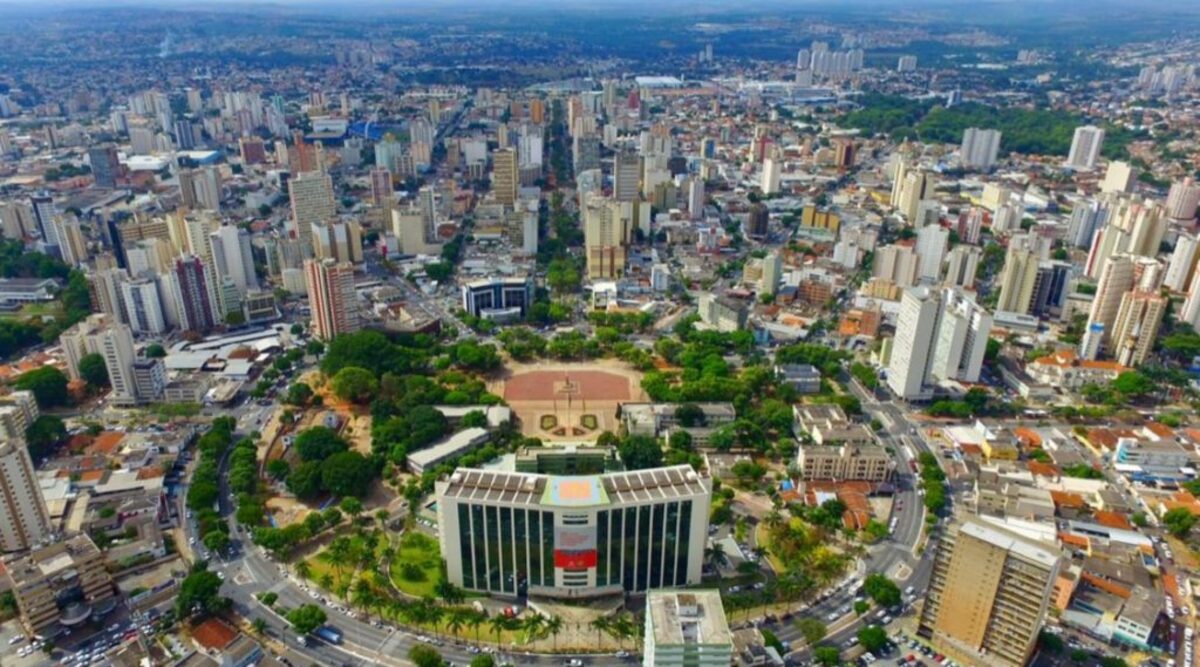

Hidden Under The Goiânia Theater, An Ancient Bunker From The 1950s Reveals A Forgotten Part Of The Capital’s History, With Tunnels That Would Link It To The Palace Of Emeralds
Few people know, but in the heart of Goiânia lies a hidden structure that seems like something out of a movie. A subterranean bunker, built in the 1950s, rests beneath one of the city’s most emblematic buildings: the Goiânia Theater. And yes, it really exists.
The theater, known for its Art Deco style and for hosting cultural events, guards in its basements a forgotten part of history.
Underneath Tocantins and Anhanguera avenues, structures were discovered during renovations, revealing an ambitious plan from the past: underground routes that could connect the theater to the Palace of Emeralds and the Jockey Club.
-
Oldest tree on the planet reappears after 130 years of searches: Wattieza, 385 million years old, was 10 meters tall and had no leaves or seeds; Gilboa fossils in New York solved the mystery in 2007.

-
A 48-square-meter house assembled in hours with 4,000 bricks made of recycled plastic that does not absorb moisture, has natural thermal insulation, and costs less than 90,000 reais in a complete kit.

-
Luciano Hang revealed that Havan’s air fleet has already accumulated more than 20,000 landings, 10,000 flight hours, and 6 million kilometers traveled, and he says that without the planes, the company would never have grown so quickly.

-
A historical discovery in the Andes Mountains reveals a gold deposit valued at 770 billion reais hidden over 4,000 meters above sea level on the border between Chile and Argentina, and the whole world is watching.

Construction During Times Of Tension
The Goiânia Theater was inaugurated in July 1942, during the Estado Novo government. It was a time marked by uncertainties and fear.
World War II raised concerns even in countries not directly involved in the conflicts. In Brazil, these tensions inspired precautionary measures.
In this context, plans emerged for the construction of underground tunnels in the capital. The idea was simple: to create escape routes and protection sites for authorities in case of air strikes.
The bunker under the theater would be part of this defensive strategy. Although not all of the project was completed, what was built remained hidden for decades.
Accidental Discovery During The Theater Renovation In The 1970s
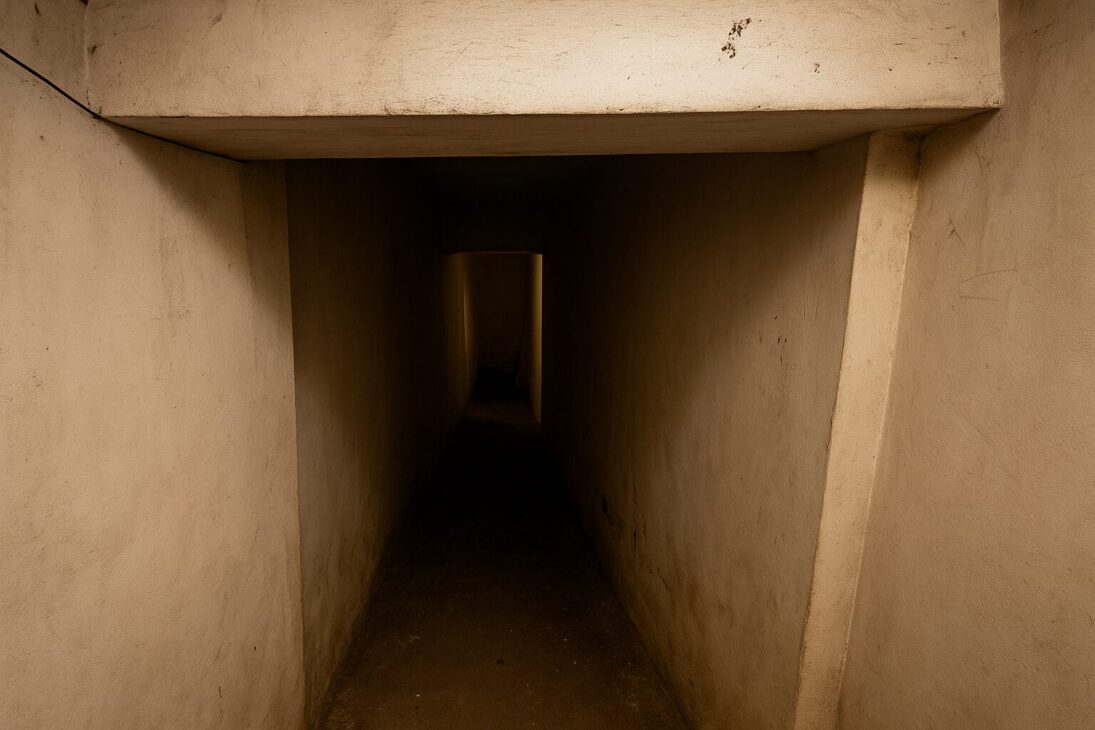
During a renovation in 1975, workers found the theater’s secret basements. What was once just an urban legend began to show itself as real.
Concrete structures, narrow passages, and partially closed tunnels came to light. The city’s history gained a new layer of mystery.
According to reports, the tunnels would run beneath Tocantins Avenue and extend to Praça Cívica and the Palace of Emeralds. The purpose would be to serve as air raid shelters or escape routes for authorities.
Even without official confirmation of the entire route, what was found shows that there was indeed an intention to use the city’s underground for strategic purposes.
The Theater As A Stage For Culture And Secrets
In addition to the bunker, the Goiânia Theater has a rich past. It was the stage for the solemn session of the Cultural Baptism of the city. On that historic day, the keys to the city were handed over to the first mayor, Venerando de Freitas.
The theater also screened the film “Divine Torment,” starring Jeannette McDonald and Nelson Eddy, and presented the play “Intern School” by the Eva Todor Company.
In the following decades, the theater hosted plays, concerts, and national and international productions. For a long time, it was the main cultural space in the capital.
However, like many public spaces, it faced neglect and the need for renovations. It was during this restoration period that the mysteries came to light.
Reports Feed The Mystery
Marco Antonini, an advisor at the theater, told the G1 portal that there is a legend among the staff. According to him, the tunnels would connect the theater to Praça Cívica and the Palace of Emeralds.
He believes that these paths were air raid shelters planned during the war. He also reported that over the years, many of these tunnels have been closed off or disappeared beneath urban concrete.
Workers and staff at the theater report that on quiet nights, strange sounds can still be heard echoing through the building.
The floor creaks, the ceiling pops, and the wind seems to whisper messages through the windows. For many, these are just natural noises of an old building. For others, it’s the past trying to communicate with the present.
Modern Renovation, But With Preserved Past
The last major renovation of the Goiânia Theater took place in 1998. One hundred new chairs were added to the auditorium, raising its capacity to 836 seats.
The building received a new structure, but the tunnels remained intact, even if discreet. They do not appear in brochures, nor are they part of official tourist routes. They remain as a subterranean memory, silent and rare.
Despite not being showcased to the public, the subterranean bunker continues to be a point of curiosity. It is a forgotten piece of the city’s security architecture. Many visitors have no idea what lies beneath the stage.
Fragments Of A Hidden Past
For those interested in history, the bunker is a real find. It represents an era when war influenced even urban planning in cities far from the major conflict centers.
Goiânia, young and under construction at the time, was already thinking about how to protect its population and political leaders from a possible attack.
What remains today is a forgotten structure that survives the test of time. It does not appear in the stage lights, but it is there, beneath the feet of those who watch a performance. The subterranean bunker of the Goiânia Theater is an urban secret that intertwines architecture, politics, and fear.
If you are walking through the city center, it might be worth looking at the Goiânia Theater with new eyes.
After all, just below the routine of stages and audiences rests one of the most curious secrets of the capital: a subterranean bunker from the 1950s that still holds the echoes of a time marked by tension and uncertainty.
With information from Saiba Mais.







A construção é da década de 40 e não dos anos 60