





 Portuguese
  English
  Spanish
  5 min of reading
  0 comments


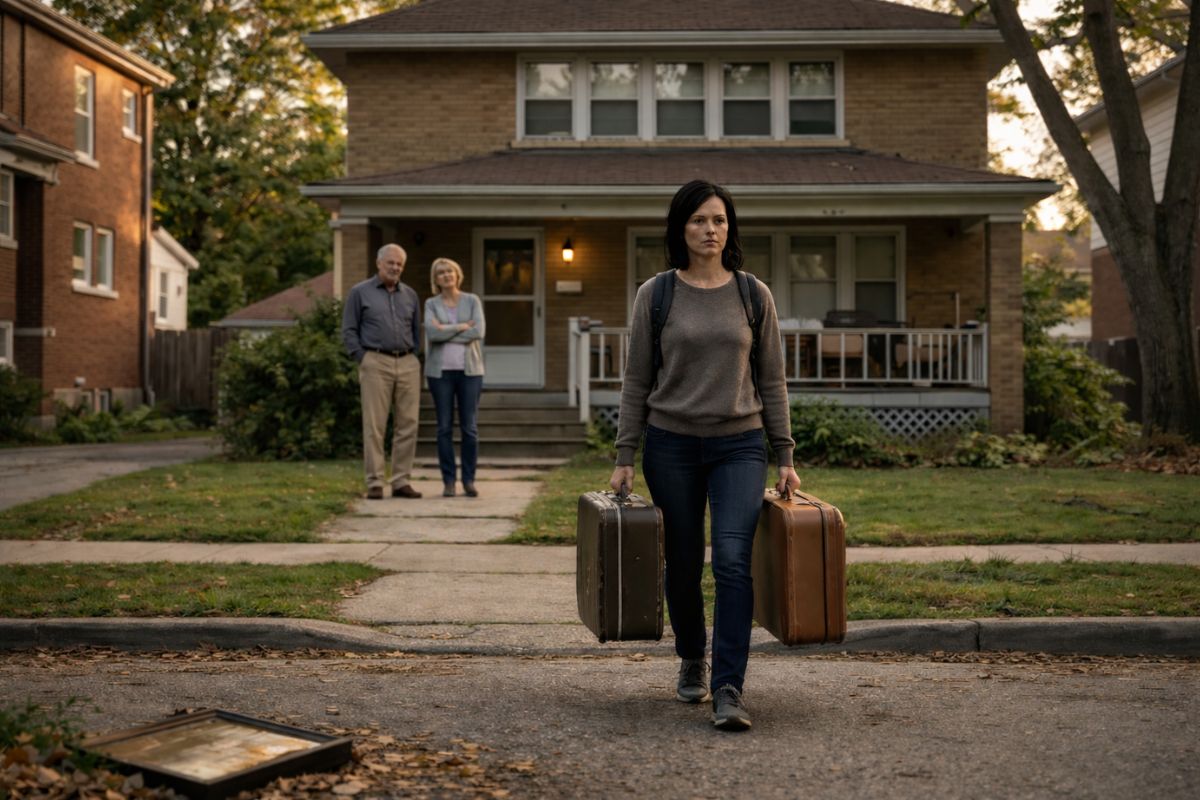
Psychology explains that distancing oneself from toxic parents is not ingratitude, but the way to preserve mental health. Studies from the University of Cambridge show that hostile family relationships increase the risk of depression, isolation, and prolonged psychological suffering that can last a lifetime.
Psychology has an answer that many people do not want to hear: not every family relationship deserves to be maintained at any cost. The belief that blood ties justify any type of emotional sacrifice is deeply rooted in Brazilian culture and in practically all societies, but scientific research shows that living with toxic parents can cause psychological damage as severe as any other type of trauma. When a child decides to distance themselves, they are not committing an act of ingratitude. They are often choosing the only available alternative to ensure their emotional survival.
The problem is that this decision rarely comes without social consequences. Those who distance themselves from parental figures face immediate judgment from friends, relatives, and even strangers who repeat phrases like “but she’s your mother” or “family is family” without knowing what happens inside that home. Psychology helps to understand why this pressure exists and, mainly, why yielding to it can be more destructive than the distancing itself. The starting point is to accept that parental love is not automatically synonymous with healthy love.
What psychology says about families that make you sick instead of protecting you
According to the portal Correio Braziliense, the romantic view of motherhood and fatherhood imposed by society suggests that parental love should be unconditional and that children should be eternally grateful, regardless of the treatment they receive. Psychology challenges this narrative by documenting that family relationships marked by control, emotional manipulation, and systematic invalidation produce measurable effects on the mental health of those subjected to them. The concept of gratitude, when distorted, becomes a tool for maintaining cycles of abuse that can span entire generations.
-
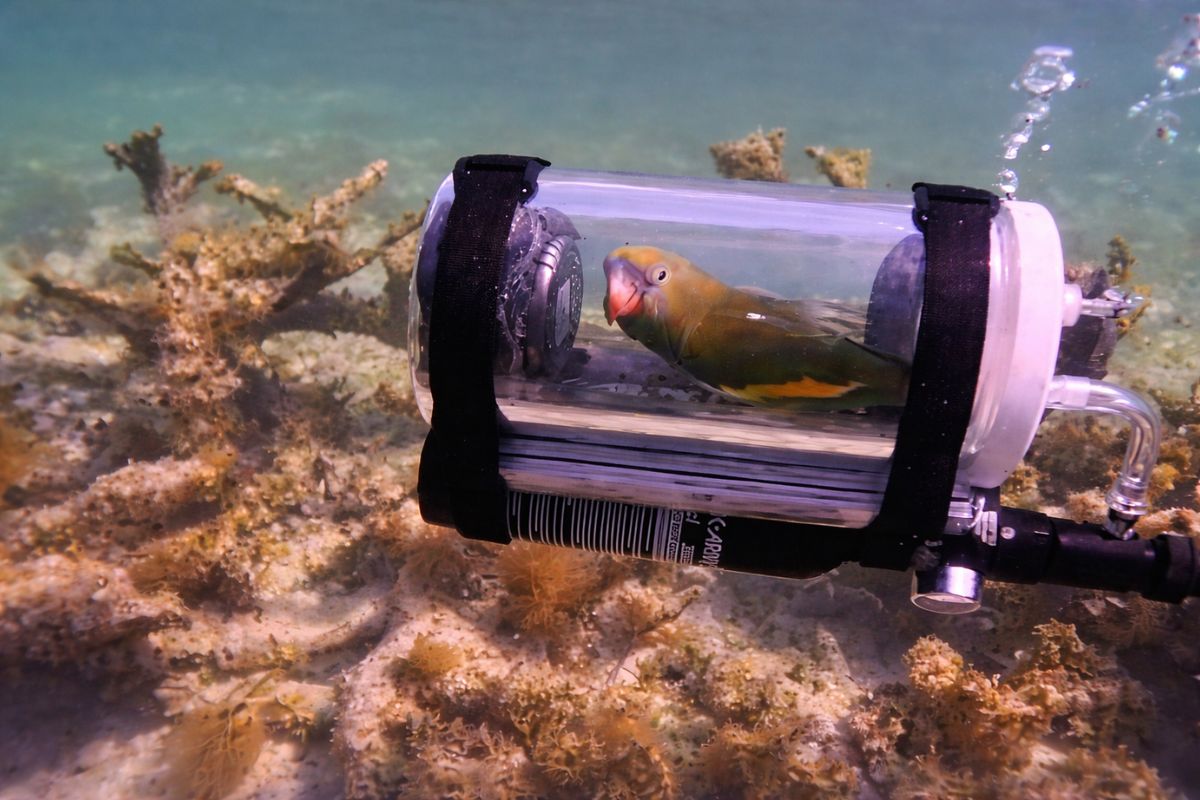
The parakeet owner built a mini submarine with a paintball cylinder to take the bird diving in the Bahamas, and the video went viral, but not everyone found the idea that cute.
-
After leaving engineering and crossing Brazil by bicycle in search of a simpler life, two young people demonstrate in practice how they installed solar energy at their farm with 4 panels of 550 watts and started producing their own energy.

-
A 10-year-old girl is attending both elementary school and college at the same time in the United States, and the school principal says she never imagined something like this was possible.

-
According to specialists, after the age of 60, elderly individuals can indeed take creatine every day, but the decision depends on little-known factors that can completely change the effects.

Studies linked to the University of Cambridge on family estrangement reinforce this perspective. The research showed that people without stable family ties experience more loneliness, guilt, and shame, especially when the surrounding society reinforces that “family is always a support network.” The revealing data is that the suffering does not come only from the absence of the bond but from the social pressure that transforms the choice for health into a reason for condemnation. For psychology, family can be both a source of security and a source of illness, and recognizing the latter possibility is the first step toward healing.
Signs that living with parents is harming your mental health
Identifying the moment to step back requires honesty with oneself and courage to observe patterns that are often normalized since childhood. Psychology points out that if interactions with parents systematically result in feelings of inadequacy, guilt, or emotional exhaustion, the environment is draining vital energy and preventing the development of healthy self-esteem. It is not about a specific misunderstanding or a difficult phase, but about a repetitive pattern that persists over the years.
Some behaviors are especially destructive, and psychology classifies them as markers of relationships that require drastic boundaries. The frequent use of emotional blackmail to obtain favors or attention, constant criticism aimed at diminishing achievements and life choices, systematic invasion of privacy, and denial of past abusive behaviors are signs that the relationship is not sustained by love but by control. When the demand for absolute loyalty persists even in the face of verbal or physical aggression, distancing ceases to be an option and becomes a necessity.
Why guilt is the main barrier for those who need to distance themselves
Guilt is the most effective tool that toxic relationships use to keep people trapped. Psychology describes this mechanism as an emotional shackle that prevents the individual from prioritizing their own health, even when all evidence indicates that the relationship is causing harm. The fear of being labeled as a “bad child” or “ungrateful” is so powerful that many people endure decades of suffering with toxic parents before considering distancing themselves. The accusation of ingratitude acts as a silencer: those who receive it tend to retreat and accept yet another cycle of abuse.
Working through guilt in therapy is a fundamental part of the liberation process. Psychology helps to understand that you are not responsible for your parents’ emotional failures and that filial respect does not require the acceptance of psychological abuse. Redefining what it means to respect one’s parents without destroying oneself in the process is one of the most difficult and transformative tasks that therapy can offer. Understanding that distancing oneself from toxic parents is not ingratitude, but self-preservation, is the turning point that changes everything.
What happens to the mental health of those who remain in toxic family relationships
The effects of staying in a hostile family environment are not only emotional. Psychology and medicine document that chronic stress generated by prolonged toxic relationships increases the risk of depression, generalized anxiety, insomnia, cardiovascular diseases, and immune system impairment. The body registers what the mind tries to normalize, and the cost of staying accumulates silently but concretely over the years.
The University of Cambridge’s research on family estrangement during the pandemic revealed a particularly telling fact: people who lived distanced from toxic families reported, in many cases, better mental health than those who maintained forced contact in the name of social obligation. The pandemic, by confining entire families in small spaces, exposed dynamics that many preferred to ignore. For psychology, the conclusion is clear: staying in a relationship that makes you sick is not a virtue; it is a measurable risk to health.
The path to healing after breaking toxic family ties
Rebuilding identity away from negative parental influence is a challenge that psychology recognizes as painful but feasible. The first step is to seek professional support, preferably with therapists specialized in family trauma and abuse dynamics, who can offer concrete tools to process guilt, mourning for the idealized family, and legitimate anger for what has been experienced. Therapy does not erase the past, but teaches not to allow it to define the future.
The second step, equally important, is to build a support network made up of friends, partners, and professionals who provide the emotional support that the biological family could not give. Psychology shows that healthy emotional bonds outside the family nucleus can fulfill the emotional functions that parents did not fulfill, and that the capacity to love and be loved does not depend on who shares the same blood. Life becomes lighter when others’ expectations cease to dictate the rules of your happiness, and psychological tranquility justifies every step taken toward that freedom.
Psychology shows that distancing oneself from toxic parents is not ingratitude, it is self-preservation. Have you ever gone through this situation or know someone who had to make this decision? Do you think society should stop romanticizing family at any cost? Share your experience in the comments.








Seja o primeiro a reagir!