





 Portuguese
  English
  Spanish
  3 min of reading
  3 comments


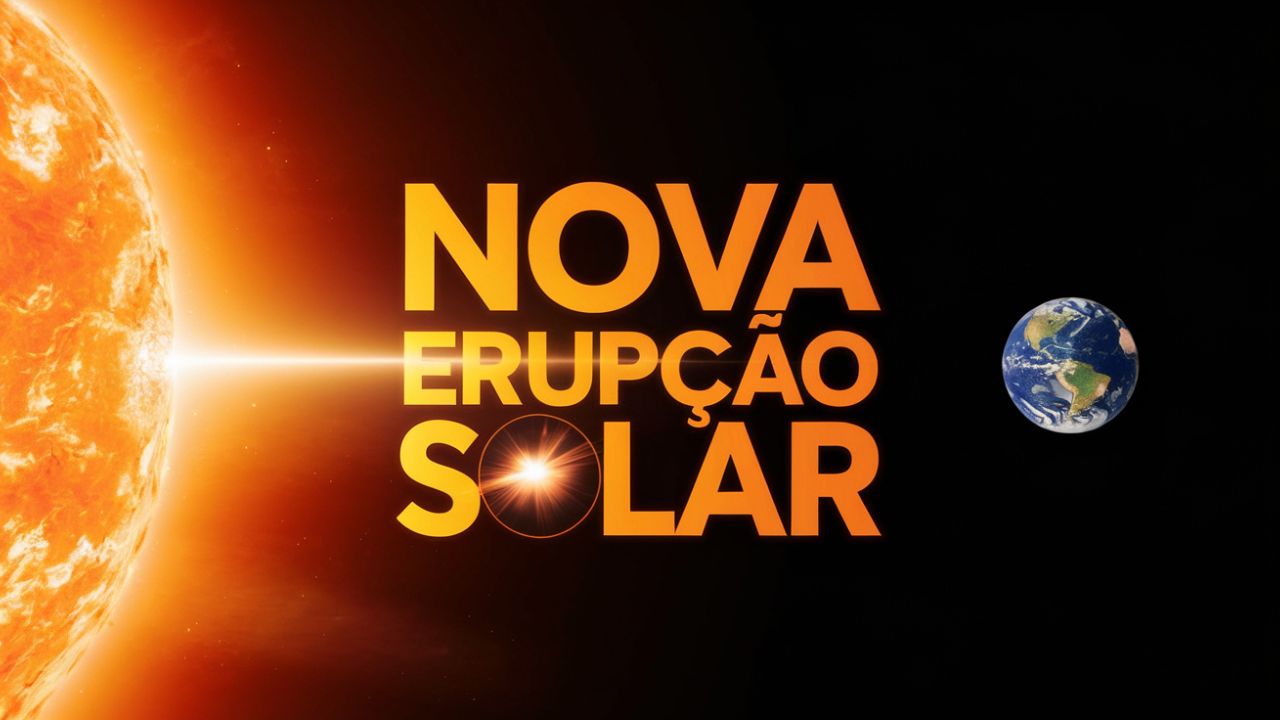


With speeds between 1,964 and 3,161 km/s, the Sun’s coronal mass ejection was recorded by NASA as one of the fastest ever seen and could reach Earth in less than 18 hours if it were directed toward the planet.
Coronal mass ejections, or CMEs, are like gusts of wind, but on a cosmic scale. Imagine the Sun as a boiling kettle: sometimes, it releases its stored energy in an explosion of hot plasma, mixed with magnetic fields. These explosions can be so fast and intense that they take only a few hours to travel millions of kilometers.
Understanding The Power Of The Sun
The Sun is much more than a bright ball in the sky. It is a true nuclear fusion engine, producing energy and spectacular phenomena like CMEs. This power is not just beautiful – it can also be dangerous.
Slow CMEs can take days to reach Earth, while fast ones, like the recently recorded event, would do it in less than 18 hours. This reduced time turns the event into a race against the clock for scientists.
-
In a flooded well, archaeologists found a 1,700-year-old Roman egg that still contains clear and yolk intact inside the very thin shell.

-
Something is happening around the Earth: Inside the huge explosion of fireballs in 2026

-
A hot air bubble coming from Argentina expands over Brazil, causing thermometers to exceed 38 degrees with a thermal sensation of 40 degrees in late March, affecting 6 states at once.

-
The radish leaf that almost everyone throws away has more polyphenols, flavonoids, and fiber than the consumed root, and a 2025 study showed that the leaf contains compounds that protect the intestine, combat inflammation, and may inhibit the growth of cancer cells.


The Last Recorded CME: A Rare Event
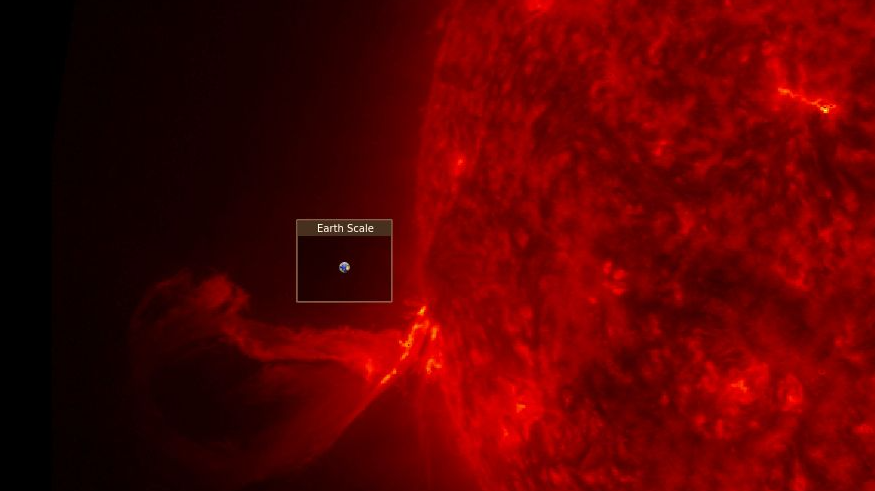
Last Tuesday (17), the Sun surprised scientists by launching an extremely fast CME, reaching speeds between 1,964 and 3,161 km/s. Fortunately, the event occurred on the Sun’s far side, away from Earth. But what if it had been directed here?
To put it into perspective, the average speed of a CME is usually much lower. An event like this is rare and signals intense activity on the Sun, which may generate even more explosions.
The side we don’t see may be hiding hyperactive sunspots, responsible for events like this. In the past 10 days, four CMEs have been recorded from that side, suggesting that something big is happening.
The Impact Of A CME Directed At Earth
If a CME of this magnitude were to hit Earth directly, it could cause severe geomagnetic storms. These events interact with the planet’s magnetic field, creating stunning visual effects, such as auroras, but also technological problems.
Storms can interfere with satellites, communications, and even electrical grids. Imagine losing GPS or facing widespread blackouts – that is the potential impact.
Our world depends on technology, and an intense CME could damage sensitive equipment. Energy and telecommunications companies are always alert to space weather to minimize risks.
Monitoring And Prevention: The Role Of NASA And ESA
Scientists have powerful allies: space telescopes and instruments like the Lasco coronagraph. This equipment, located at the Solar and Heliospheric Observatory (SOHO), captures detailed images of the Sun and helps predict the effects of CMEs.
Without Lasco, detecting and analyzing events like this would be like trying to predict the weather without looking at the sky. It is essential for space safety.
In addition to identifying eruptions, NASA and ESA constantly monitor the Sun, creating an “alert system” for solar storms. This allows governments and companies to take preventive measures.
What To Expect From The Sun In The Coming Days
Based on the increase in solar activity, the coming days may bring more CMEs, some potentially directed at Earth. Scientists believe an active sunspot may soon emerge on the Sun’s visible side.
If the sunspot is as intense as it seems, we can expect more rapid events. This requires heightened attention from scientists.
The Sun is both our ally and a potential adversary. While it gives us light and life, it can also send bursts of energy that challenge our technology. The good news is that scientists are vigilant, using cutting-edge tools to ensure we are prepared.






Isso realmente é verdade pela amor de Deus?
Isto poderá ser o apagão tão comentado os dias de hoje?
Isto mostra que todo o nosso conhecimento e poder sobre o que pode acontecer na terra é insignificante.
Quem controla o Sol?
Uma mínima atividade dele pode destruir a terra e toda a humanidade…
Examine a bíblia e isto poderá ser entendido.