





 Portuguese
  English
  Spanish
  5 min of reading


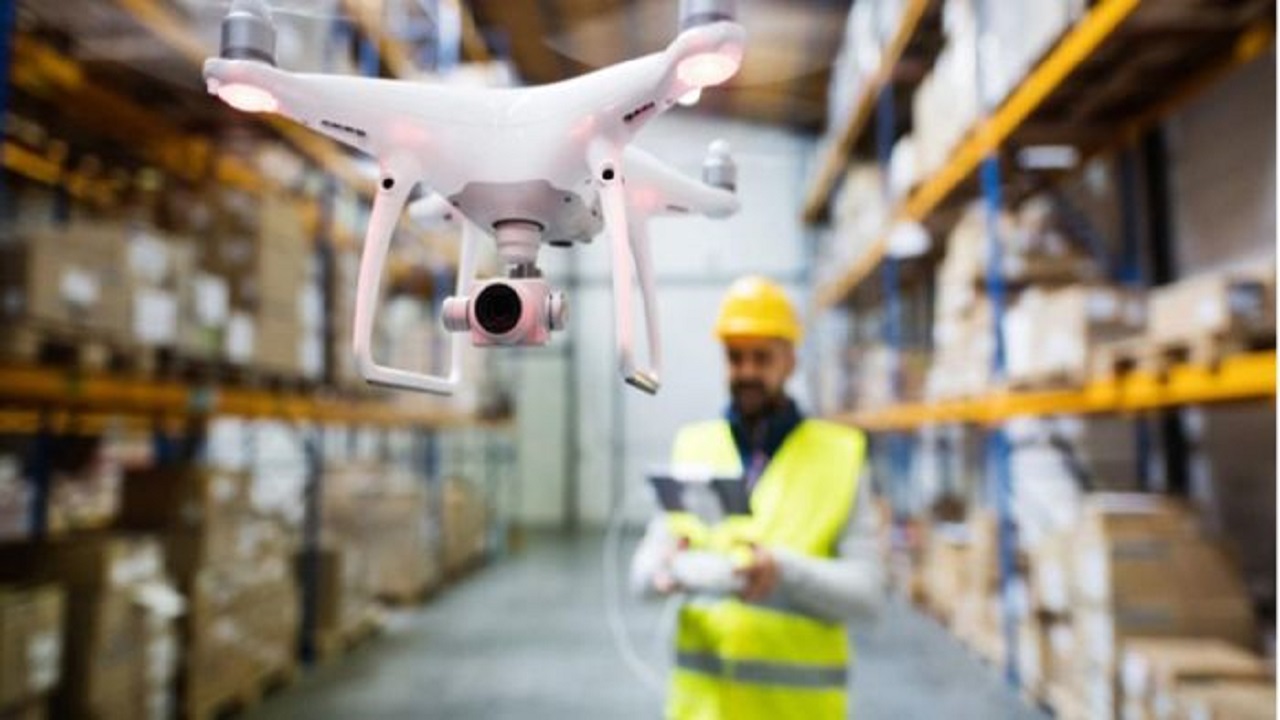
Companies Promise to Revolutionize the Way Industry 4.0 Manages Assets, Monitors Infrastructure and Predicts Failures in Operations Using Drones and Autonomous Robots
The Brazilian Solvian, a company providing environment and asset monitoring solutions with IoT sensors for Industry 4.0, and the multinational Percepto, a leader in autonomous monitoring solutions for industrial facilities via drones and autonomous robots, have just closed a partnership. With the agreement, Solvian will expand the scope of its monitoring software for environments, assets, and preventive machine maintenance, which will start predicting failures by receiving visual data from the air, collected by autonomous drones that do not require a pilot. This way, companies using the software will be able to receive alerts and predictive analyses in minutes from video and thermal images captured during a scheduled flight in hard-to-reach locations, where engineers would take weeks and could make mistakes analyzing with the human eye.
Read Other Related News
Daniel Vilas, General Director of Solvian, Speaks About the New Partnership
According to Daniel Vilas, the General Director of Solvian, the solutions of the two companies complement each other, and the synergy of the teams promises to accelerate the development and commercialization of products in a market with growing demand.
“Now, we can solve any monitoring need for any type of industry, even reaching prediction, which is being able to foresee that something will fail before it happens, whether on land, water, and now, along with Percepto, from the air.”
-
With 74% of companies facing difficulties in hiring, technicians and engineers in renewable energy are becoming scarce in Brazil and are essential to support the expansion of solar, wind, and green hydrogen projects.

-
The lack of welders, electricians, and operators becomes a structural threat in 2025, with the construction industry and manufacturing already suffering from delays, cost pressures, and labor shortages in Brazil.
-
Brazil and Paraguay are just 46 meters away from a historic union on the bioceanic bridge that promises to revolutionize trade between the Atlantic and the Pacific.

-
With 55 km over the sea, a cost of US$ 20 billion, and enough steel to build 60 Eiffel Towers, China’s largest project has connected Hong Kong, Zhuhai, and Macau in a colossal bridge that defies the logic of engineering.


The goal is to grow not only in service offerings but also in the customer base in Brazil and Latin America. “Currently with clients in Colombia, Argentina, and Costa Rica, our expectation is to double in size compared to the previous year”, says Vilas, who hopes to achieve at least R$ 14 million in revenue by the end of 2022.
The executive explains that the drones will not be sold separately but will be part of a SaaS (Software as a Service) model, managed by Percepto’s software. Industries will be able to use the application over the internet, paying for the service as an annual subscription.
“The companies hiring the service will be trained to operate the drone and robot systems, to schedule the rounds, to read the reports, always with full support from Solvian in Brazil. Support (level 1 and level 2) will also be provided by Solvian, as well as the maintenance of the drones and robots. When necessary, support from Israel and the United States will be escalated,” explains Vilas.
Drones Adapted for Industrial Activities
-
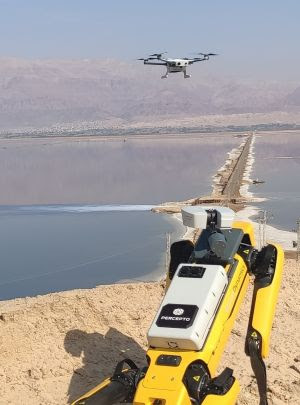
Partnership in Drones and Autonomous Robots for Industry 4.0 – Disclosure/Percepto -
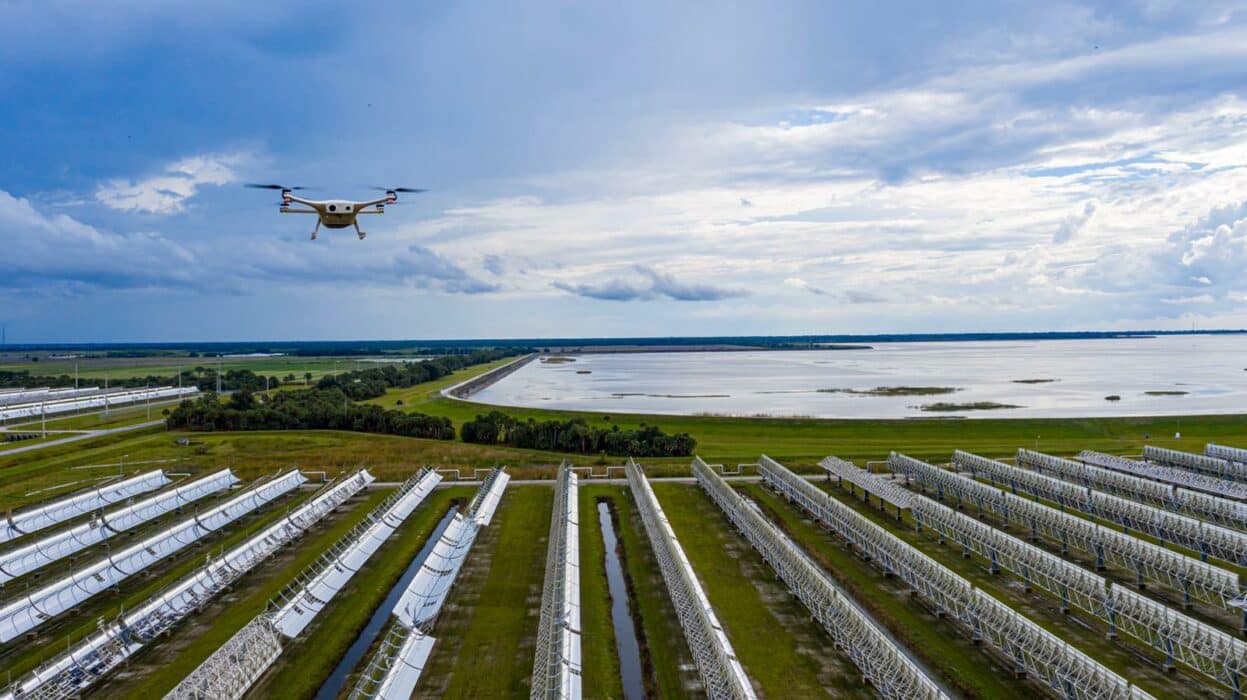
Partnership in Drones and Autonomous Robots for Industry 4.0 – Disclosure/Percepto -
Partnership in Drones and Autonomous Robots for Industry 4.0 – Disclosure/Percepto
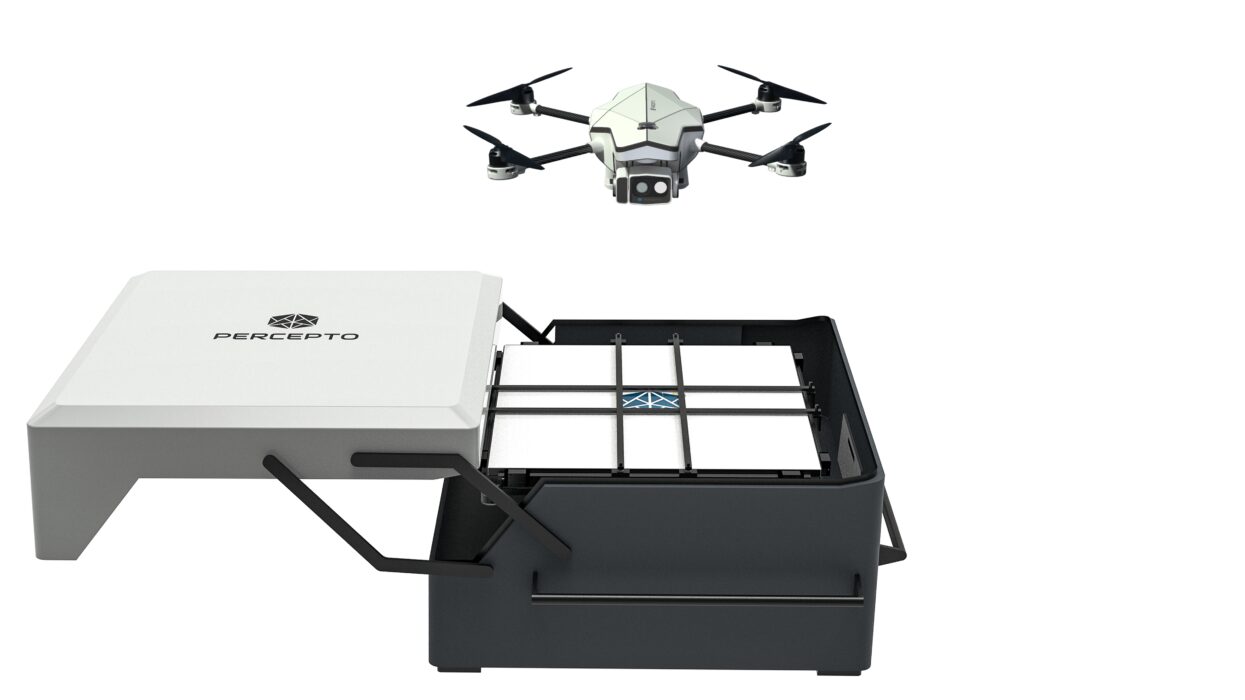
According to Dante Dominguez, Sales Director for Latin America at Percepto, as the drones are adapted for industrial activities, they fly over programmed locations and then return to a base, a kind of box that recharges the drone’s batteries by induction. “It’s different from a normal drone, which requires you to manually change the battery. Additionally, it transfers the images and collected data (both visual and from the thermal camera) to a gateway at the base, which sends the data to the cloud and goes to Percepto, where the analysis and processing of this data using artificial intelligence for report and BI generation takes place.”
“Managers or engineers receive alerts about the health of assets no matter where they are in the world. After being notified that a problem has been found and at which moment in the video it appears, the company can, for example, zoom in on that image and ascertain that if they do not perform maintenance, a replacement, or another type of repair, within six months or a year they could have a bigger problem. This is the great advantage of the software. It performs analysis and prediction with machine learning and not only delivers images or videos to be analyzed by the human eye, as is the general public’s idea about drones,” clarifies Daniel Vilas.
Growing Market
According to Droneii, a research specialist, Brazil will drive the growth of the sector in South America – the country will remain the largest in the region and is expected to grow by 11.3% annually between 2021 and 2026, a rate higher than major markets such as the United States (6.8%) and China (9.7%). Among the three segments of this sector – services, hardware, and software – the most prominent is services, which is expected to reach annual revenue of US$ 32.2 billion in 2026, representing 79.3% of the market. The sector that will most use drone services is Energy. Today, it is already the main user and will continue to be so in the coming years, followed by Construction, Agriculture, Transport, Internal Logistics, and Storage.
The Florida Power & Light Company (FPL), one of the largest energy supply companies in the U.S., for example, uses Percepto’s technology to inspect its electricity distribution network, says Dante Dominguez. The drone can detect thermal anomalies up to 3 meters deep, underground. When it comes to electricity transmission towers, the drone can fly over the junction of the wires between the towers and identify through the thermal camera whether the wires are connected correctly or not, or if they are short-circuiting.
This way, it is possible to prevent, for example, a wire rupture, a power outage, and the company can perform preventive maintenance in that environment. The goal of analyzing the data is always to prevent unexpected downtimes, inactivity, meaning the company is achieving a more effective, efficient, reliable, and profitable use of its assets.
Percepto System
According to Dante Dominguez, from now on, companies with any monitoring device will be able to integrate with the Percepto system. “Assuming a company has a fixed camera connected to inspect a specific industrial area, or another monitoring device, Percepto can take the information from this camera, or any device, or robot, or even images filmed with a cell phone, and insert all of this into the Percepto software database. By uniting the information, it is possible to generate a 3D model, analyzing that area from all points of view.”
In addition to its own offices in Israel, Germany, Australia, and the U.S., Percepto, which recorded revenue of US$ 45 million in 2020, has representatives in Europe, Asia, and in Latin American countries such as Mexico, Chile, Argentina, Peru, and Colombia.
“The sector has enormous potential, and Solvian’s technological capacity in software and sensors will further contribute to our ambition to expand the boundaries of industrial automation worldwide,” says Shykeh Gordon, Global Sales Vice President at Percepto.









Seja o primeiro a reagir!