





 Portuguese
  English
  Spanish
  2 min of reading
  0 comments


British Startup Develops Orbital Platform for Manufacturing in Microgravity and Estimates Generation of Up to £45 Million per Kilogram Manufactured
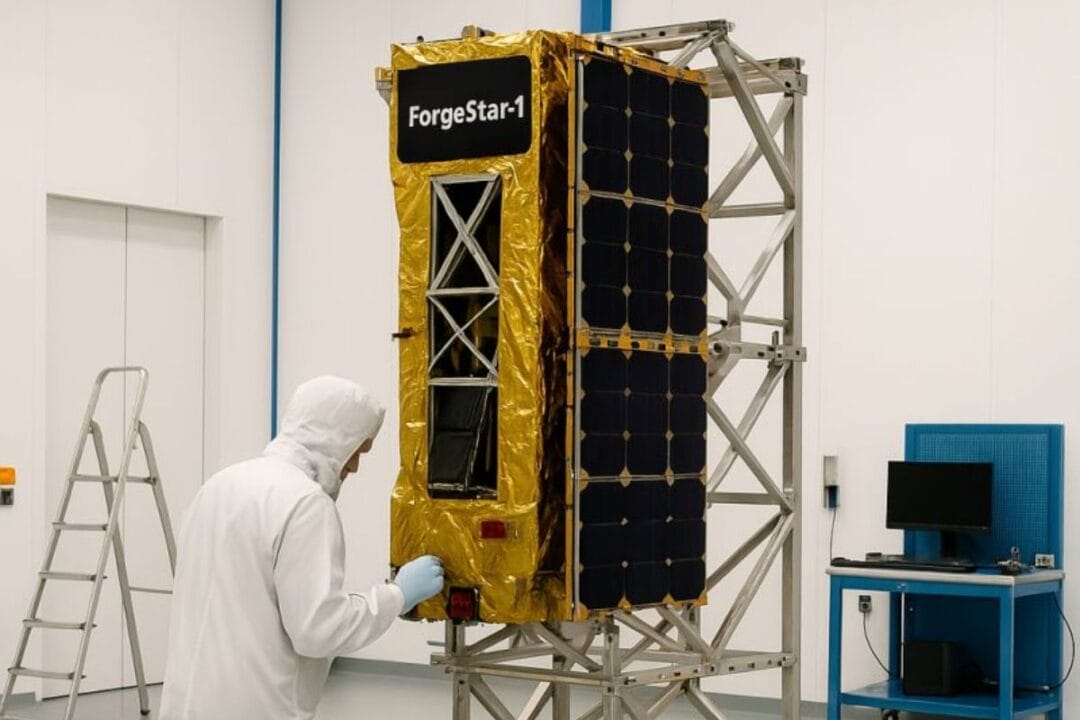
The startup Space Forge, based in Cardiff, United Kingdom, is about to launch a project that could transform the global industry. With the launch of ForgeStar-1, the company aims to start the production of semiconductors in microgravity, with 50% more efficient energy consumption compared to any similar component produced on Earth.
The mission will be carried out with support from SpaceX, and the recovery of materials will take place off the coast of the United States. The project showcases the potential of a new industrial revolution in orbit, even though the British ecosystem still does not fully support scaling initiatives of this magnitude on home soil.
Space Forge Bets on Microgravity to Manufacture Cutting-Edge Technology
The major differentiator of the Space Forge project lies in the unique conditions of space. In microgravity, industrial processes such as melting, solidification, and material deposition can be optimized so that more precise and pure molecular structures are formed. This results in products with superior performance, especially in areas such as electronics, telecommunications, and renewable energy.
-
Submarine cables installed to transmit the internet now also help scientists detect earthquakes.

-
After so many blackouts, a family transforms an electric truck into a power source for their home and shows how a 100 kWh battery can keep everything running for days.

-
Ukraine is already testing, and China has already shown the world, and now the Brazilian Army is developing its own swarm of autonomous drones with artificial intelligence that share data in real time and operate without centralized control, uniting military and universities.

-
Few people know, but the most nutritious part of wheat has been discarded for decades to produce white flour, and the “polyamine” spermidine activates cellular cleaning, reduces mortality, and may slow down memory loss.


The ForgeStar-1 is a reusable manufacturing platform in low Earth orbit (LEO). It will be equipped with automated systems to produce high-value components, such as semiconductors and advanced composite materials.
The return of the products will be conducted through a safe reentry and landing system, enabling the recovery and reintegration of materials directly into the terrestrial market.
Space Semiconductors Could Be Worth £45 Million per Kilogram
Feasibility studies indicate that semiconductors manufactured in a space environment could reach market values of up to £45 million per kilogram. This is due to the energy efficiency, structural purity, and superior thermal performance these materials offer.
Space Forge has already attracted the attention of investors and aerospace industry experts, positioning itself as one of the few companies in the world capable of combining orbital manufacturing and payload return autonomously.
United Kingdom Still Does Not Provide Local Scale for the Project
Despite the technical success and ambition of Space Forge, the startup has had to transfer strategic operations to the United States. The launch will be carried out by SpaceX, and the recovery of products will occur off the American coast, highlighting the lack of orbital infrastructure and commercial risk in the United Kingdom.
This situation raises the debate about the future of innovation in the country. If startups with global transformative potential continue seeking support abroad, the United Kingdom risks losing prominence in the new commercial space race.





Seja o primeiro a reagir!