





 Portuguese
  English
  Spanish
  3 min of reading
  3 comments


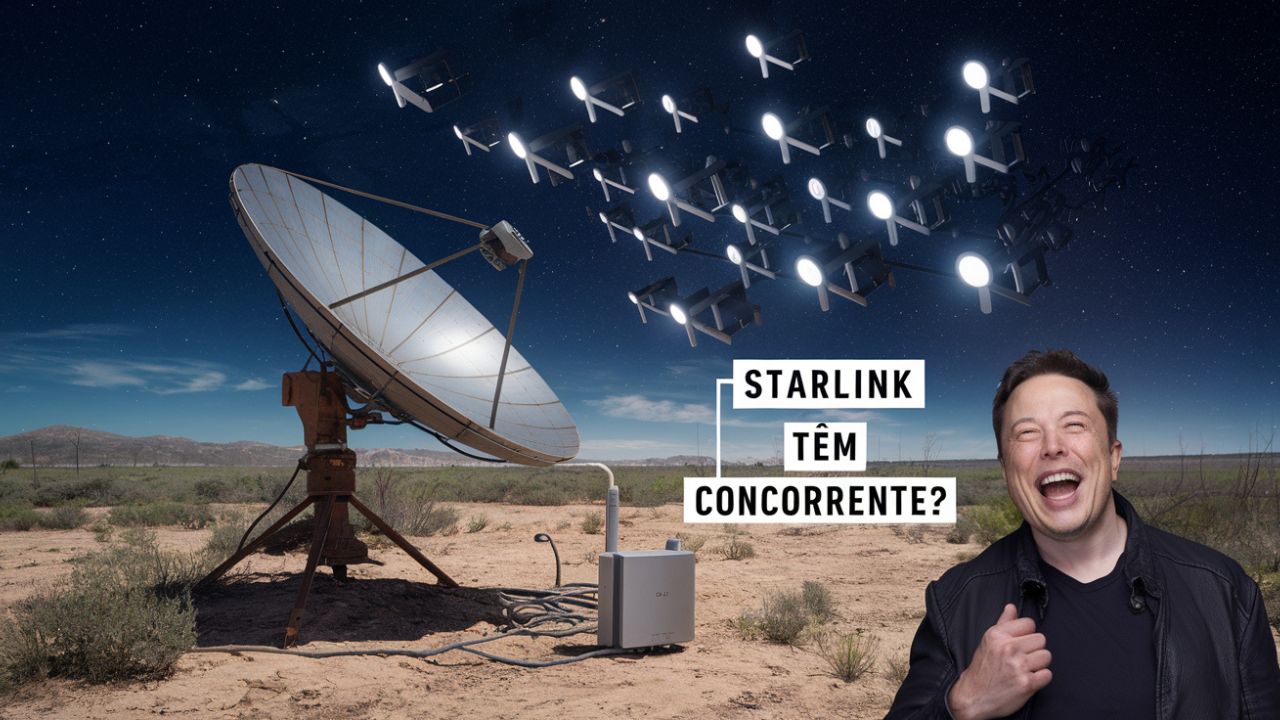


With Satellites 35,000 Km from Earth and Technology Used in Subscription TVs, the “Kulisa” Tries to Compete with Elon Musk’s Starlink, Which Operates with Over 4,500 Satellites in Low Orbit.
Belarus has entered the race to dethrone Elon Musk’s Starlink, or at least that’s what they claim. A new system, called Kulisa, has been presented as a “competitor” to the revolutionary satellite internet technology. But is it really all that? Let’s understand the context and discover what’s behind this novelty.
The Scenario Behind Belarus and Alexander Lukashenko
Alexander Lukashenko is a curious figure. President of Belarus since 1994, he is known for his authoritarian stance and for aligning with Vladimir Putin’s government. Under his leadership, Belarus has become one of the most isolated countries in the world, with strict media control and repression of dissenting voices.
With the onset of the war in Ukraine, Lukashenko followed Putin’s playbook. Although Belarus has not directly entered the conflict, the country acts as a strategic ally of Russia. An example of this is the use of Belarusian territory as a base for Russian nuclear weapons. And now, the focus is technological: to enter the competition with Starlink, which has been vital for Ukraine.
-
Remains with battle wounds of over 100 soldiers from the Roman Empire are found beneath a football field in Vienna, leaving everyone surprised.

-
Elon Musk notes Brazil and lowers the price of his internet, Starlink, promising to connect all corners of the country with affordable plans, 10,000 satellites, and 1 million active users in the national territory!
-
Man creates an infinite source of FREE electricity at home with a PVC wind turbine using a repurposed motor.
-
An aquatic seed consumed for centuries in Asia is going viral in the West after studies highlighted its antioxidant compounds and potential anti-inflammatory properties. It pops like popcorn, has low fat content, and is already being called the new functional snack.


Elon Musk’s Starlink: The Connection That Changed the Game
Since the beginning of the war, Starlink has proven to be a game changer. While traditional satellite communication systems were hacked, Elon Musk’s technology kept Ukraine connected. This enabled communication between troops as well as control of drones on the battlefield, creating a significant strategic advantage.
Starlink operates with low earth orbit satellites, significantly reducing response time (ping). In contrast, geostationary satellites are over 35,000 kilometers high, causing delays that make them unfeasible for applications such as drones and real-time communication. This technological difference is what keeps Starlink ahead.
Kulisa System
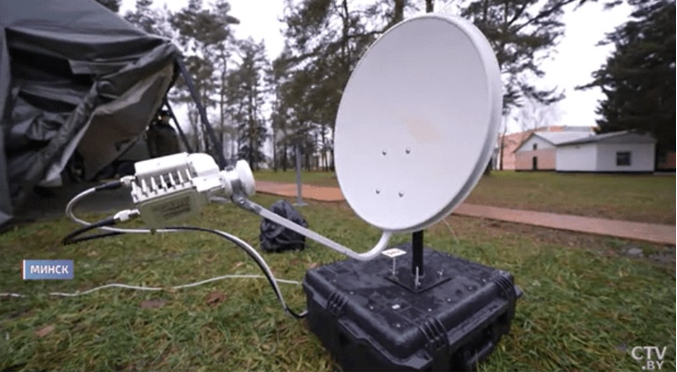
The Kulisa system, announced by Belarus, promises to be a local alternative to Starlink. But, in practice, it uses geostationary satellites, the same technology model that has existed for decades. The equipment presented includes a Ku-band antenna, similar to those used in subscription TVs, and a portable battery to keep it running.
The difference between the two systems is stark. While Starlink is capable of operating in motion, whether on drones or ships, Kulisa relies on a fixed and directional connection. Furthermore, Kulisa’s response time is extremely high, making it unfeasible for modern applications.
The Reality Behind the “Belarusian Starlink”
Kulisa seems more like a propaganda stunt than a real solution. The system presented is not capable of competing with Starlink, either in terms of technology or reach. It’s like comparing a bicycle to a Formula 1 car: both have wheels, but the similarity ends there.
In authoritarian regimes like Lukashenko’s, the media is used as a propaganda tool. The presentation of Kulisa was widely publicized as a technological milestone, but without any critical analysis. This raises a red flag: how far can we trust information coming from countries with restrictions on press freedom?
In the end, Kulisa is far from being a real threat to Elon Musk’s Starlink. While Belarus tries to position itself as a technological powerhouse, the lack of infrastructure and innovation limits the reach of its ambitions.





erm… I think you mean to say 35.000km. …
Uso em meio a uma floresta longe de cidades ,a mais próxima 100km de distância.
Nunca, nunca mesmo, fiquei sem net.
Starlink salvou os negócios escolas e socorros quando necessários.
Um está em órbita por anos o outro cai quase todos os dias e tem que repor o tempo todo.