





 Portuguese
  English
  Spanish
  6 min of reading
  0 comments


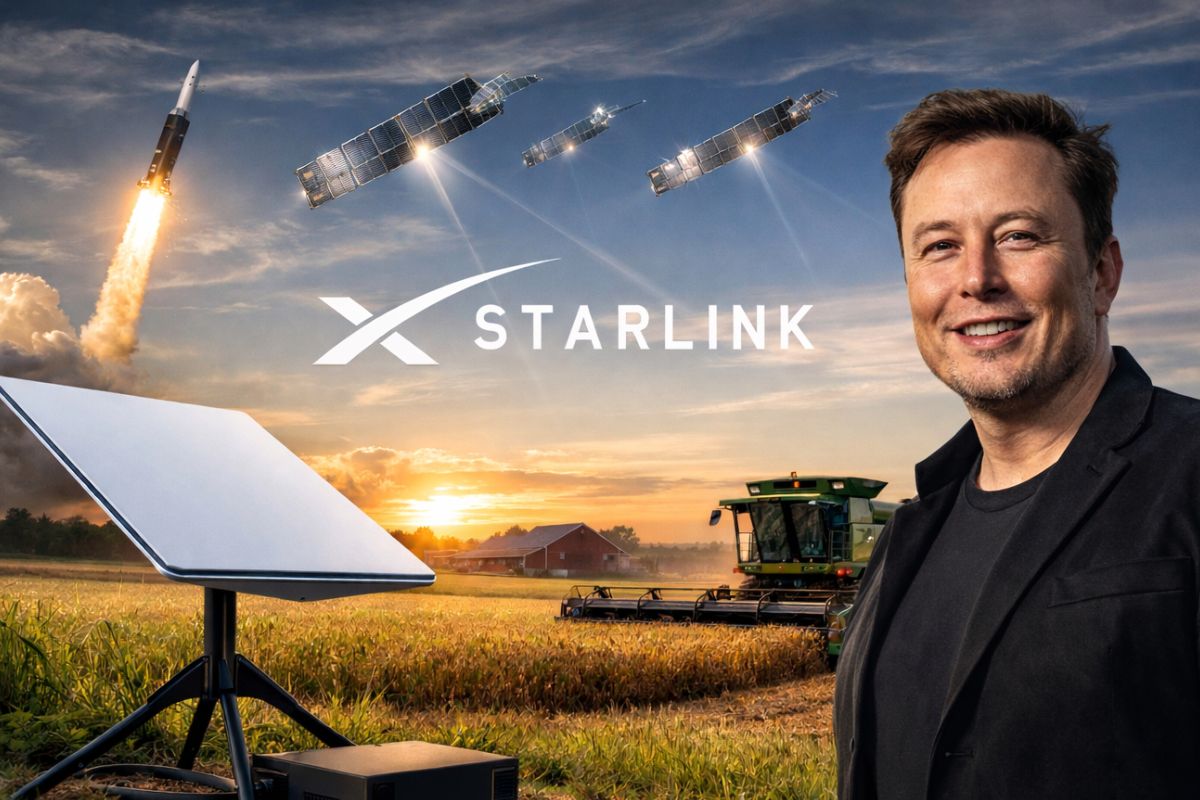
Starting February 2026, Starlink Launches a Promotion in Brazil for Agriculture: 25% Discount on the Family Residential Plan, Second Mini Kit at No Cost for Relatives or Other Properties, and 12-Month Commitment Focused on Stable Connection from the Barn to the City in More Addresses
Connectivity in the field enters 2026 with a proposal that directly addresses the routine of those who live between the farm and the city. Starlink is launching a promotion in Brazil for the Family Residential plan, with 25% off the monthly fee and the inclusion of a second antenna kit for free, usually the Mini model, designed for a relative or a second property.
The move targets a common profile in agribusiness: families with more than one usage point, whether the urban headquarters, the countryside house, the active farm, or support areas in different municipalities. The promise is clear in practice: reduce the barrier to maintain stable connection at two addresses, something that currently weighs on management, monitoring, and digital marketing.
What the Promotion Changes in Practice and Who Is Targeted
The offer comes into effect starting February 2026 and focuses on the Starlink Family Residential plan.
-
Motorola launched the Signature with a gold seal from DxOMark, tying with the iPhone 17 Pro in camera performance, Snapdragon 8 Gen 5 that surpassed 3 million in benchmarks, and a zoom that impresses even at night.

-
Satellites reveal beneath the Sahara a giant river buried for thousands of kilometers: study shows that the largest hot desert on the planet was once traversed by a river system comparable to the largest on Earth.

-
Scientists have captured something never seen in space: newly born stars are creating gigantic rings of light a thousand times larger than the distance between the Earth and the Sun, and this changes everything we knew about stellar birth.

-
Geologists find traces of a continent that disappeared 155 million years ago after separating from Australia and reveal that it did not sink, but broke into fragments scattered across Southeast Asia.

The design is straightforward: discounted monthly fee and a second device at no cost, creating a package that favors those who need two active points instead of a single fixed installation.
This focus makes sense for those who split their routine between properties, or for families where a relative lives at another address and needs similar connectivity.
In rural areas, where alternatives can be limited, the “second kit” becomes more than a detail; it becomes a strategy, as it expands reach without requiring a new hardware purchase right away.
How Much It Costs and How the Discount Affects the Cost per Point
According to the prices reported for Brazil, Starlink maintains two residential options as a reference: the Residential Plan for R$ 236/month and the Family Residential Plan for R$ 354/month, associated with the discount and the free Mini kit as a second device.
The main point here is not just the full price, but how the cost is distributed when there are two usage locations.
Dividing the family plan between two installation points, the approximate cost comes to R$ 177 per antenna/month, making the individual rate more competitive for those who would otherwise need to hire and equip two separate addresses.
It is precisely in this daily calculation that the promotion gains strength: the discount shows up in the monthly budget and the extra kit reduces the initial investment in the second location.
The Free Starlink Mini Kit as a Second Device and Why This Matters
The Starlink Mini kit is described as a compact and portable device, with a self-aligning antenna, built-in Wi-Fi router, and complete cabling, allowing installation without a technician.
The list price cited for the Mini is around R$ 999, which helps explain why “getting the second kit” becomes an immediately perceived differentiator.
For agriculture, this aspect connects with real logistics: temporary properties, remote structures, and locations with more difficult access.
The idea of “installing and using” reduces dependence on scheduling and travel, and the portability of the Mini tends to fit situations where infrastructure changes locations, such as accommodations, support headquarters, or areas that only receive teams at specific times.
What Remains in Any Plan and Where Technical Discourse Matters
Regardless of the plan, the offer describes a package of features that are consistent: plug and play setup, unlimited data, weather resistance, availability over 99.9%, and 30 days of testing, with the possibility of cancellation and full refund during this period.
For urban consumers, this may sound like a standard promise, but in the field, the stakes are different.
In rural areas, the routine includes dust, heavy rain, and frequent weather variations, along with long distances for onsite support.
Therefore, when discussing resistance and availability, the conversation shifts from “convenience” to operational continuity: having a connection that remains active influences everything from basic communication to processes that depend on constant data transmission, especially where fiber optics still do not reach easily.
12-Month Commitment and What to Consider Before Signing
The most sensitive point of the promotion is the requirement for a minimum commitment of 12 months.
This rule changes how to compare plans, as it shifts from just “how much do I pay per month” to including “how long do I commit,” something that weighs on families who alternate usage between farm and city throughout the year.
In the case of early cancellation, the information associated with the offer indicates the possibility of proportional charging for the equipment provided for free, with amounts decreasing over time that can reach approximately R$ 1,680 at the start of the contract, according to market reports cited in the base. This does not invalidate the promotion but requires careful reading: the free kit is not exactly “without conditions” when there is commitment and a rule for compensation for early exit.
Why Starlink Targets Agriculture and What Connectivity Supports in Daily Life
The Brazilian countryside already views connectivity as part of property operations, not as an extra. The very logic of the promotion suggests this by focusing on families with multiple addresses, a common profile in rural areas and agribusiness chains.
When the connection works well, it supports routines such as telemetry and machine monitoring, use of livestock and agricultural management apps, sending data from weather stations, operations with drones and satellite images, as well as real-time negotiation and integration with banking systems and rural credit.
The detail is that these tasks rarely happen in a single location: there is the headquarters, the farm, leased areas, support points, and often, the house in the city.
This is where the family plan naturally fits, as it attempts to solve a simple and costly problem: keeping two routines connected without doubling the hassle of purchase and installation.
Strategy in Brazil and How to Check Availability Without Surprises
The promotion also fits into a scenario of expansion. The data indicates that Brazil has already surpassed 1 million subscribers and has established itself as the second largest market for Starlink in the world, behind only the United States.
A discounted offer with a commitment aims for two simultaneous goals: to accelerate subscriptions and to retain the customer base for a minimum period.
Another relevant detail is that the promotion has been directed at selected customers via email and new subscriptions to the Family plan, suggesting a controlled expansion.
To subscribe, the guidance is to access the official Starlink portal and check availability by region on the coverage map, reviewing the conditions directly, as offers may vary by audience and locality.
The Starlink promotion starting February 2026 aims to transform a typical challenge in agriculture into a more predictable package: two connection points, a reduced monthly cost, and a second Mini kit without immediate purchase, in exchange for 12 months of commitment and clear rules for those who exit early.
For those who need to stay connected at more than one address, the proposal may sound less like a “promotion” and more like an infrastructure adjustment for the routine between farm and city.
And in your reality: do you currently depend on the internet for which tasks on the farm, and what else gets stuck when the signal drops?
If you had two addresses to keep connected, would you take 12 months of commitment to reduce the monthly cost, or would you prefer to pay more and maintain complete freedom of cancellation?








-

-

-

4 pessoas reagiram a isso.