





 Portuguese
  English
  Spanish
  4 min of reading
  0 comments


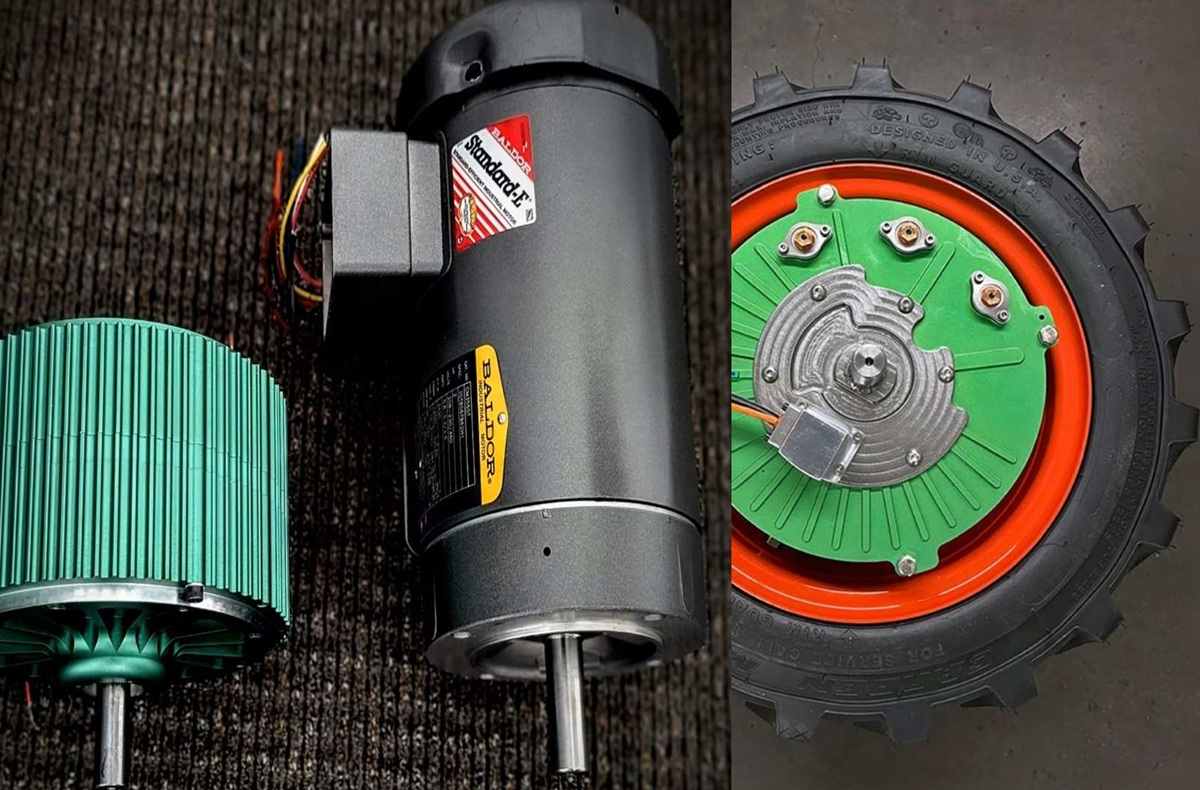
A California Startup Could Be Changing The Rules Of The Electric Industry By Completely Eliminating Rare Earths From Its Electric Motors. With A Simple, Cheap, And Scalable Proposal, The Company Bets On Iron Magnets And A Disc-Shaped Design To Reduce Costs And Dependence On China.
The global dependence on rare earths has always been a strategic problem for the industry. But a California startup may be changing this scenario with a bold and functional proposal: electric motors without rare earths, cheaper and scalable.
Focus On Rare Earth-Free Motors
Conifer Motors, based in California, has developed an innovative technology that completely eliminates the need for elements such as neodymium, dysprosium, and terbium — minerals widely used in electric motors, but almost exclusively controlled by China.
The startup’s proposal is clear: replace rare earths with iron ferrite magnets, an abundant and cheap material.
-
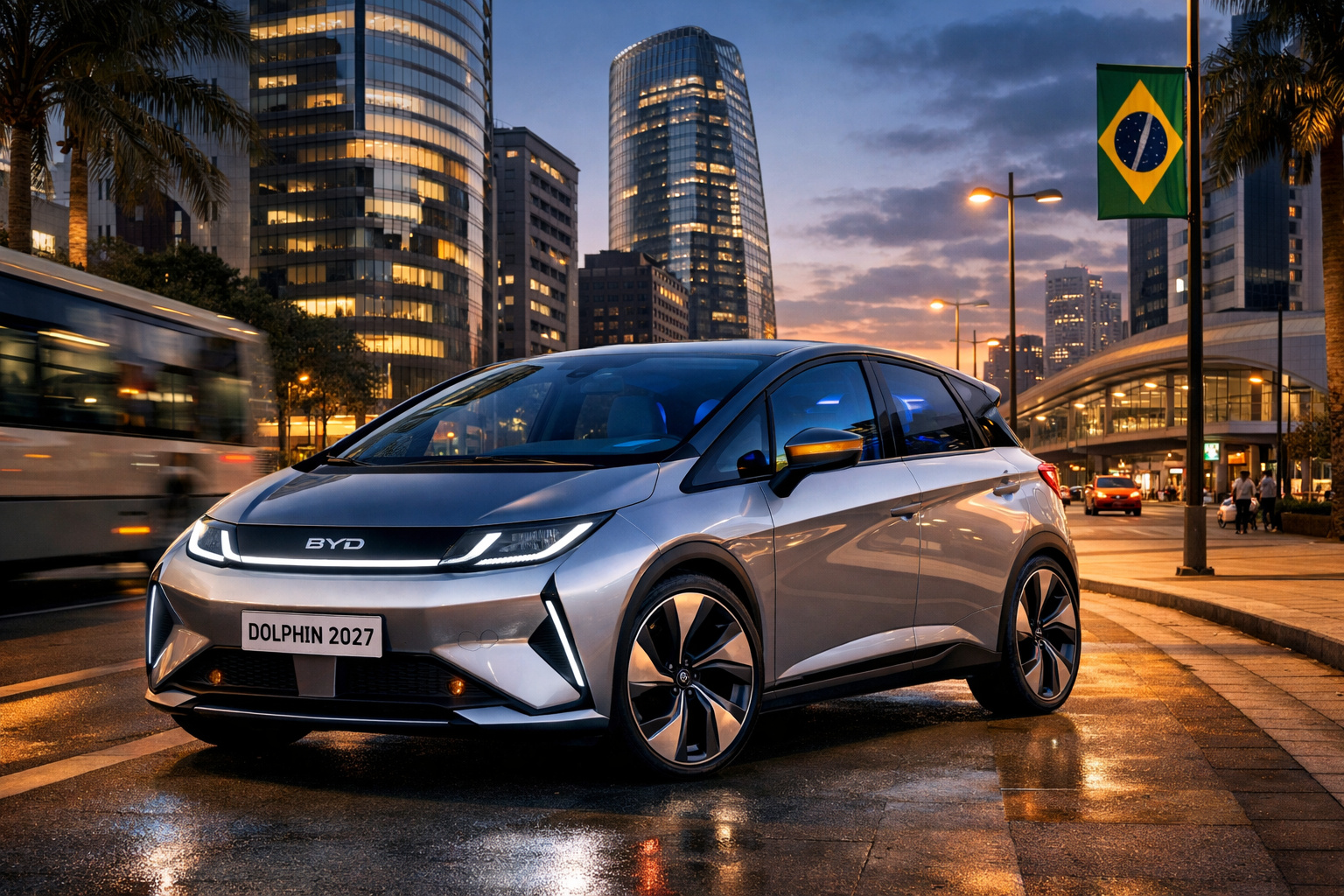
BYD Dolphin 2027 gains more power, increases in size, changes interior, and abandons controversial feature to face new competition in Brazil.
-
The German economist Wolf-Peter Schill has no doubts: “Electric cars are already far superior to cars with internal combustion engines.”

-
Largest public charging network in Brazil: BYD reaches 125 fast chargers and accelerates national expansion of electric mobility.
-
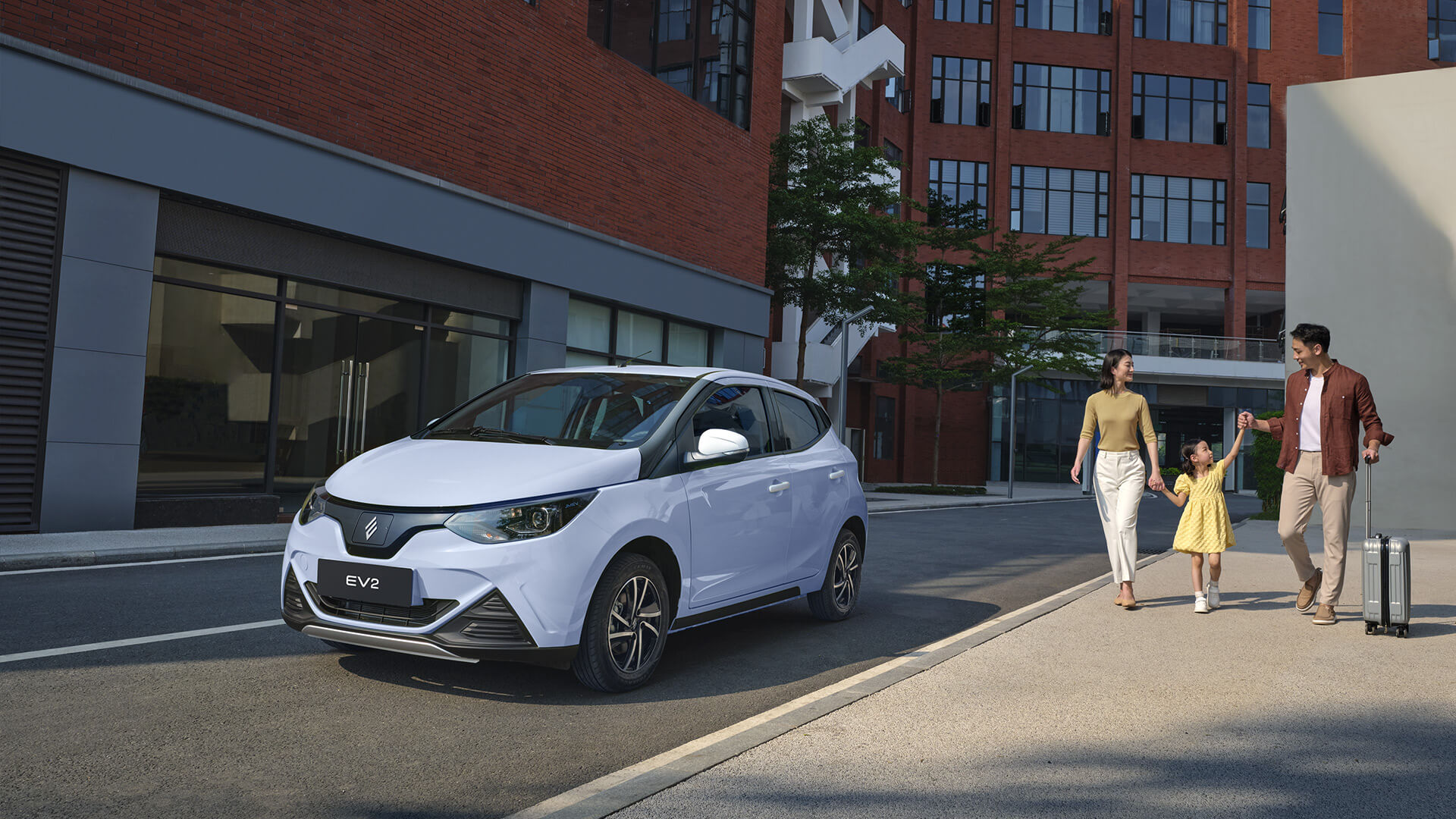
Goodbye expensive popular car: electric vehicle for less than R$ 70,000 starts being sold in Brazil with a range of 200 km and targets those looking to escape gasoline.

This makes the motors less dependent on international supply chains and much easier to manufacture locally.
Disc-Shaped Design And Axial Flow
The secret of Conifer lies in the adoption of an axial flow design. Unlike radial motors — which are the most common — the axial flow motor has a disc shape. This allows the magnetic flow to move along the axis, generating more torque in less space.
For a long time, this model was considered unfeasible. There were issues with heating, complex assembly, and lack of precision.
But recent advances in thermal management, composite materials, and precision machining have made the design viable.
Conifer seized this opportunity to develop motors that work with ferrite magnets, even though they are less powerful.
To compensate, the company adopted a smart design, positioning more magnetic mass away from the axis and taking advantage of the so-called “flywheel effect.” This ensures competitive performance in various applications.
Practical Applications For Light Vehicles And Equipment
The Conifer proposal does not target the premium electric car market, such as those from Tesla or Rivian. Instead, the focus is on sectors where extreme performance is not a priority, but rather cost, simplicity, and local production.
The motors from Conifer range from 0.75 to 18.65 kilowatts. This makes them ideal for equipment like industrial fans, power tools, pumps, compressors, and light vehicles — scooters, delivery carts, and even electric quadricycles.
Additionally, the design allows the motors to be integrated directly into the wheels, eliminating axles, differentials, and other mechanical components. This reduces weight, energy consumption, and maintenance costs.
Local Production And Innovative Assembly Technique
Another differentiator for Conifer is the manufacturing process. Instead of the traditional winding of motors — which can be manual or require complex machines — the company adopted a model inspired by battery assembly.
They use flat stacked windings, which are easily automated. This approach allows for a reduction of up to 90% in winding costs and a flexible assembly line. The same line can produce motors of different sizes without needing to be reconfigured.
This practicality translates to less material waste, lower energy consumption in production, and greater industrial resilience. Practically, it means that a factory can be set up anywhere with access to steel and basic technology.
Limitations That Do Not Compromise The Goal
Despite the advantages, Conifer motors also have disadvantages. Ferrite magnets, for example, do not reach the same power as rare earth magnets. Thus, these motors are not suitable for high-performance cars.
Another point is the use of motors in the wheels. This adds unsprung mass to the vehicles, which can affect ride quality on uneven terrain. Even so, in urban contexts or industrial applications, this is not a significant issue.
The important thing for Conifer is to offer a solution that is practical, functional, and scalable without relying on expensive or hard-to-obtain materials.
Direct Impact On Decarbonization And Reindustrialization
Conifer’s technology can bring relevant changes in specific sectors. With more accessible motors, it is possible to accelerate the decarbonization of industrial equipment and light vehicles.
Urban delivery companies, for example, can electrify their fleets without relying on imported or expensive components. Instead, they can adopt a low-cost local production solution.
Moreover, Conifer’s approach favors reindustrialization. Since manufacturing does not depend on strategic raw materials, new factories can be established in different regions, with autonomy and low cost.
Open Path To New Possibilities
Conifer’s proposal does not aim to solve all the problems of the electric industry. But it opens the door for practical, scalable, and realistic solutions.
Among the strengths of the technology:
- Reduction of dependence on China in providing rare earths.
- Lower production and maintenance costs.
- Simple and efficient design.
- Possibility of electrification in areas previously unserved.
- Flexibility for local factory installation with lower investment.
Final Relevant Information
Conifer shows that it is possible to innovate with simple materials and intelligent design. By removing rare earths from the equation, the company challenges the traditional logic of the industry and offers an alternative path for the energy transition.
Whether in an industrial fan or a delivery scooter, these motors demonstrate that good ideas do not require rare materials — only a creative and well-executed approach.









Seja o primeiro a reagir!