





 Portuguese
  English
  Spanish
  5 min of reading
  21 comments


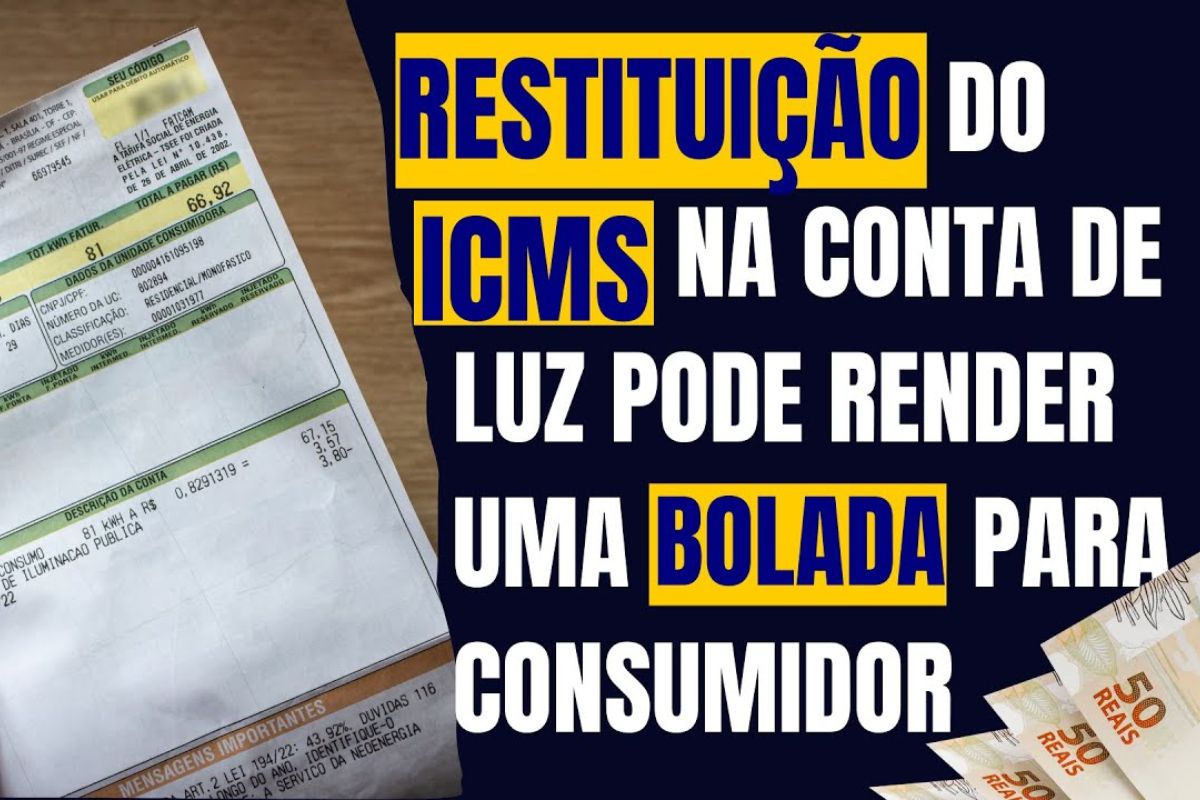


Decision in ADI 7324 Consolidates the Refund of ICMS in Electricity Bills, Establishes a 10-Year Period to Discuss Values, and Authorizes Distributors to Deduct Taxes and Specific Fees When Refunding, Structuring How the Refund of ICMS to Consumers Will Be Carried Out
The Refund of ICMS in electricity bills was defined by the Supreme Court in the judgment of ADI 7324, with a direct impact on residential and business users. The established thesis ensures the refund of amounts charged incorrectly and sets clear deadlines for counting, in addition to regulating how distributors must operationalize the settlement with consumers.
At the center of the case is how the ICMS was considered in the calculation base and passed on to the final user. The decision affirms the right to recover what was charged in excess and organizes the procedure, including the decadal deadline and the hypotheses for deduction by the concessionaires when carrying out the refund.
What Exactly Did the STF Decide in ADI 7324
The Plenary judged the action and gave an interpretation in accordance with Law 14.385/2022 to regulate the refund of ICMS in electricity bills.
-
The Senate approves a bill that criminalizes misogyny, hatred, or aversion towards women, and includes the crime in the Racism Law with a penalty of up to 5 years.

-
Chamber Approves Bill That Allows Pepper Spray for Women Over 16 and Imposes Strict Rules for Purchase, Possession, and Use as Self-Defense

-
Chamber Approves Law to Combat Leucaena, Fast-Growing Plant That Dominates Land and Threatens Native Species in Various Regions of the Country

-
Asset Division: Know What Cannot Be Divided in Case of Divorce


In practice, the Court confirmed that amounts charged as ICMS, classified as undue, must be refunded to the consumer by the distributors.
The decision also details the destination of the refunded tax overpayments.
The court allowed that, when refunding ICMS, the concessionaires can deduct taxes applicable to the refund operation and the specific fees incurred to obtain the repayment of the overpayment.
This is a technical-accounting adjustment within the reimbursement process.
In general, any consumer who has borne the undue charge during the reference period can seek the refund.
This applies to individual bills and to units in the name of either individuals or legal entities, provided that documentation proving payment is observed.
The calculation base for the refund involves the amounts actually overpaid related to ICMS in the electricity bill.
The analysis is case by case and depends on the bills and payment records, as the refund targets what was actually charged incorrectly.
How the 10-Year Deadline Works
The STF set a 10-year deadline to discuss irregularities and claim amounts.
The counting may relate to the time of payment or to the final approval of offsets, when such a procedure occurs with the distributor, as described in the thesis of the decision.
This wide temporal horizon allows the consumer to gather the history of bills and proofs.
In practice, the decadal deadline organizes the window to demand the refund of ICMS and reduces uncertainties about the enforceability of credits over time.
When refunding the undue payment, the distributors can deduct taxes applicable to the refund operation, as well as specific fees related to obtaining the repayment of the undue payment.
These deductions do not eliminate the consumer’s right, but adjust the final amount based on parameters defined in the decision.
This point is relevant because it explains any differences between the initially calculated gross amount and the final amount to be received.
The logic is accounting and arises directly from the organization given by the STF to the flow of the ICMS refund.
Documentary Step-by-Step for the Consumer
The first step is to gather invoices and payment receipts from the period within the 10-year deadline.
If you do not have the documents, you can request the history from the distributor; if denied, a document production action may be necessary to officially obtain the old bills.
With the data in hand, the consumer can check where ICMS was highlighted and calculate how much was charged in excess.
Spreadsheets and verification methods based on invoice items help estimate the amount to be refunded, always remembering that the final verification depends on documentation and the criteria defined in the decision.
The STF recorded that amounts received in good faith by the consumer will not be subject to repayment.
In other words, there is no reverse refund when the consumer received excess amounts under these conditions, which provides predictability and legal security for those seeking reimbursement.
Another precaution is to avoid expectations outside the scope of the decision.
The refund of ICMS follows technical and legal parameters established in ADI 7324, so that the calculation must reflect exactly what was unduly charged and what can be deducted by the distributors at the time of refund.
Practical Impacts and Next Steps
The organization of the subject by the STF creates a standardized roadmap for distributors and consumers, reducing disputes about the proper procedure and deadlines.
The refund of ICMS now enters a phase of application focusing on documentation, calculations, and verification, respecting the authorized technical deductions.
For the consumer, the main effect is to have clarity regarding rights, deadlines, and steps.
For companies, the decision aligns procedures and mitigates fragmented disputes, within a schedule that tends to be executed case by case as requests are presented.
The refund of ICMS in electricity bills, as structured by the STF in ADI 7324, combines guarantees of refund with rules for counting deadlines and specific deductions, offering a clear operational path.
The result is greater predictability for the consumer and a settlement process guided by clearly defined legal criteria.
In your assessment, should the refund of ICMS preferably be made through automatic compensation in the next bills or through direct payment after documentary verification? Have you requested the history of bills from the distributor or needed to file a document production action to obtain old invoices? What were the difficulties and the outcome? Share your experience in the comments to help those in the same process.








Não se trata de devolução de ICMS. Mas sim, devolução de PIS/COFINS diante da exclusão do ICMS da base de cálculo do PIS e COFINS. A maneira correta é solicitar a distribuidora um extrato dos últimos dez anos da sua unidade consumidora para verificar qual valor e se algum valor já foi restituído com base na legislação 14385/2022.
Se o valor a restituir se refere a ICMS recolhido, pq se pede devolução às companhias de energia e não ao governo do estado?
Tem q entrar na justiça por algo feito indevidamente pelas empresas??, não seria nós q temos q correr atrás, deveria ser a própria empresa fazer os cálculos e devolver. Se foi decretado q há erro, pq entrar via judicial. Desculpa mas palhaçada. E mais gastos pra entrar na justiça.
Ai depende a aneel já regulou isso e vai abater de tarifas futuras mas as concessionárias não demonstram como estão fazendo isso. Cabe solicitar e conferir.
Assim como aquela empresa que fechou tem direito e não será no abatimento.