





 Português
  Inglês
  Espanhol
  5 min de leitura
  10 comentários


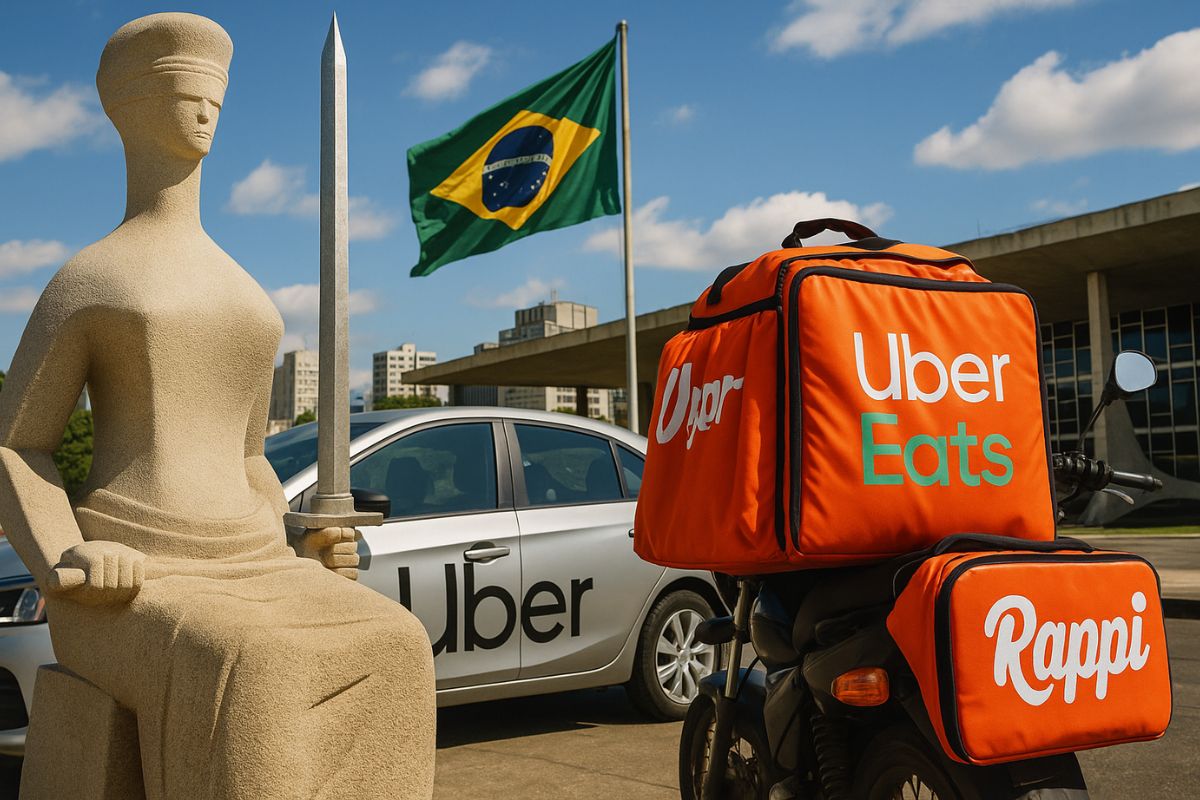


Trial In The Plenary May Standardize Years Of Conflicting Decisions And Directly Affect The Model Of Uber And Rappi.
The Federal Supreme Court set for 10/1 the trial that may determine whether transportation and delivery platforms must register their collaborators as employees with all the rights of the CLT, as anticipated by ConJur. The case, the first in the plenary under the presidency of Minister Edson Fachin, who takes office on 9/29, involves two high-impact actions, with general repercussions (Theme 1.291) and the potential to standardize understandings across the country.
On one hand, companies argue that they are technology intermediaries, not transportation operators; on the other hand, decisions from Labor Justice have been recognizing employment relationships based on the primacy of reality, as noted by ConJur. The outcome could reshape the app economy and the lives of millions of drivers and couriers.
What Is At Stake In The STF
The plenary will analyze, together, two cases that address the relationship between platforms and workers, including a resource that will establish a thesis for Theme 1.291. Edson Fachin is the rapporteur for one of the actions regarding app drivers. The expectation is that the court will standardize a highly litigious scenario, providing legal certainty for both workers and companies.
-
The Senate approves a bill that criminalizes misogyny, hatred, or aversion towards women, and includes the crime in the Racism Law with a penalty of up to 5 years.

-
Chamber Approves Bill That Allows Pepper Spray for Women Over 16 and Imposes Strict Rules for Purchase, Possession, and Use as Self-Defense

-
Chamber Approves Law to Combat Leucaena, Fast-Growing Plant That Dominates Land and Threatens Native Species in Various Regions of the Country

-
Asset Division: Know What Cannot Be Divided in Case of Divorce


Apart from the legal dispute, the reach is economic and social. If the STF understands that there is a bond and that the professionals must be considered employees with all the rights of the CLT, registration, vacations, 13th salary, FGTS, and other amounts may be required.
If the classification as a civil partnership prevails, the logic of autonomy with rules defined by the platforms and without the typical charges of employment remains.
How We Got Here: Decisions That Raised The Alarm
In recent years, TRTs and the TST recognized subordination through telematics in cases involving apps. In TRT-3 (MG), a 2020 action against Rappi concluded that the apparent autonomy hid elements of employment, such as control over shifts and penalties. The TST pointed out, in cases involving Uber, that the company defines pricing, rules, control, and dismissals—factors that characterize legal subordination, even if mediated by algorithms.
These decisions are not unanimous and have generated a picture of “undeniable legal insecurity”, a term used by Fachin when proposing general repercussions. The STF, therefore, has been called upon to provide a “uniform and effective response”: maintain the labor understanding that recognizes a bond or validate the corporate narrative that these are technology platforms in an environment of free enterprise and competition.
The Two Sides: Technology vs. Bond
The platforms argue that they offer digital infrastructure, intermediation, and payment means, connecting supply and demand without directing service provision on the street.
For them, imposing the employee regime with all the rights of the CLT would be undue intervention in the business model, raising costs to the point of making operations unviable and reducing supply and income for those who depend on flexibility.
On the other hand, unions and legal entities argue that there is algorithmic control, management by goals, unilateral blocks, and sanctions—mechanisms that, in practice, reproduce classical subordination of the employment relationship.
For this group, clear rules protecting health, minimum remuneration, and predictability prevent precariousness and reduce asymmetries imposed by software and terms of use.
Why The Case Is So Complex
Work Mediated By Apps does not neatly fit into traditional compartments of Labor Law. Algorithmic management can disguise or fragment typical elements of the employment relationship (subordination, habituality, onerousness, and personal nature). The STF now needs to decide whether such elements can be verified and recognized even when they occur through digital means.
Another factor is the national dimension of the market. A binding decision, regardless of its direction, will impact pricing, supply of rides/deliveries, deadlines, and income.
Millions of users and workers will feel the effects in their daily lives from the lunch ride of the day. Hence, there is a broad range of amici curiae: apps, unions, associations of the judiciary, and the MPT, among other entities.
What Exactly The STF Can Decide
The court can:
- Recognize the possibility of a bond and establish objective criteria (for example, control standards, goals, blocks, and price fixing) to characterize it;
- Acknowledge that there is no bond as a rule, preserving autonomy, but opening exceptions when there is robust evidence of subordination;
- Indicate parameters for a legislative solution, without closing all doors for future cases, given the speed of innovation.
The highlighted processes include Rcl 64.018 and RE 1.446.336, and the trial should establish a thesis to guide the lower courts. Any chosen formula will need to balance social protection and economic dynamics and avoid both precariousness and the annihilation of business models.
Immediate Practical Effects: What May Change In Your Life
If the STF determines that there is a bond in general terms, drivers and couriers may seek registration and typical amounts of the CLT, including retroactive when applicable.
Companies will tend to review routes, rates, and policies to absorb charges and work rules. Consumers may see price adjustments and changes in availability at least during the adaptation phase.
If the court does not recognize the bond as the rule, it should demand transparency and limits on algorithmic power (blocks, goals, evaluations) and keep the door open for specific situations where subordination is proven. In both scenarios, the trend is to reduce litigation and clarify rights and duties.
Timeline And Background That Explain The Urgency
The controversy gained status as a “burning topic” in Fachin’s vote to admit general repercussions (March 2024). Since then, the number of interested parties has only grown, from the app sector to labor entities, indicating the high economic and social impact.
Now, in the first trial of the plenary under the presidency of Fachin, the Court will have the opportunity to provide predictability to the ecosystem. According to ConJur, the calendar was adjusted to have the case open the agenda for the new leadership of the court.
What do you think the STF should decide? Recognize the bond and classify these professionals as employees with all the rights of the CLT, or maintain contractual autonomy with rules of transparency and limits on the algorithm?
Are you a driver/courier, fleet manager, merchant, or frequent user? Share how a change in rules impacts your daily life; your real account helps qualify the debate.










Todo motoboy já sabe que os app é que mandam, as regras e exigências são deles e não nossas os valores das entregas são fixadas por eles e não por nós motoboys e isso precisa acabar pois os app deveriam ser apenas uma ferramenta de trabalho mas se tornou o concorrente de uma categoria que já existia é que veio a precarizar financeiramente todo uma classe impondo preços abaixo do mercado e regras que nos tornamos escravos modernos sem poder dar qualquer tipo de opinião no seu próprio trabalho sem ter voz nas tomadas de decisão da sua própria jornada de trabalho.
Deveria ser de acordo com metas, se a pessoa bater certa meta mínima.
Opa! Apareceu sindicato e estado na notícia já está explicado o interesse. Arrecadar para bancar as mamatas.