





 Português
  Inglês
  Espanhol
  4 min de leitura
  0 comentários


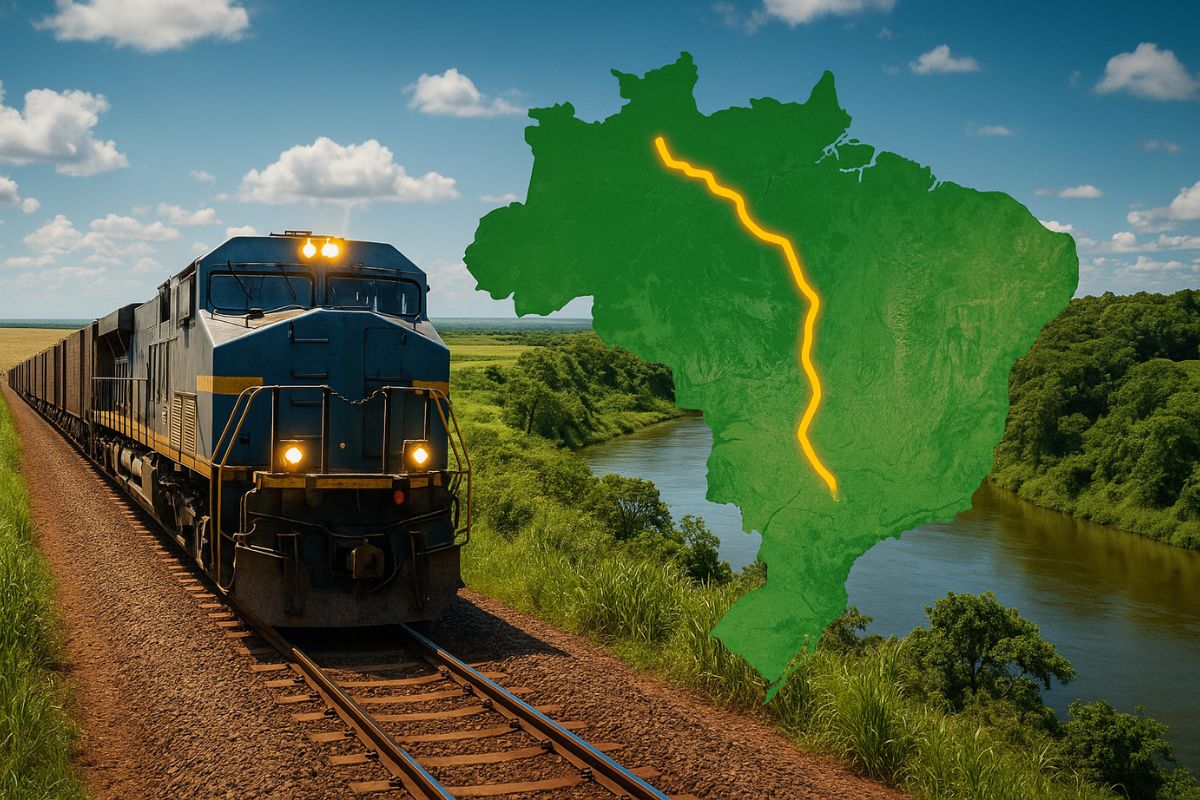
The Supreme Court Ruling Reignites the Debate Over the Ferrogrão, a Strategic Project of 933 Kilometers Between Mato Grosso and Pará That Promises to Reduce Logistics Costs, CO₂ Emissions, and Accidents, But Faces Environmental and Legal Impasse
The Ferrogrão is considered one of the most strategic works for the drainage of Brazilian agricultural production. The project, of 933 kilometers, will link Sinop (MT) to Itaituba (PA), allowing for the railway transport of grains to the port of Miritituba, on the banks of the Tapajós River. The railway has been included in the new phase of the Growth Acceleration Program (PAC) and could generate an estimated annual savings of R$ 7.9 billion for agribusiness.
According to O Globo, the Federal Supreme Court resumed this week the ruling on the constitutionality of the law that authorized the allocation of part of the Jamanxim National Park, in Pará, for the route of the Ferrogrão. Ministers Alexandre de Moraes and Luís Roberto Barroso voted in favor of the project’s approval, while Flávio Dino requested a review to better analyze the changes to the project.
The Legal Impasse and Moraes’ Vote
Minister Alexandre de Moraes, the case’s rapporteur, argued that the law is constitutional and that there is no significant environmental violation.
-
The bluest city in Brazil has just gained a new floating bridge for the free crossing between the island and the mainland, connecting residents and visitors to the historic center of São Francisco do Sul every day of the week.
-
In a silent race, Shopee signs a mega contract in Guarulhos and accelerates the e-commerce war with faster deliveries, pressured shipping, and a new threat to rivals in Brazil.

-
Oil surged to $115 a barrel due to the war in the Middle East, and diesel in Brazil has already risen to R$ 7.45 per liter, while the United States…
-
Brazilian city bets on the business environment to generate jobs and attract investments in the energy sector — secretary reveals strategy at Macaé Energy 2026.


He pointed out that the suppression of vegetation corresponds to only 0.054% of the total area of the park, with 60% of this strip already degraded due to BR-163.
For Moraes, the environmental impact is “minimal compared to the logistical, economic, and environmental benefits” of the project.
The minister argued that the relocation of the railway will reduce CO₂ emissions, the number of road accidents, and transport costs for grain producers.
Barroso supported the vote, suggesting that the Executive could, by decree, restore areas equivalent to those removed from the park.
Flávio Dino’s Request for Review and the Next Steps
Minister Flávio Dino interrupted the ruling by requesting a review, stating that he wants to better understand the new route proposed by the Ministry of Transport and the environmental compensations planned.
He emphasized that his request does not mean opposition to the project, but the need for a detailed analysis of the impact on the region.
The ruling is expected to resume after the process is returned, which could happen later this year.
If the majority of ministers follow Moraes’ vote, the decision will allow for the immediate resumption of environmental licensing and technical studies for the execution of the railway.
The Economic and Strategic Importance of the Ferrogrão
The Ferrogrão promises to revolutionize grain drainage in the Midwest region, reducing dependence on BR-163, which is currently overloaded with trucks and subject to logistical bottlenecks.
Rail transport would allow for a decrease in cost per ton and improve the international competitiveness of Brazilian products, especially soybeans and corn.
The use of rail transport could reduce up to 1 million tons annually in carbon dioxide emissions, contributing to environmental and energy efficiency goals.
According to the Ministry of Transport, the Ferrogrão is a “structural work” that integrates logistics corridors and expands the country’s export capacity.
Critics and Environmental Concerns
Environmental entities and the PSOL, the action’s author, question the manner in which the law altered the boundaries of the Jamanxim National Park.
They argue that the modification was made by provisional measure, and that the government should have conducted the process through legislative project with public debate.
Critics also warn of ecological risks in the Amazon region, which hosts sensitive areas of biodiversity and traditional communities.
Despite this, the government claims that the new railway route does not cross indigenous lands and that all environmental requirements will be met.
The Political Context and the Impact on the PAC
The release of the Ferrogrão is seen as a priority of the federal government within the new PAC.
The Ministry of Transport argues that the project is essential to reduce freight costs, increase logistical efficiency, and boost agricultural GDP.
Internal estimates suggest that each year of delay represents billion of reais in unnecessary costs for the productive sector.
The STF’s approval would also have a symbolic effect on the legal predictability of large works in the country, signaling security for domestic and foreign investors.
The impasse, however, shows that the balance between infrastructure and environmental preservation remains one of the greatest challenges of Brazilian development.








Seja o primeiro a reagir!