





 English
  Francês
  Alemão
  Italiano
  Japonês
  Norueguês
  Portuguese
  Spanish
  3 min of reading
  0 comments


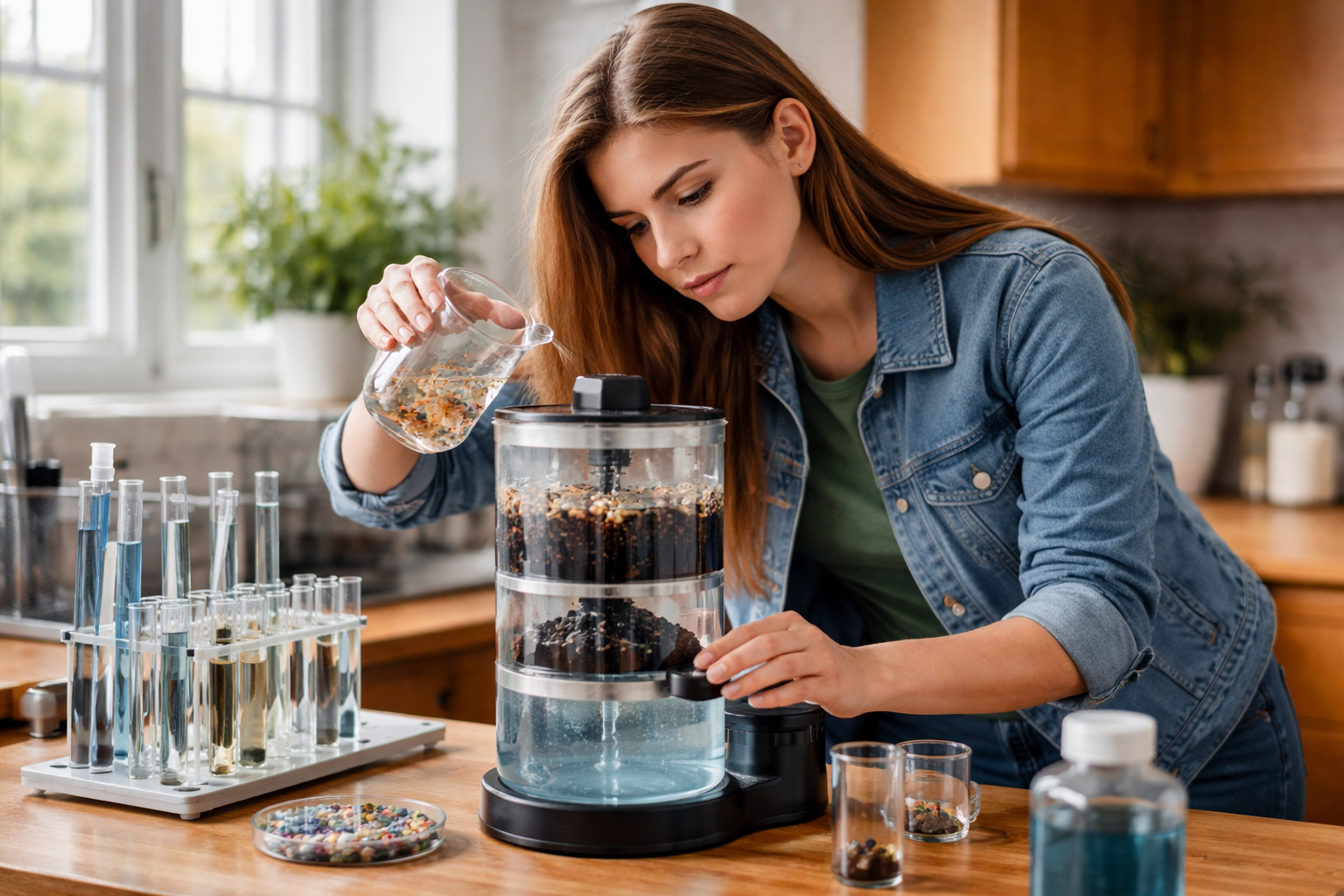
Technology developed in the United States uses magnetic separation to eliminate plastic particles and reduce residential filtration costs
An innovative solution to the problem of microplastics in drinking water gained recent attention in the United States when a high school student from Virginia created a filtration system capable of removing most of these particles without using traditional membranes.
In this context, Mia Heller, 18 years old, developed the project and used a reusable ferrofluid, that is, a magnetic oil that binds to microplastics as the water passes through the system, keeping the process continuous and controlled.
Origin of the idea after local contamination in 2024
The idea emerged in 2024 when Heller read, in a local newspaper, a report about the contamination of water in Warrington.
-
Seen from space, a colossal ‘Y’ cuts through the largest desert in China, blending a jade-filled river, red and white mountains, and revealing the absurd scale of the transformation of the Taklamakan surrounded by a green wall with billions of trees.

-
The Pacific Ocean reveals what the cliffs of Big Sur have hidden for millennia: Pfeiffer Beach, in California, features swirling purple sand formed by garnet crystals and displays a stone arch that is illuminated by the sun in winter for just a few days each year.

-
Aursjøvegen in Norway is a 100-kilometer gravel road that crosses chasms and dark tunnels carved into the rock at an altitude of 947 meters in the fjords and is only open for four months a year.

-
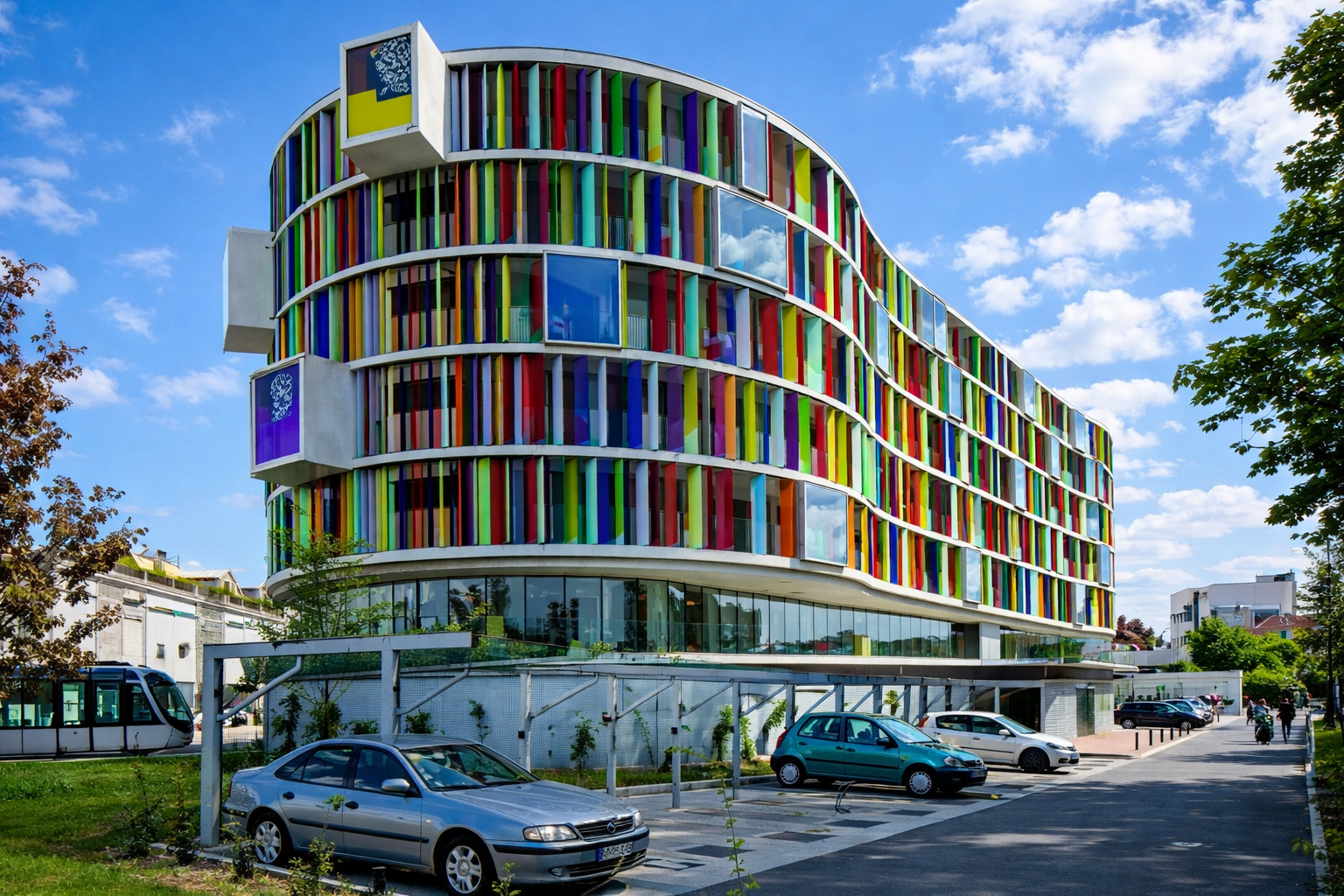
With about 4,000 m², the building constructed in a traditional neighborhood in France looks like a rainbow, has a colorful facade, mixes vibrant glass, and creates one of the most unusual visuals in Bordeaux.

At the time, tests indicated elevated levels of PFAS and microplastics, while authorities reported the absence of public resources to cover the filtration costs.
In light of this scenario, the family installed an advanced system at home; however, the frequent maintenance caught the student’s attention, who began to seek a more accessible, efficient alternative with less need for intervention.
Development of the prototype throughout 2024
From this, still in 2024, Heller began developing the project and conducted experiments in the garage and kitchen over several months.
Initially, the prototype removed microplastics in two stages; however, the system still required constant maintenance, as it did not automatically recover the ferrofluid.
Thus, the main challenge became creating a closed circuit capable of reusing the magnetic material, reducing losses and increasing the system’s autonomy.
Operation of the filter with magnetic separation
After about five cycles of improvement, Heller arrived at the current model, with dimensions similar to a package of flour and a structure divided into three main modules:
- Contaminated water reservoir
- Ferrofluid compartment
- Magnetic separation chamber
In this system, a magnetic field removes microplastics from the water, while the equipment itself recovers and reuses the ferrofluid.
Thus, the device acts as an independent household filter and processes approximately one liter of water per cycle.
Results obtained in tests conducted in 2025
To measure efficiency, Heller developed a turbidity sensor, which quantifies suspended solids in the liquid.
According to tests conducted in 2025, the system showed 95.52% removal of microplastics and 87.15% recovery of the ferrofluid, results that stand out when compared to traditional treatment stations, which remove between 70% and over 90% of these particles, according to data mentioned in the study itself.
International recognition and necessary validation
As a consequence of this performance, the project gained international recognition in 2025 when Heller became a finalist in the Regeneron International Science and Engineering Fair, considered one of the largest student science competitions in the world.
Additionally, she received a special award of US$ 500 from the Patent and Trademark Office Society, which recognized the efficiency and low cost of the technology.
Still, experts highlight the need to validate the results in independent laboratories and define appropriate methods for disposing of or destroying the removed microplastics, avoiding new environmental impacts.
Domestic application and future prospects
Currently, Heller sees the system primarily as a domestic solution, especially for use in under-sink filters, while maintaining focus on the technical validation of the results obtained.
Later, she may bring the technology to market if the tests confirm the performance presented.
In light of this advancement, a relevant question arises: can this innovation represent a more accessible way to reduce the presence of microplastics in the water consumed daily?









Seja o primeiro a reagir!