





 Portuguese
  English
  Spanish
  4 min of reading
  0 comments


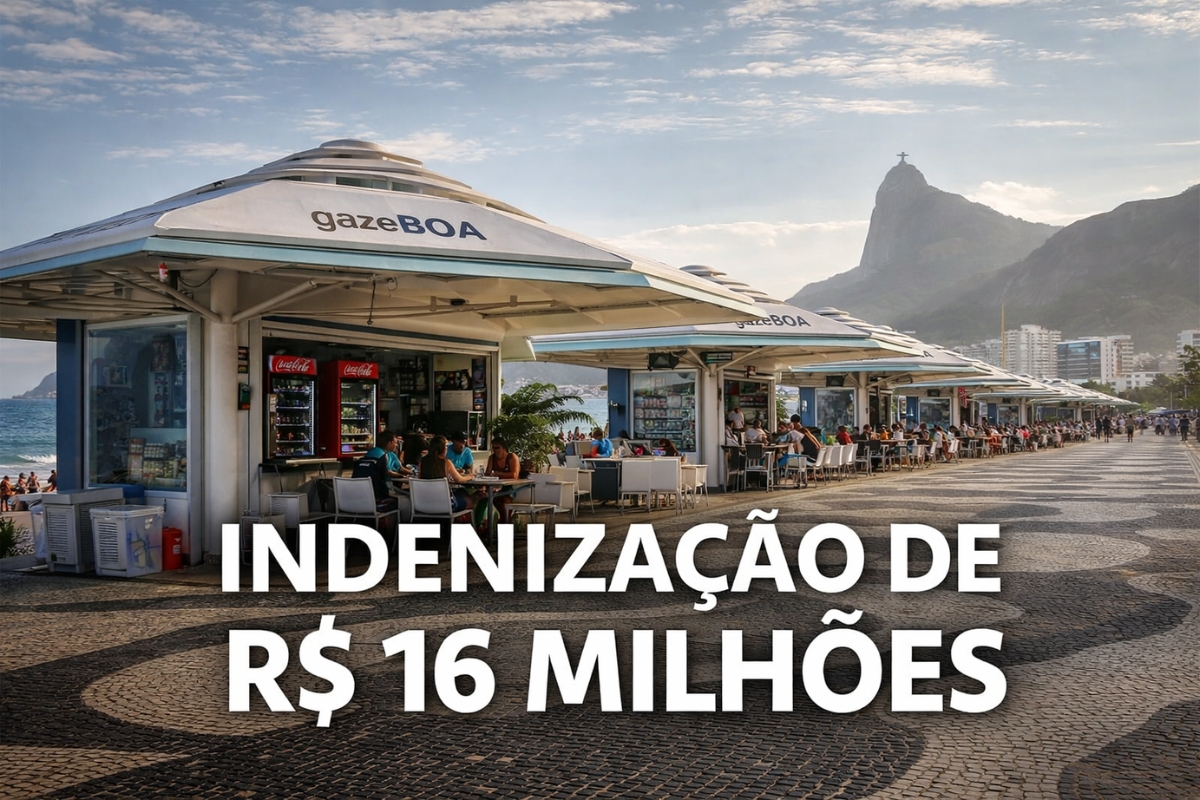
3rd Panel of the Superior Court of Justice Confirms Compensation and Strengthens the Effects of Contract Termination in Modernization Partnership for Kiosks.
The 3rd Panel of the Superior Court of Justice upheld the ruling that requires the beverage company Rio de Janeiro Refrescos to pay R$ 16 million to Orla Rio, the concessionaire that commercially operates kiosks in the capital of Rio de Janeiro.
The judgment ended with 3 votes to 2 and confirmed the compensation related to the breach of a contract aimed at modernization and renewal of the area.
The decision effectively maintains the result already established in the Justice of Rio de Janeiro, with direct effects on the payment due and on the consequences of the termination of the contractual relationship.
-
The noise law will no longer be in effect at 10 PM starting in June with a new rule valid during the 2026 World Cup.

-
The Chamber opens a debate on driver’s licenses at 16 years old as part of a reform that includes around 270 proposals to change the Brazilian Traffic Code and may redesign rules for licensing, enforcement, and circulation in the country.

-
The new Civil Code could revolutionize marriages in Brazil with “express divorce” and changes that could exclude spouses from inheritance.
-
Banco do Brasil sues famous influencer for million-dollar debt and intensifies debate on delinquency, risks of seizure, and direct impact on Gkay’s credibility.


What Happened and Why It Drew Attention
The case involves a contract in which the beverage company would finance renovation work on kiosks, as part of a partnership with the concessionaire responsible for the commercial exploitation of the spaces.
The dispute focused on the release of necessary licenses to enable the interventions planned for the modernization of the kiosks.
In the end, the understanding prevailed that maintained the compensation of R$ 16 million and the other repercussions related to losses and damages recognized in the process.
How the Decision Was Made at the STJ and the Score of the Judgment
The maintenance of the ruling was determined on Tuesday, December 16, with a score of 3 votes to 2 in the 3rd Panel of the STJ.
The winning position applied Súmula 7 of the court, which limits the review of conclusions when the analysis would require a re-examination of facts and evidence already evaluated in previous instances.
This understanding was adopted by the rapporteur, Minister Humberto Martins, with the support of Ministers Moura Ribeiro and Daniela Teixeira.
What Was at Stake in the Kiosk Contract
The central point was the granting of licenses for the beverage company to finance the works on the kiosks, according to the contractual provision.
The discussion addressed the allegation of irregularity in the licenses, used as a justification for the impossibility of passing on the funds allocated for the renovations.
Even with this line of defense, the procedural framework maintained the recognition of breach of contract, as well as the condemnation for the termination of the relationship and for losses and damages.
Why Súmula 7 Influenced the Outcome
The application of Súmula 7 acts as a filter in special appeals when the thesis depends on re-evaluating evidence elements, such as documents, facts, and circumstances already examined by the local court.
In practice, the winning understanding considered that altering the conclusions formed by the TJ RJ would require this type of review.
As a result, the condemnation and its effects remain, keeping the amount of R$ 16 million and the outcome consolidated in the previous instances.
The Divergence About Who Failed and What Was Defended in the Dissenting Vote
The divergence was opened by Minister Ricardo Villas Bôas Cueva, who remained in the minority after presenting a dissenting opinion read in the same session.
His analysis concluded that Orla Rio had failed to present the necessary licenses, which would legitimize the conduct of the beverage company.
This understanding also highlighted the complexity of the established partnership and the possibility of exempting the opposing party’s responsibility in this scenario.
The Attempt to Change the Course of the Judgment Due to Jurisdictional Issues
Minister Nancy Andrighi was also in the minority by proposing a matter of order to recognize the incompetence of the 3rd Panel in the judgment.
The proposal indicated the possibility of transferring the case to one of the Public Law panels, which would change the procedural path within the court.
Even so, the majority kept the judgment in the panel and confirmed the ruling.
What May Happen From Now On
With the ruling maintained, the obligation to pay R$ 16 million remains, along with the consequences related to the termination of the contract and the losses and damages already recognized.
The outcome also reinforces the importance of execution clauses, documentation, and licensing in modernization and renovation contracts that depend on authorization for works.
An attorney from the firm Nilson Naves Advogados, who represented the concessionaire, stated that the decision represents a significant victory in the field of Contract and Business Law, emphasizing the weight of the commitments made in Brazil.
The 3rd Panel of the STJ upheld the ruling and consolidated the amount of R$ 16 million at the center of the dispute involving kiosks on the waterfront of Rio de Janeiro.
The case reinforces that disputes over licenses and execution of contractual obligations can lead to significant financial impacts when the Judiciary recognizes the termination of the relationship and the existence of losses and damages.









Seja o primeiro a reagir!