





 Portuguese
  English
  Spanish
  4 min of reading
  1 comment


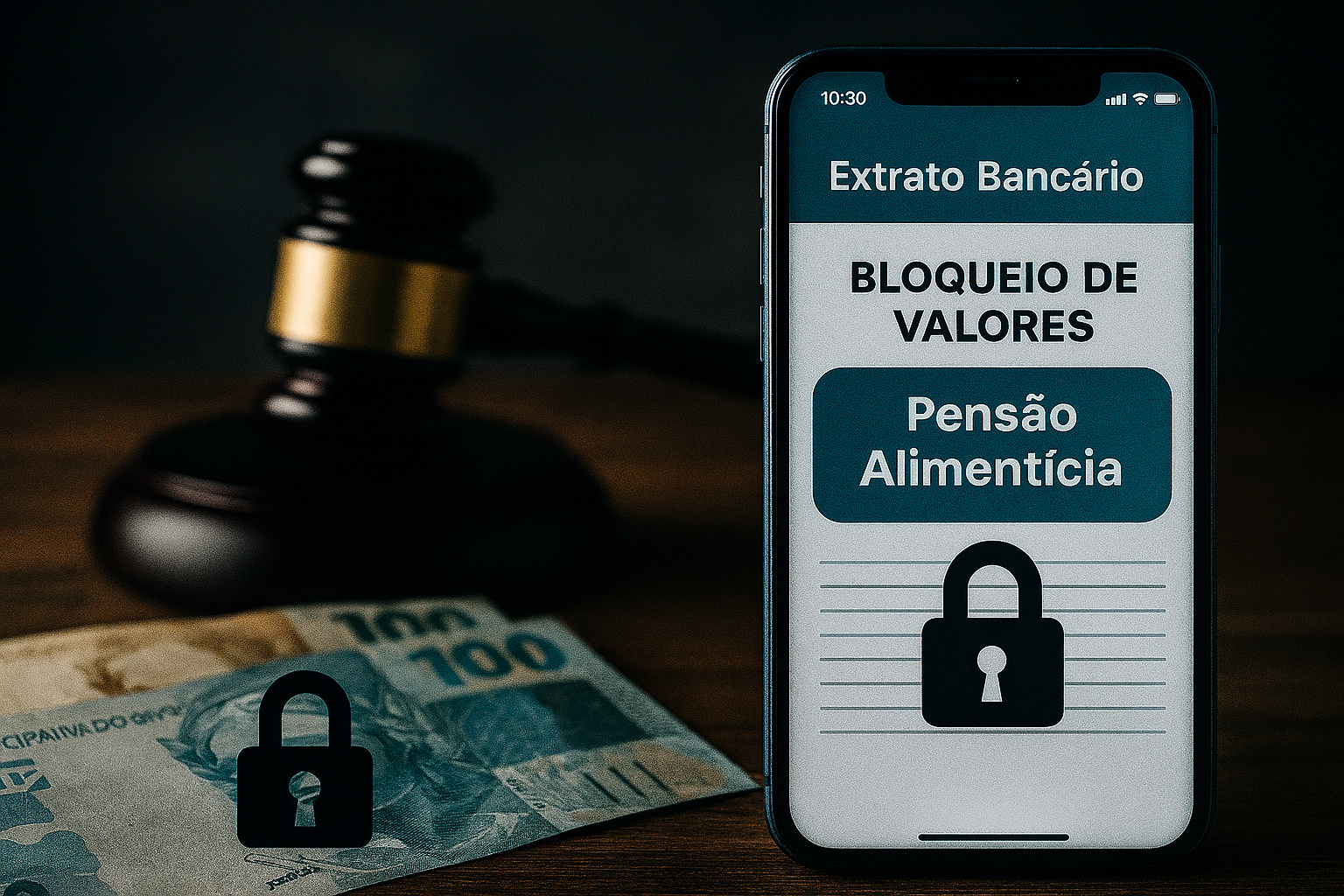


The STJ Reinforces the Rigidity in the Collection of Alimony, Authorizing Direct Deductions from Salaries and Pensions and Blocking Bank Accounts through the Sisbajud System to Guarantee the Rights of the Alimentando.
The Superior Court of Justice (STJ) has once again consolidated the rigidity in the treatment of alimony in Brazil. The Court has ruled that the amounts owed can be directly deducted from salaries, pensions, and formal benefits, as well as being blocked in bank and digital accounts through the electronic Sisbajud system.
In practice, this expands the collection capacity and tightens the noose against debtors. The alimentando — whether a minor child, ex-spouse, or another relative entitled to it — cannot be left unprotected. The Justice system understands that the obligation to pay alimony is vital in nature, linked to survival, and therefore deserves stricter treatment than any other debt.
What Does the Law Say About Alimony Obligation
Alimony in Brazil is provided for in Article 1,694 of the Civil Code, which guarantees the right of relatives, spouses, and partners to request necessary food for subsistence. Article 528 of the Civil Procedure Code regulates the execution of this obligation, authorizing severe measures, including the civil imprisonment of the debtor in case of default.
-
The noise law will no longer be in effect at 10 PM starting in June with a new rule valid during the 2026 World Cup.

-
The Chamber opens a debate on driver’s licenses at 16 years old as part of a reform that includes around 270 proposals to change the Brazilian Traffic Code and may redesign rules for licensing, enforcement, and circulation in the country.

-
The new Civil Code could revolutionize marriages in Brazil with “express divorce” and changes that could exclude spouses from inheritance.

-
Banco do Brasil sues famous influencer for million-dollar debt and intensifies debate on delinquency, risks of seizure, and direct impact on Gkay’s credibility.




Unlike other debts, alimony takes priority because it is directly linked to the principle of human dignity. Therefore, courts have expanded the range of collection tools.
Direct Deductions from Salaries and Pensions
One of the measures confirmed by the STJ is the possibility of automatic deductions for alimony from salaries, pensions, pró-labore, social security pensions, and even temporary benefits.
The deduction is made at the source, even before the debtor has access to the amount. This ensures predictability for the alimentando and prevents recurring delays. Companies and social security agencies are judicially notified to carry out the monthly deduction and pass the amount to the beneficiary.
This measure is particularly common in cases where the alimony is set as a percentage of the alimentante’s income, such as 20% or 30% of net salary.
Blocking of Bank and Digital Accounts
Another increasingly used tool is the judicial blocking of amounts in bank and digital accounts. Since the creation of the Sisbajud system, which replaced the old BacenJud, judges can access all financial institutions in the country in an integrated manner and block available amounts to guarantee the payment of alimony. This includes:
- checking and savings accounts in traditional banks;
- digital wallets and accounts in fintechs;
- amounts received via PIX and electronic transfers;
- fixed-income investments and even balances from brokerages.
The STJ has already recognized the validity of these measures, reinforcing that there is no distinction between physical and digital accounts when it comes to guaranteeing food support.
What Happens in Case of Default
When a debtor fails to pay alimony, the creditor can file for alimony execution. In this process, the judge can:
- Order salary deductions;
- Order immediate blocking of accounts via Sisbajud;
- Authorize the seizure of movable and immovable assets;
- Impose a fine of up to 10% on the debt amount;
- Decree the civil imprisonment of the debtor for up to 3 months if the most recent debts are not paid.
This combination of measures makes alimony the most severely enforced obligation in Brazilian law.
Practical Cases Already Judged by the STJ
The STJ has analyzed situations where debtors tried to hide assets in digital accounts or transfer amounts to evade blocking. In recent decisions, ministers have reinforced that technology allows tracking virtually any financial movement, and that attempts at fraud can worsen the debtor’s situation.
In another case, the Court confirmed that even pensions can be subject to deductions, even if they have an alimentary nature, precisely because alimony takes absolute priority over other expenses.
Social Impact of the Decision
The rigor in the collection of alimony has a direct impact on the protection of children, adolescents, and ex-spouses in vulnerable situations. According to data from IBGE, Brazil has over 5 million alimony-related cases in progress, one of the most recurrent issues in the Justice system.
By reinforcing that there is no technical limit for blocking — whether in a traditional bank or fintech — the STJ signals that the system will not tolerate willful default.
The Other Side: Criticism and Debates
Although the decision is widely celebrated by family lawyers and child rights advocates, there are criticisms about the excessive rigidity. Some experts argue that indiscriminate blocking in digital accounts can affect the subsistence of the debtor, especially in cases of sole income.
Still, the majority jurisprudence understands that it is up to the judge to balance the measures, ensuring that the debt is paid without completely jeopardizing the debtor’s survival.
A Message to Debtors
The STJ’s decision reinforces a clear message: there is no room to hide income or delay alimony in Brazil. Salaries, pensions, digital accounts, PIX, and financial investments are all on the Justice radar.
A debtor who tries to circumvent the obligation may have amounts blocked instantly and, ultimately, face civil imprisonment.
In the end, the message is direct: alimony is not just a common debt — it is a matter of human dignity. And the Judiciary is ready to use all available tools to ensure that no alimentando is left unprotected.










Isso serve também pra quem paga pensão sociafetiva?