





 Portuguese
  English
  Spanish
  3 min of reading
  0 comments


Researchers from McGill University Identify New Species of Prehistoric Insect in Region Dominated by Dinosaur Fossils in Alberta
A graduate student from McGill University identified a new species of insect from a fossilized wing found in Dinosaur Provincial Park, Alberta. The discovery of the rare dragonfly fossil represents the first finding of this type of specimen in rocks from the dinosaur era in Canadian territory.
The piece, dated to approximately 75 million years ago, fills a 30 million-year gap in the evolution of these insects and was detailed in a study recently published in the Canadian Journal of Earth Sciences.
The Unexpected Discovery of an Insect in the Dinosaur Park Formation
The record occurred in 2023 during a field course coordinated by Professor Hans Larsson in an area primarily known for vertebrate remains. André Mueller, the lead author of the research, reported that the team was fragmenting rocks in search of leaf traces when they spotted the insect’s wing. Prior to this occurrence, the only insect record at the site was a microscopic aphid preserved in amber, making the rare dragonfly fossil a scientific milestone for the region.
-
The smallest bird of prey in the world is at risk of extinction and could disappear by 2050.
-
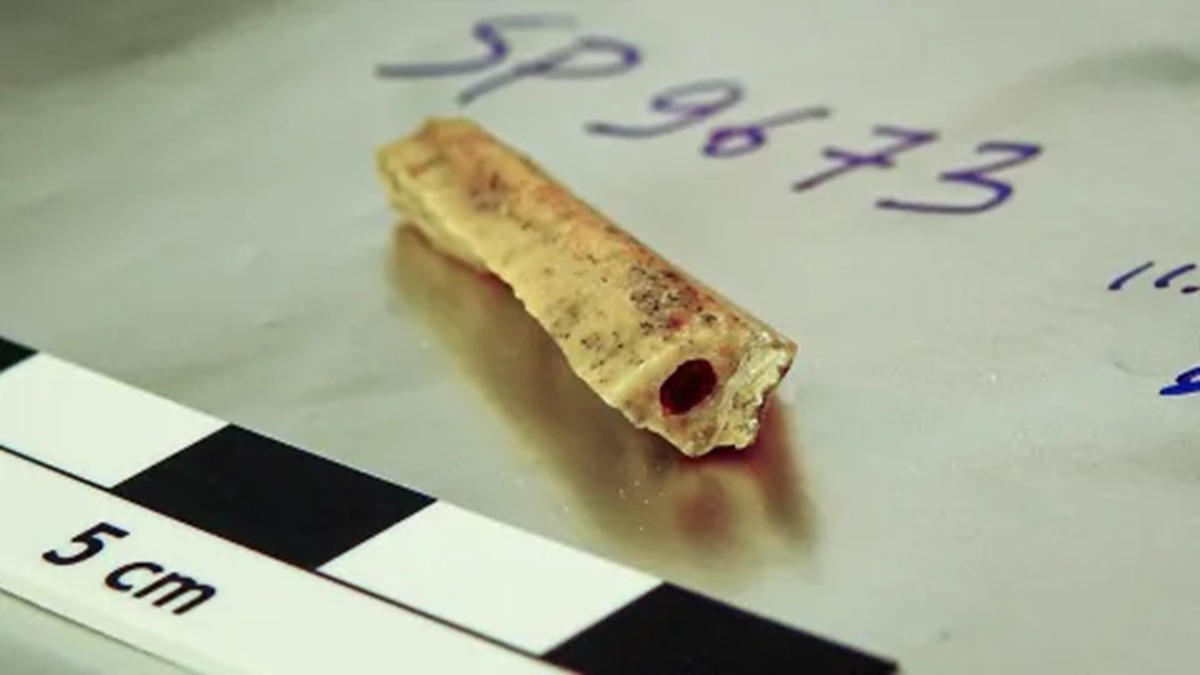
Researchers extracted DNA from a bone fragment of a Neanderthal found in the Denisova Cave in Russia.
-
Navios dump 40 tons of shells and concrete blocks into the sea off the UK, reversing 200 years of destruction, bringing oyster reefs back, cleaning the water, and testing if the ocean floor can regenerate on a large scale.

-
Scientists released one-ton giant bison in the mountains of Romania, and the result surprised even zoologists: the vegetation in the region increased by 30%, and the soil began to capture ten times more carbon than before.

Unlike the specimen in amber, the new specimen is preserved as a compression fossil, which introduces a new method of data collection about the fauna of the geological formation. Alexandre Demers-Potvin, a postdoctoral researcher at McGill, emphasized that the expansion of sites and search methods has revealed a diversity of insects greater than previously imagined. The finding opens precedents for new investigations into invertebrate life in areas dominated by dinosaur fossils.
Classification of the New Species Named Cordualadensa acorni
The morphological analysis of the material resulted in the classification of a new species named Cordualadensa acorni, belonging to the also new family Cordualadensidae. The name given to the rare dragonfly fossil pays tribute to John Acorn, an entomologist and professor affiliated with the University of Alberta. The study indicates that this is the first North American member of the group Cavilabiata identified in this specific period of geological history.
With a wingspan comparable to the width of a human hand, the insect played a significant role in the Late Cretaceous ecosystem. According to the researchers, the dragonfly would have served as a food source for raptors of the time. The discovery consolidates the importance of small fossils in the comprehensive understanding of the food chains that coexisted with the large dinosaurs in Canada.
Evolutionary Relevance and Flight Adaptations for Migration
The structure of the found wing provides evidence that the species had specific adaptations for gliding flight. This characteristic is observed in contemporary migratory dragonflies and is pointed out by Hans Larsson as a possible determining factor for the evolutionary success of the group. The rare dragonfly fossil thus acts as a key piece for understanding the locomotion and behavior of these animals millions of years ago.
In addition to providing biological data, the specimen helps reconstruct the ecological scenario of one of the most diverse archaeological sites in the world. The integration of this new information into the environmental puzzle of the Cretaceous allows for a more nuanced view of prehistoric Canadian life. The study reaffirms that, although small, these discoveries are essential for documenting the evolutionary progression that remained unknown for decades.
With information: Daily Galaxy





Seja o primeiro a reagir!