





 English
  Francês
  Alemão
  Italiano
  Japonês
  Norueguês
  Portuguese
  Spanish
  4 min of reading
  1 comment


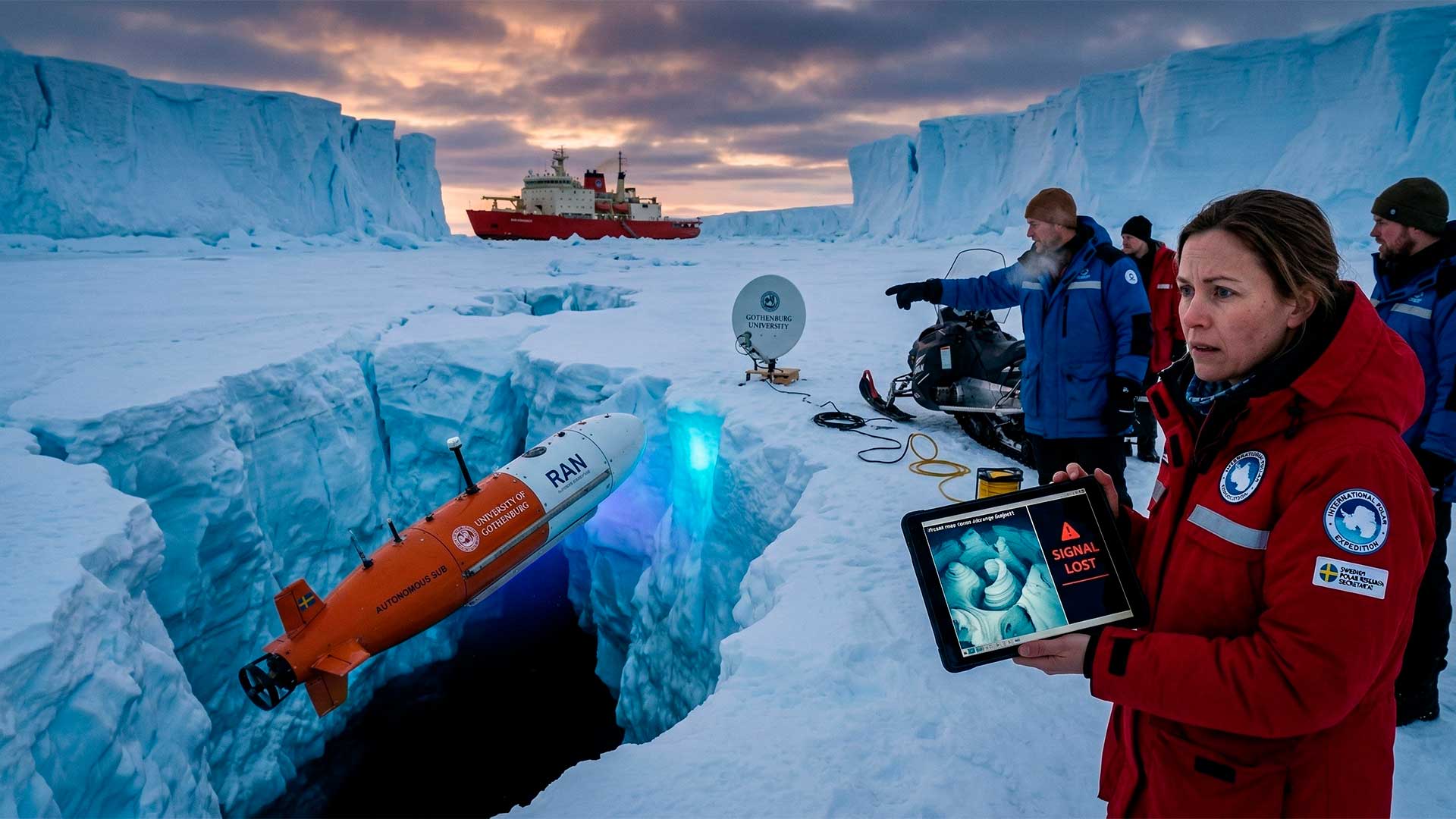


Scientific Mission In Antarctica Loses Contact With Submersible After Recording Unprecedented Structures Beneath The Ice Shelf. Discovery Reinforces Concern About Warm Currents And Bottom-Up Melting.
An international mission investigating glacier melting in West Antarctica ended in mystery. The autonomous submarine Ran, developed by researchers at the University of Gothenburg, disappeared after mapping an extensive area beneath the Dotson Ice Shelf and identifying unknown structures at the base of the ice.
The vehicle operated in a practically inaccessible environment, covered by hundreds of meters of ice and far from the open ocean. Before losing contact, the Ran recorded high-precision data with sonar and sensors indicating an intense interaction between the ocean and the base of the shelf.
Initial information suggests that relatively warm currents may be sculpting the ice from below, a process capable of accelerating melting and influencing sea level. The disappearance of the equipment, however, currently prevents a direct validation at the same location.
-
Seen from space, a colossal ‘Y’ cuts through the largest desert in China, blending a jade-filled river, red and white mountains, and revealing the absurd scale of the transformation of the Taklamakan surrounded by a green wall with billions of trees.

-
The Pacific Ocean reveals what the cliffs of Big Sur have hidden for millennia: Pfeiffer Beach, in California, features swirling purple sand formed by garnet crystals and displays a stone arch that is illuminated by the sun in winter for just a few days each year.

-
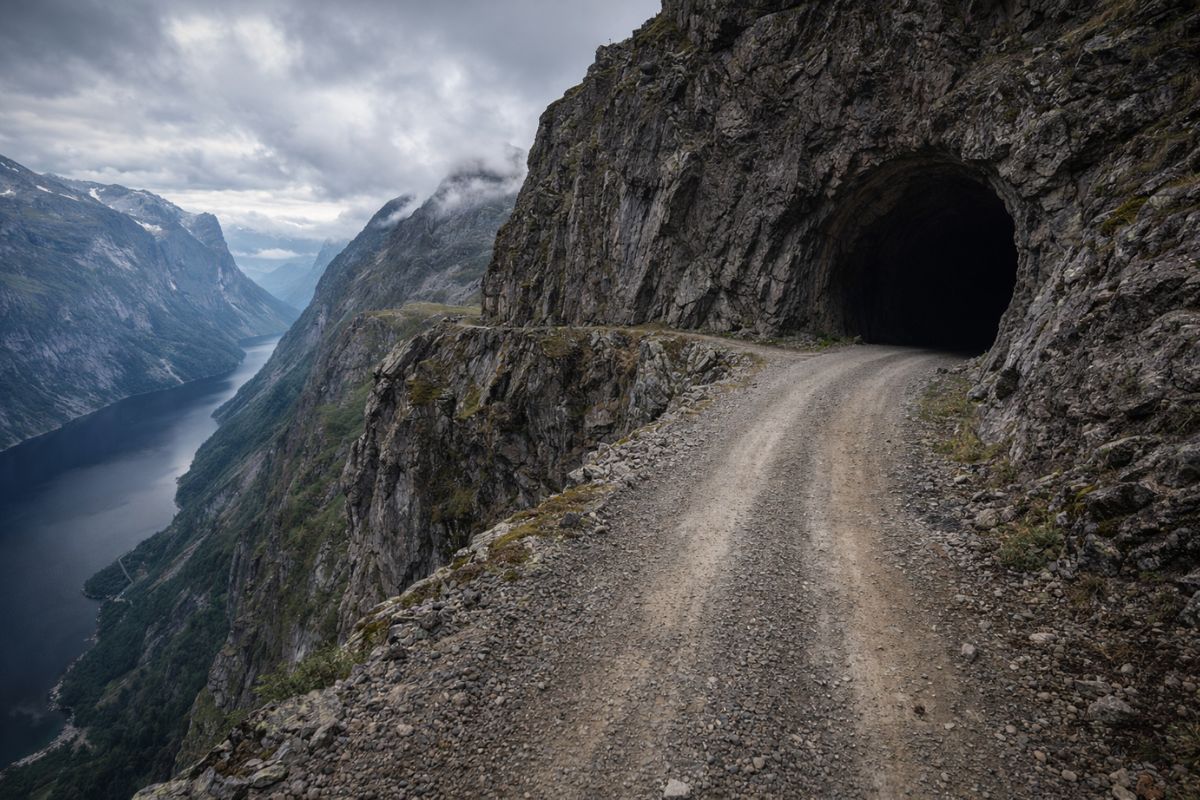
Aursjøvegen in Norway is a 100-kilometer gravel road that crosses chasms and dark tunnels carved into the rock at an altitude of 947 meters in the fjords and is only open for four months a year.
-
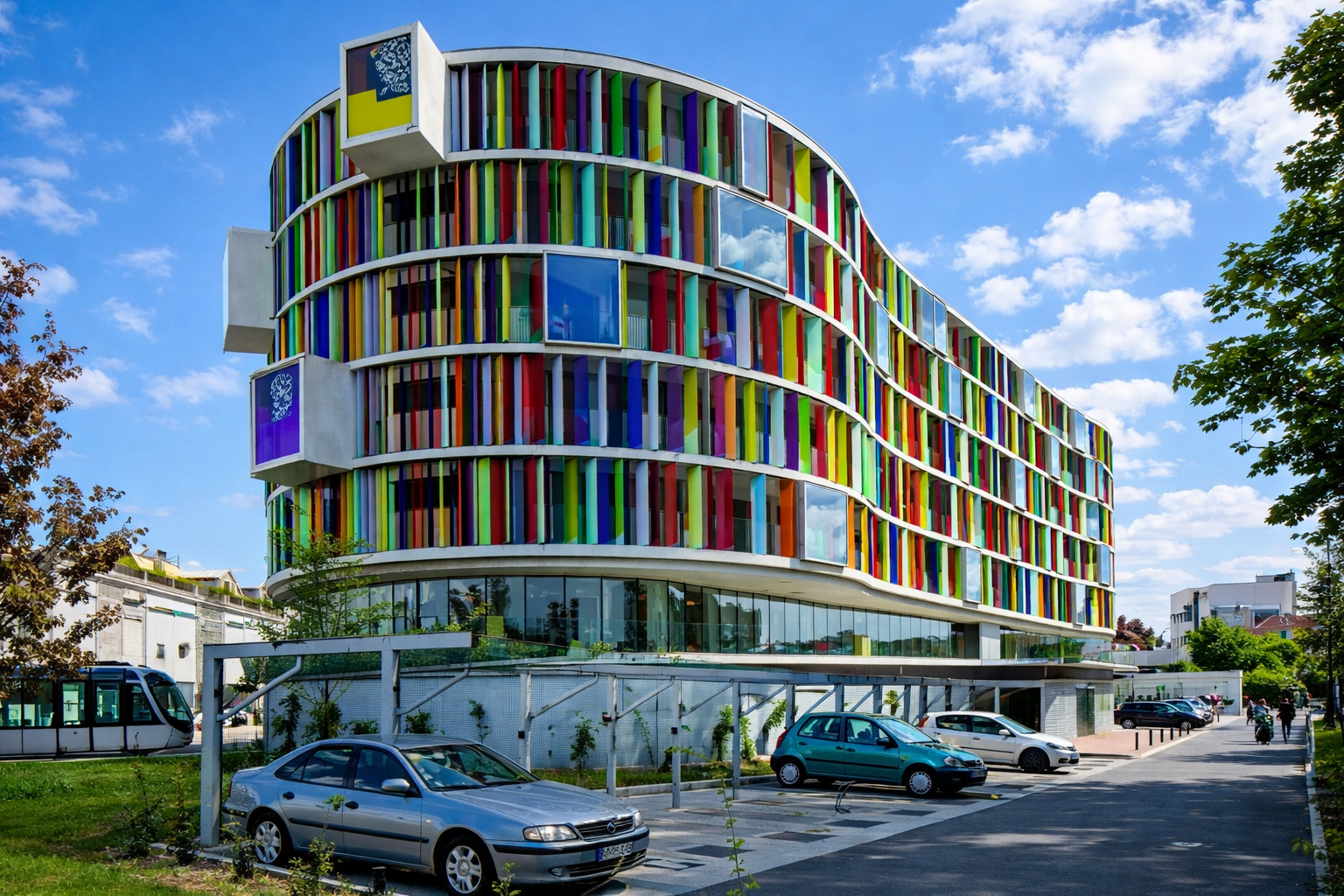
With about 4,000 m², the building constructed in a traditional neighborhood in France looks like a rainbow, has a colorful facade, mixes vibrant glass, and creates one of the most unusual visuals in Bordeaux.
Submarine Disappears After Mission Beneath The Dotson Ice Shelf, A Remote Area Covered By Hundreds Of Meters Of Ice
The Ran was sent to investigate the cavity between the ocean and the base of the Dotson Ice Shelf, a floating block measuring several dozen kilometers in length. The objective was to map the subglacial topography and measure water flows to understand how ocean heat reaches the glaciers.
According to the University of Gothenburg University of Gothenburg, the vehicle was designed to operate autonomously in extreme environments where ships and divers cannot safely operate. With advanced sonar systems and sensors, it produces detailed maps of the seabed and the bases of the ice shelves.
Unknown Structures Suggest Warm Currents And Bottom-Up Melting Action In West Antarctica
The data collected before the Ran’s disappearance revealed complex geological structures never observed in the region. Although the team did not detail all the formations, the shape of these features points to the presence of relatively warm ocean currents that sculpt the underside of the shelf.
This pattern strengthens the hypothesis of bottom-up melting, when ocean heat attacks the base of the ice. This process is crucial for understanding the stability of the shelves and their ability to hold glaciers that drain into the sea.
According to the IPCC IPCC, West Antarctica is one of the regions most vulnerable to warming deep waters, and changes in the dynamics of the shelves can accelerate ice mass loss and contribute to sea level rise. The Ran’s records, although partial, add to this diagnosis.
The preliminary interpretation of the researchers is that subglacial cavities function as channels for heat transport, intensifying melting at strategic points of the base. Understanding the shape, extent, and connectivity of these cavities has become a scientific priority.
Loss Of Contact Occurred After The Vehicle Advanced Several Kilometers Under The Ice, In An Isolated And Hostile Area For Rescues
After completing part of the planned route, the Ran moved several kilometers beneath the Dotson shelf and shortly afterward, the team lost all contact. The submarine did not return to the designated recovery point, and since then, it has never been recovered.
The extreme conditions make any search nearly unfeasible. The location is remote, covered by thick ice, and far from the open sea, limiting the use of ships and aircraft. Among the hypotheses for the disappearance are technical failure, collision with subglacial structures, or entrapment in cavities beneath the ice.
Discoveries May Redefine Sea Level Projections, Elevating The Urgency For Data On Subglacial Cavities
Even with the loss of the equipment, the data obtained before its disappearance provide valuable clues about the ice-ocean interaction. If relatively warm currents are indeed remodeling the base of Dotson, this may reduce the shelf’s support and facilitate the advance of glaciers into the sea.
The potential global impact is significant. Changes in West Antarctica could accelerate the collapse of ice masses and significantly contribute to sea level rise in the coming decades, as highlighted by scientific literature consolidated by the IPCC. Each new measurement helps calibrate models and reduce uncertainties.
Thus, understanding what happens in these hidden cavities is urgent. Autonomous systems like the Ran, combined with ocean observations and radar mapping, are essential today to anticipate risks and guide coastal adaptation strategies.
What The Mission Teaches About Scientific Strategy, Operational Risks, And Paths For Future Expeditions
The case of the Ran exposes a common dilemma in polar science, which is the need to push technological limits in extreme environments. Taking sensors to inhospitable locations involves considerable risks but opens access to data that satellites and ships cannot provide.
The lessons from this mission include improving communication routes and redundancies, planning alternative extraction points, and strengthening protocols for collapse zones and subglacial labyrinths. The continuity of this type of research depends on multidisciplinary teams and stable funding to replenish and evolve instrumentation.
While the Ran remains missing, the data already collected should feed studies on basal melt mechanics and the circulation of relatively warm waters in shelves like Dotson. The focus now is on transforming these initial signals into robust evidence to underpin more reliable projections.
What do you think about the balance between risk and reward in polar missions like this? Should we expand operations with autonomous vehicles even in light of likely equipment losses, or is it time to reassess safety limits and investment? Leave your comment and help qualify the debate on science, climate, and research priorities.









Na verdade devemos urgentemente aumentar os investimentos em pesquisas,para não sermos pego de surpresa.