





 Portuguese
  English
  Spanish
  3 min of reading
  0 comments


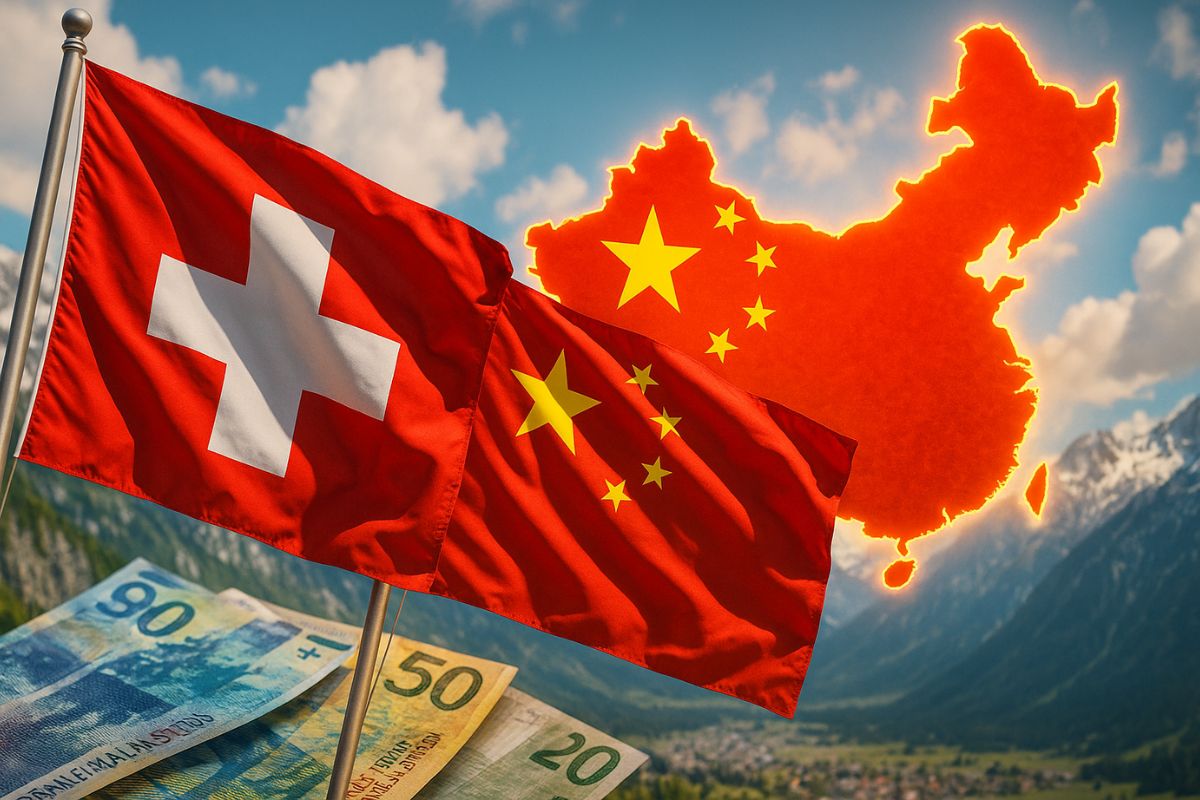
Amidst the Growing Global Trade Dispute, Switzerland Confirmed Progress in Negotiations with China and Aims to Conclude by 2026 a New Free Trade Agreement, Modernizing Rules and Expanding Bilateral Economic Opportunities.
According to the Brasilia newspaper, Switzerland announced that it intends to conclude, by the beginning of next year, a new free trade agreement with China, reinforcing the interest of both countries in modernizing and deepening their economic relations. The announcement was made by Swiss Foreign Minister Ignazio Cassis after a meeting with his Chinese counterpart, Wang Yi, in Bern.
According to Cassis, the negotiations have progressed in a “constructive and positive” manner and reflect the mutual effort to adapt to the new dynamics of international trade. The goal is to update the treaty that has been in force since 2014, which already established Switzerland as the first European country to enter into such an agreement with Beijing.
Modernized Agreement Aims for a New Level in Trade Relations
The new treaty seeks to expand economic and technological cooperation between Switzerland and China, especially in strategic areas such as innovation, intellectual property, and sustainability.
-
Elderly individuals aged 65 or older who have never contributed to the INSS can receive R$ 1,621 per month in 2026 without having paid any contributions in their lifetime: learn how the benefit works that already supports nearly 7 million Brazilians.

-
The gaucho city reduced the number of Bolsa Família beneficiaries by almost 40% in just a year and a half with active outreach that connects each registered person directly to job vacancies in Bento Gonçalves in Rio Grande do Sul.

-
The bluest city in Brazil has just gained a new floating bridge for the free crossing between the island and the mainland, connecting residents and visitors to the historic center of São Francisco do Sul every day of the week.

-
In a silent race, Shopee signs a mega contract in Guarulhos and accelerates the e-commerce war with faster deliveries, pressured shipping, and a new threat to rivals in Brazil.

In an official statement, the Chinese Ministry of Foreign Affairs stated that the existing agreement “has played an important role in the economic and trade cooperation between the two countries,” but now needs an update to reflect the new demands of the global market.
The text emphasizes that the objective is to “promote a more open, inclusive, and balanced trade”, as well as to strengthen the defense of the multilateral free trade system.
The move comes at a time when the Chinese economy seeks to expand partnerships outside the Asian axis, while Switzerland attempts to diversify its trading partners amid uncertainties from the European Union and international regulatory pressures.
Geopolitical Context and Strategic Interests
The advancement in negotiations between Switzerland and China occurs amid a global landscape of trade tensions.
The Chinese government has faced tariff barriers imposed by the United States and the European Union, especially in sectors such as electric vehicles, technology, and semiconductors.
In this context, bilateral agreements like the one proposed with Switzerland become strategic instruments to expand Beijing’s access to stable and technologically advanced markets.
For Bern, the modernization of the treaty represents an opportunity to preserve the competitiveness of Swiss exports and ensure a direct dialogue channel with the world’s second-largest economy.
China is currently Switzerland’s third-largest trading partner, trailing only the European Union and the United States, with a focus on trade in pharmaceuticals, watches, precision equipment, and luxury goods.
Economic Perspectives and Expectations for 2026
Since the entry into force of the original agreement, bilateral trade between the two countries has grown consistently, surpassing the mark of tens of billions of dollars annually in exchange.
The expectation is that the new agreement will incorporate clauses aimed at digitalization, environmental sustainability, and technological innovation, reflecting the priorities of the contemporary economy.
Swiss authorities hope that the updated treaty will come into force by 2026, after the completion of technical and legal stages.
For the Chinese government, the modernization is viewed as a symbol of pragmatic and predictable cooperation with European partners, at a time when global trade relations suffer from protectionism and disputes over technological hegemony.
Economic Cooperation in Focus
The resumption of negotiations reinforces the willingness of both countries to defend the rules of free trade and promote economic globalization in a balanced and beneficial way for both sides.
The diplomatic dialogue between Cassis and Wang Yi also included topics related to international stability, the role of Chinese companies in Europe, and strengthening joint innovation in strategic sectors.
“We are pleased that the discussions are advancing constructively, and we hope to conclude this work soon,” said Cassis, highlighting the importance of China as an essential trade partner for the Swiss economy.
Do you believe that the rapprochement between Switzerland and China can influence new agreements between European and Asian countries? Does this type of partnership strengthen global trade or increase economic dependence on China? Leave your opinion in the comments; we want to know how you see this international movement.









-

-

4 pessoas reagiram a isso.