





 Portuguese
  English
  Spanish
  3 min of reading
  1 comment


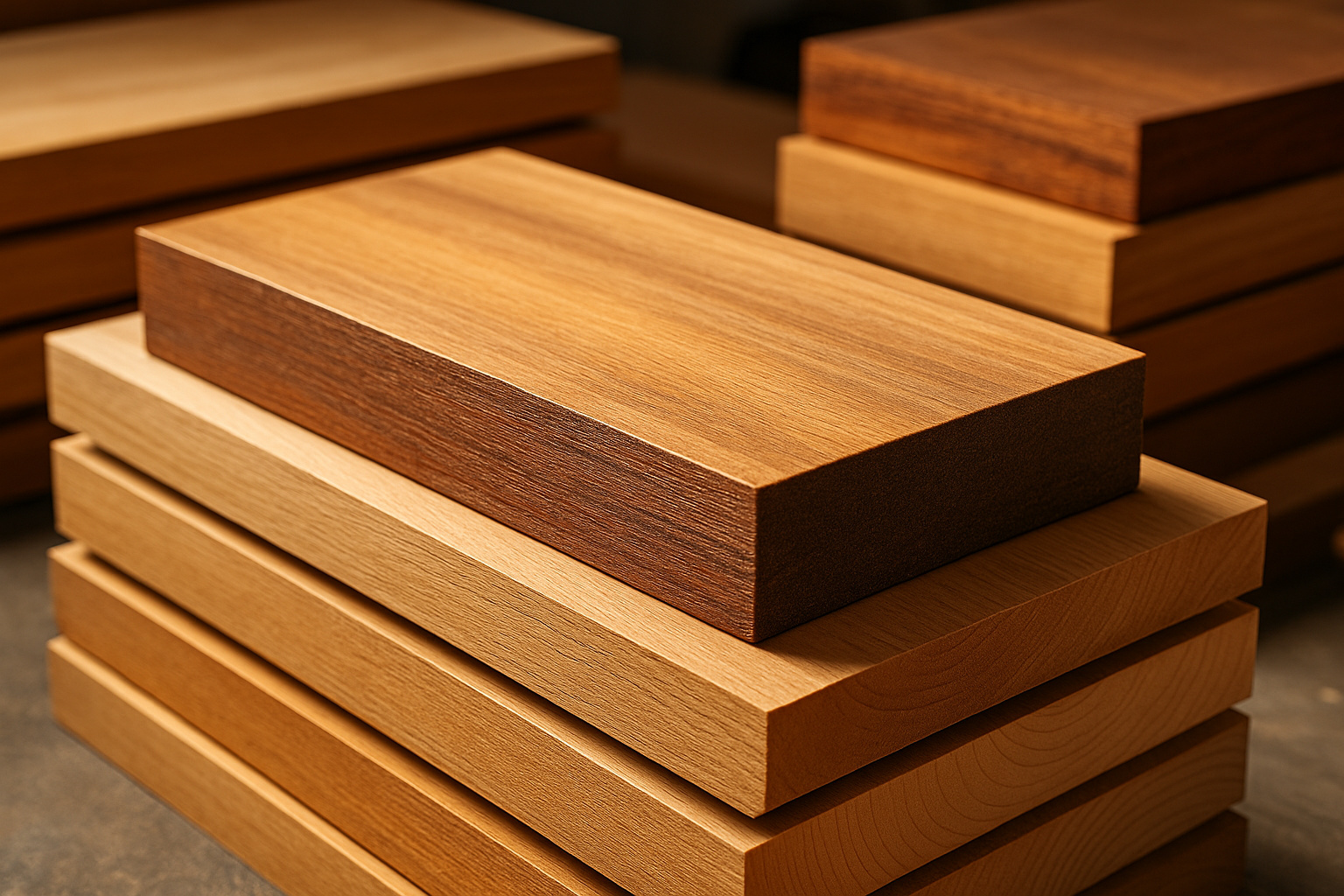


Material Developed by the University of Maryland Will Be Marketed in 2025 and Redefines Structural Standards by Combining Extreme Lightness, High Strength, and Very Low Environmental Impact
The super wood, created in 2018 by researchers from the University of Maryland, officially arrives on the market in 2025, marking a new phase for natural materials applied to engineering. InventWood, the company responsible for industrial production, consolidates the technology after registering more than 140 patents, demonstrating its scientific and industrial relevance.
Origin of Super Wood and Technical Process That Modifies Its Structure
Super wood emerges as a modified natural material capable of surpassing conventional wood in strength and lightness. Therefore, its development follows precise stages. Initially, researchers remove lignin, which is the component responsible for the original color and rigidity. Next, the wood is boiled in water with chemicals. Shortly after, the material is pressed at high temperature, compressing the cellulose fibers and creating dense hydrogen bonds, which are responsible for the enhanced strength.
This process, documented by the University of Maryland, makes the material ten times stronger and six times lighter than common wood, completely changing its potential for use.
-
The village where two rivers run side by side without mixing in Santarém and Alter do Chão reveals some of the most beautiful freshwater beaches on the planet.
-
Mars is accelerating, and scientists have discovered that the planet’s day is getting shorter, revealing surprising signs of internal activity.

-
Artemis 2 is set to launch on April 1 at 7:24 PM to orbit the Moon with four astronauts, but a class X solar flare and coronal mass ejection could interfere with communications and threaten the launch.

-
The largest deposit of Vale was discovered by accident and today represents almost all the ore produced by the company.

Structural Impact and Immediate Benefits in Civil Construction
The entry of super wood into the market in 2025 reveals significant advantages. Architects and engineers can, therefore, use much lighter structures, reducing loads on foundations and improving performance in seismic areas. Additionally, its industrial production emits 90% less carbon than steel, according to data released by InventWood in 2025.
These characteristics reinforce the material’s importance for large-scale projects seeking energy efficiency and reduced environmental impact.
Commercial Lines: Superwood Exteriors and Superwood Interiors
InventWood launches two distinct lines:
- Superwood Exteriors: designed for outdoor environments, with enhanced resistance to fire, moisture, and UV rays.
- Superwood Interiors: aimed at internal use, maintaining a natural aesthetic in floors, stairs, and furniture, along with greater durability.
Thus, super wood expands its reach and offers alternatives for different segments of civil construction.
Regulatory Challenges and Barriers to Large-Scale Adoption
Although its strength has been proven since 2018, industry experts claim that civil construction proceeds cautiously regarding new materials. Therefore, adoption depends on companies’ willingness to incorporate technologies that are still not widely disseminated.
Nevertheless, significant progress has been made. In 2025, engineers consulted by InventWood stated that the material can replace conventional wood in complex projects and thereby reduce the use of environmentally harmful inputs.
The Role of Super Wood in Urban Sustainability
Super wood also stands out for its ability to store carbon for long periods, reinforcing its importance in cities that aim to reduce emissions. This occurs because the material retains natural properties of wood, even after the modification process.
This characteristic contributes to urban policies that prioritize renewable materials with reduced impact, a trend observed in different capitals starting in 2024.
Future Perspectives and Expansion of Technology in the Industrial Sector
For experts and researchers involved in the technology, super wood could consolidate as a viable alternative to steel and titanium in the coming years. This scenario therefore depends on regulatory advances, extensive testing, and proof of its efficiency in real projects.
If the expansion occurs as expected, the material could redefine structural standards and strengthen the presence of advanced natural resources in contemporary engineering.









Gostaria de saber de onde vem a madeira para iniciar o processo???