





 Portuguese
  English
  Spanish
  4 min of reading
  0 comments


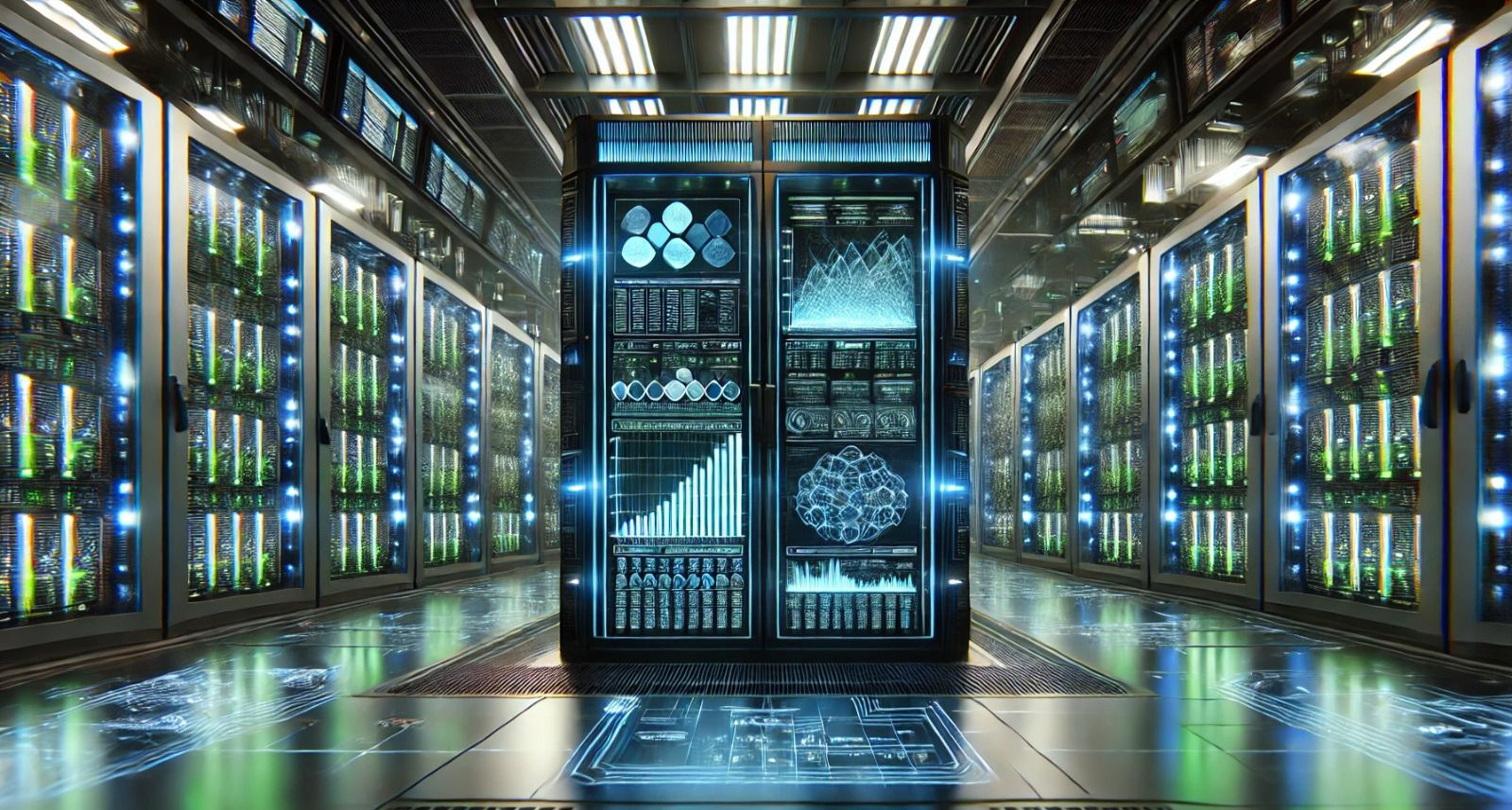
Tianhe, Chinese Military Supercomputer, Leads the Global Green Graph500 Ranking with an Impressive Energy Efficiency of 6,320 MTEPS/W. Developed in China, it symbolizes progress in sustainable technologies and leadership in high-performance computing. Its achievement highlights the future of artificial intelligence in an increasingly competitive and innovative global scenario.
A breathtaking technological advance promises to reshape the global balance in the field of artificial intelligence. At the heart of this revolution, a Chinese military supercomputer emerges as the new benchmark in the quest for energy efficiency and large-scale data processing.
With technologies that challenge expectations, the Tianhe, built by the National University of Defense Technology of China, has achieved a remarkable feat that is generating discussions and admiration in the international community.
Tianhe and the Supremacy of the Green Graph500 List
The Tianhe supercomputer has been ranked as the most energy-efficient system in the world in the big data processing category, according to the Green Graph500 list, a global reference in the industry.
-
Friends have been building a small “town” for 30 years to grow old together, with compact houses, a common area, nature surrounding it, and a collective life project designed for friendship, coexistence, and simplicity.

-
This small town in Germany created its own currency 24 years ago, today it circulates millions per year, is accepted in over 300 stores, and the German government allowed all of this to happen under one condition.

-
Curitiba is shrinking and is expected to lose 97,000 residents by 2050, while inland cities in Paraná such as Sarandi, Araucária, and Toledo are experiencing accelerated growth that is changing the entire state’s map.

-
Tourists were poisoned on Everest in a million-dollar fraud scheme involving helicopters that diverted over $19 million and shocked international authorities.


This list evaluates computing systems based on metrics that combine performance and energy consumption, focusing on intensive workloads such as machine learning and complex analytics.
The new version of the Tianhe Exa-node Prototype achieved an impressive 6,320 MTEPS/W (Million Traversed Edges per Second per Watt).
This result is a significant advance compared to its predecessor, which recorded 4,385 MTEPS/W.
With this, the Tianhe solidified its position at the top of the ranking, surpassing global rivals like Eniad, developed by the University of Pennsylvania, which ranked third with 2,057 MTEPS/W.
According to information released by the National Center for Supercomputing in Tianjin, responsible for operating the Tianhe, this victory demonstrates China’s commitment to leading the development of sustainable and high-performance solutions in advanced computing.
The Impact of High-Performance Computing
High-performance computing (HPC) is essential for solving extremely complex problems in areas such as science, engineering, and finance.
HPC systems utilize multiple processors in parallel, allowing for the simultaneous processing of enormous volumes of data and the execution of advanced simulations.
Supercomputers are indispensable for applications such as:
- Scientific Research: simulations in physics, chemistry, and biology;
- Climate Modeling: high-precision weather forecasts;
- Engineering: studies in fluid dynamics and structural analysis;
- Finance: risk assessment and economic modeling.
In this context, energy efficiency stands out, especially in light of the growing demand for big data solutions. The operation of HPC systems requires a considerable amount of energy, and solutions like the Tianhe excel by delivering high performance with a lower environmental impact.
Green Graph500: A Global Reference
The Green Graph500 was created to evaluate the energy efficiency of supercomputers in intensive computational tasks.
Developed by Torsten Hoefler from ETH Zurich, this methodology measures the performance of HPC systems in terms of consumption per watt, highlighting technologies that balance processing capability and sustainability.
This list complements the Graph500, which has been assessing the performance of supercomputers in graphics computing and data processing since 2010.
Together, these tools encourage the development of more efficient solutions for intensive workloads.
Advances in China and the Role of Tianhe
The advancement of Tianhe represents more than a technical victory. It also symbolizes China’s strategic investment in emerging technologies.
According to chief scientist Dr. Meng Xiangfei, the recognition achieved by Tianhe reinforces the country’s potential to lead the development of next-generation systems.
The expectation is that Tianhe will play a crucial role in supporting innovations in artificial intelligence and distributed computing, in addition to directly influencing the evolution of quantum computing.
Energy Efficiency as a Pillar of the Future
With the exponential increase in the need for big data solutions, energy efficiency has become one of the pillars of technological advancement.
HPC systems like Tianhe demonstrate that it is possible to combine high performance with sustainability, setting a new standard for the industry.
In addition to reducing operational costs, these technologies help mitigate environmental impact, a growing concern in datacenters around the world.
Reflections on the Future
The results achieved by Tianhe and its leadership in the Green Graph500 send a clear message: the future of computing is intrinsically linked to the pursuit of sustainability.
As China continues to invest in innovation, other countries will need to intensify efforts to keep up with advancements.
Will this technological race result in more international cooperation or just intensify global rivalry?









Seja o primeiro a reagir!