





 Portuguese
  English
  Spanish
  3 min of reading
  0 comments


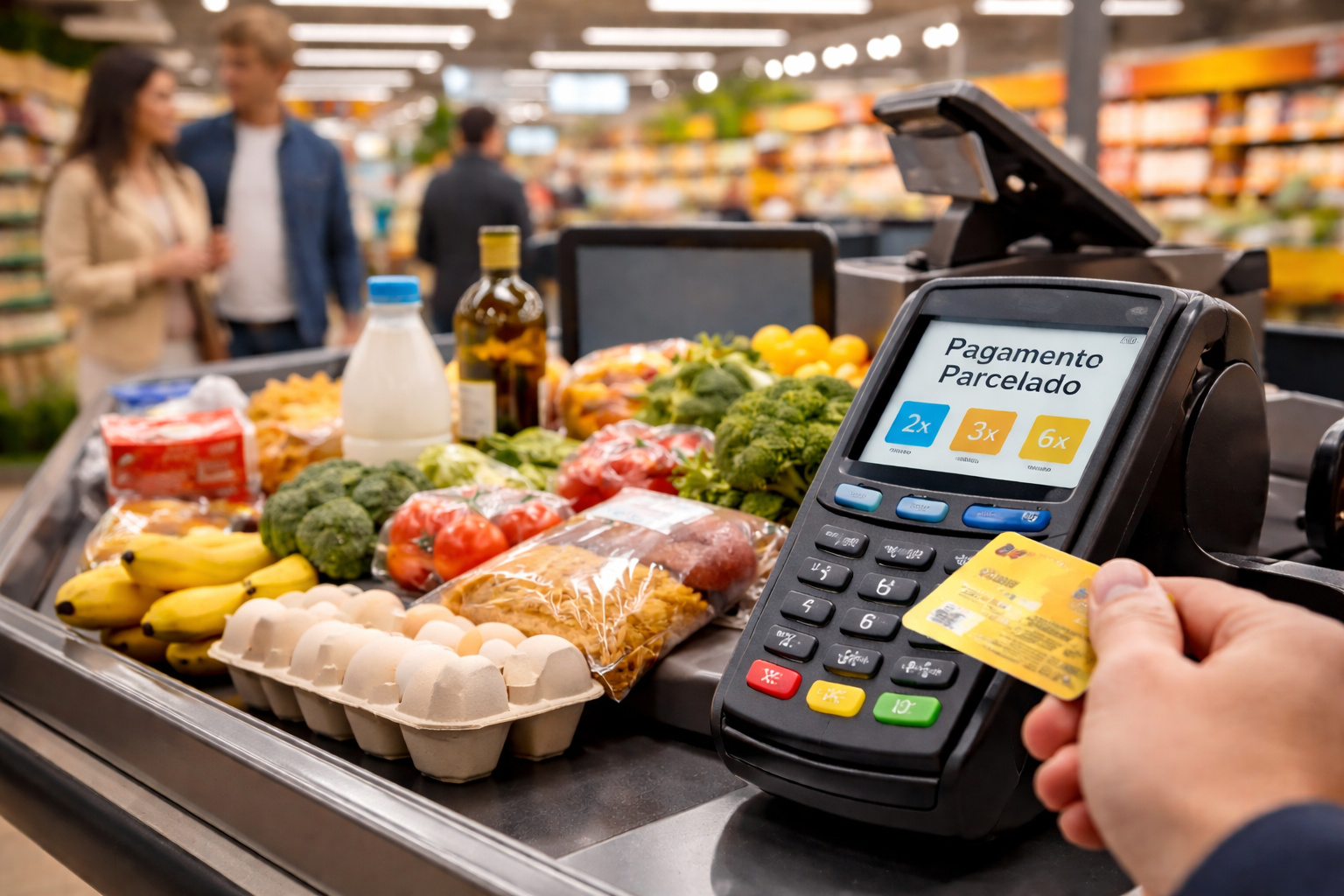
Food Installment Plans Reach Shelves, Reflect Greater Household Debt, and Reorganize the Way Essential Items Are Paid for in Grocery Retail
A silent change, yet with a significant social impact, began to solidify in Brazil throughout 2024 and gained traction in 2025. Supermarkets began to allow the installment of food purchases on credit cards, a practice previously limited to home appliances and higher-priced items. This movement draws attention because it directly alters the dynamics of basic consumption, while also highlighting the increased burden on the incomes of Brazilian families.
The installment plan, which was traditionally applied to general merchandise, has now reached supermarket purchases with higher values, especially full baskets. Thus, credit has ceased to be an exception and has become part of the daily food routine for some consumers, reflecting a scenario of pressured income and tighter budgets.
Change in Retail Accompanies Income Restrictions
The adoption of food installment plans arises as a direct response to the reduction in purchasing power and the greater difficulty of making cash payments. Supermarkets have identified that a portion of customers has come to rely on credit to maintain a minimum consumption standard, which led to the expansion of this option at checkout.
-
The government requests the Federal Revenue Service for a new system to automate the income tax declaration, reducing errors, time, and bureaucracy for millions of Brazilians.

-
Pix in installments, international Pix, and contactless payment without internet: the Central Bank revealed the new features coming to the tool that is already used by almost every adult in Brazil.

-
Mercado Livre has just started selling medications with delivery in up to three hours to your door, and this move could completely change the way Brazilians buy medicines on a daily basis.

-
In Dubai, rising tensions from the war in the Middle East are causing super-rich individuals to leave the Gulf and direct their fortunes to a new financial refuge in Asia.

Moreover, retail chains began to offer installment plans based on the total purchase amount, the customer profile, and agreements with card operators. Thus, the model is not standardized, varying between stores, brands, and specific commercial conditions.
Technology and Payment Methods Drive Installment Plans
The advancement of this model was only possible because payment companies and fintechs expanded credit solutions integrated with supermarkets. Since 2024, systems have been analyzing consumers in real-time at the moment of purchase, allowing for near-instant approval of installment plans.
This process eliminated bureaucratic steps and facilitated the use of credit in daily consumption. As a result, the credit card has come to function as a support tool for food consumption, something that until recently was not part of the retail routine.
Experts Point to Economic Alert
According to published analyses, food installment plans indicate a higher level of family debt. Credit, in this context, ceases to be a strategic choice and becomes a necessity to cover essential expenses.
Although installment plans relieve immediate cash flow, experts warn that this practice can compromise future income, as current expenses are shifted to the following months. Thus, the risk of structural indebtedness increases, especially among consumers who use credit regularly.
Commercial Strategy to Maintain Sales
From the perspective of supermarkets, installment plans also serve as a tool to preserve sales volume. In light of rising food prices and income restrictions, offering credit has become a competitive differential, preventing a decrease in average ticket size.
Chains emphasize that installment plans do not replace pricing policies, but serve as an alternative to keep consumption active. In many cases, the conditions are limited to minimum amounts, specific dates, or certain brands, reinforcing the controlled nature of the strategy.
Structural Change in Food Consumption
The growth of food installment plans between 2024 and 2025 reveals a structural transformation in the consumption behavior of Brazilian families. The practice showcases ongoing economic difficulties and, at the same time, repositions grocery retail in light of a financially pressured consumer.
This scenario raises an increasingly pressing debate: to what extent should credit finance essential daily items, and what will be the long-term effects of this dependence on family budgets and the financial health of the population?









-

-

-

-

-

18 pessoas reagiram a isso.