





 Portuguese
  English
  Spanish
  3 min of reading
  0 comments


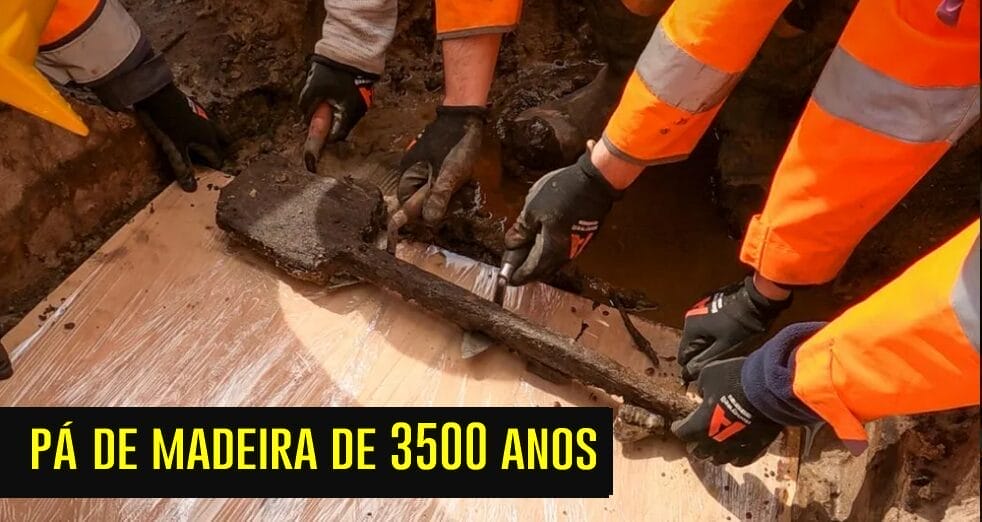
In An Impressive Discovery, Archaeologists Reveal A 3,500-Year-Old Wooden Spade Found Preserved In An English Trench.
Archaeologists often unearth objects like bones, ceramics, and stone tools. However, it is rare for them to find wooden artifacts, which usually decompose over time. This is why a team of researchers was surprised to discover a wooden spade dating back to the Bronze Age in England.
Radiocarbon dating revealed that the artifact is about 3,500 years old, making it one of the oldest and best-preserved wooden tools in the UK, according to a statement from Wessex Archaeology.
Phil Trim, one of the archaeologists responsible for the discovery, stated that the find is “so rare” that he never expected to find such a thing. “It’s a truly unique object, finding something that is made of wood that age,” he reported to the Independent.
-
Friends have been building a small “town” for 30 years to grow old together, with compact houses, a common area, nature surrounding it, and a collective life project designed for friendship, coexistence, and simplicity.

-
This small town in Germany created its own currency 24 years ago, today it circulates millions per year, is accepted in over 300 stores, and the German government allowed all of this to happen under one condition.

-
Curitiba is shrinking and is expected to lose 97,000 residents by 2050, while inland cities in Paraná such as Sarandi, Araucária, and Toledo are experiencing accelerated growth that is changing the entire state’s map.

-
Tourists were poisoned on Everest in a million-dollar fraud scheme involving helicopters that diverted over $19 million and shocked international authorities.


Archaeologists Found In Special Preservation Conditions
The spade was found in a circular ditch near a marshy area in southern England. This type of ditch was used to control flooding in residential areas. At first, the archaeologists thought it was just a tree root.
After a more detailed inspection, they realized it was an almost complete tool, likely carved from a single piece of oak.
The preservation of the spade occurred due to the waterlogged conditions of the site, which prevented oxygen from getting in, an essential factor for wooden decomposition. “Preservation occurs when the artifact remains constantly moist and buried, excluding oxygen,” explains Ed Treasure, an environmental archaeologist from Wessex Archaeology, in an interview with BBC News.
Thus, unlike common archaeological sites, where organic remains disappear over time, in the marsh, they can survive for thousands of years. However, they are extremely fragile, even when preserved.
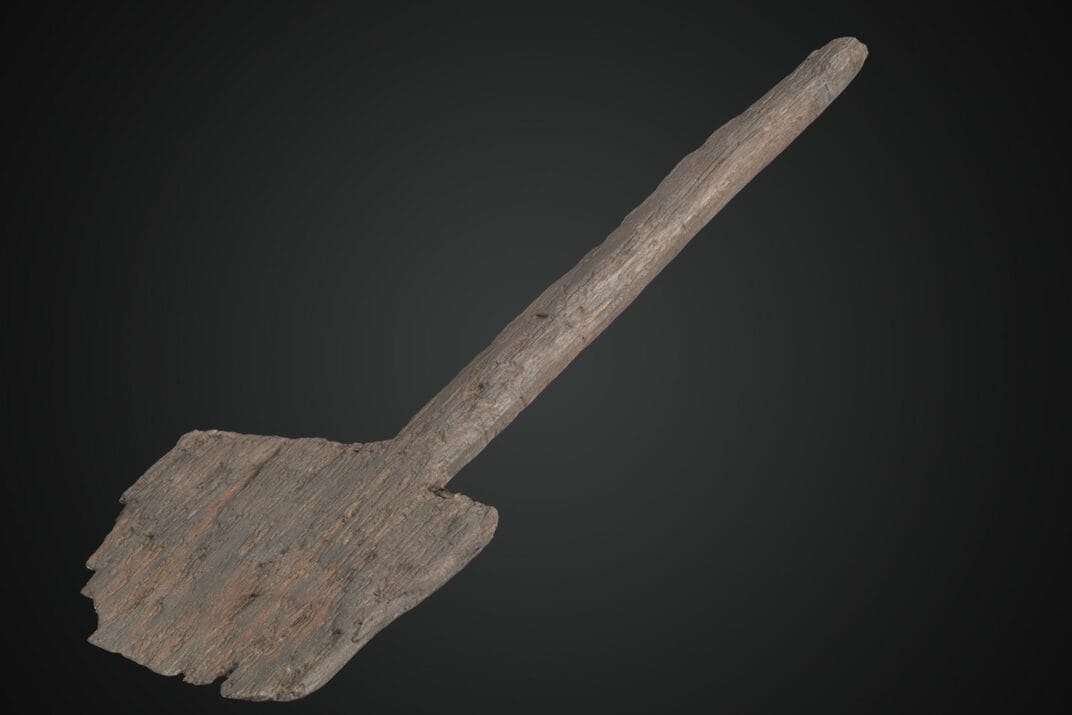
Wessex Archaeology
The Historical Context And The Possible Uses Of The Spade
When this spade was made, the inhabitants of the region, who until then were nomadic, were beginning to settle more permanently, cultivating crops and raising livestock. Although they didn’t live in the marshy areas year-round, they returned seasonally to take advantage of local resources, such as reeds and peat, and for grazing.
The archaeologists are still unsure how the spade was made or what its specific use was. However, they have some theories. “It may have been used to cut peat on-site,” suggests Treasure in an interview with New Scientist. Another hypothesis is that the tool could have been used to dig the very ditches in which it was found.
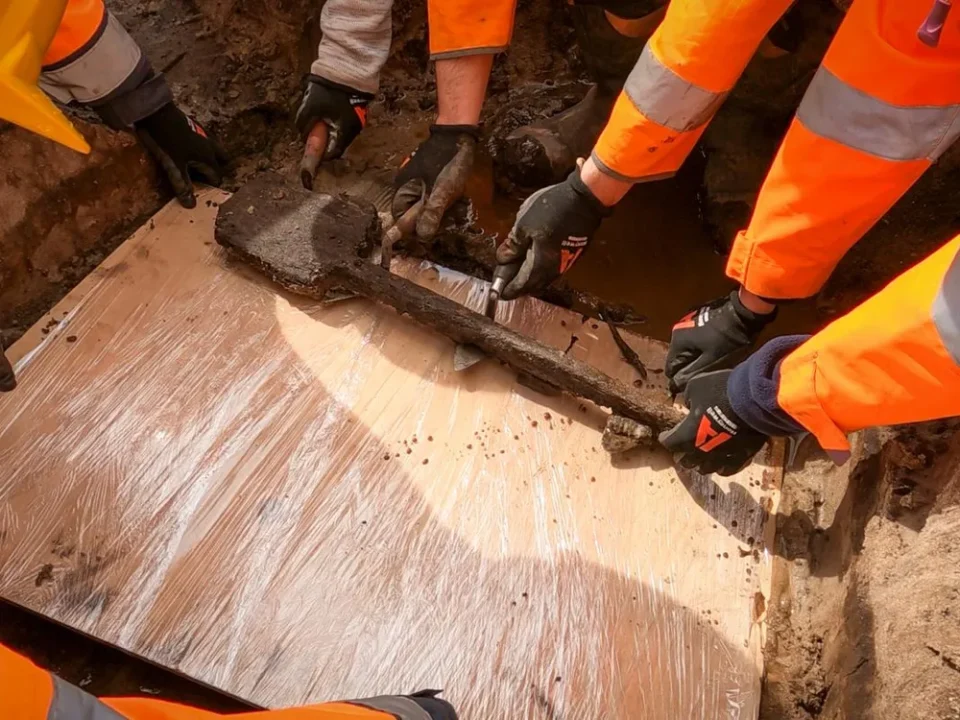
Wessex Archaeology
Future Prospects And The Scientific Value Of The Discovery
The research team plans to continue studies to learn more about the spade and the communities that inhabited the region thousands of years ago. “We are working in a landscape dominated by nature, where, to the naked eye, there are almost no signs of human activities,” comments Greg Chuter, a governmental archaeologist. “However, just below the surface, we find evidence of how ancient inhabitants adapted to the challenging environment of this region over 3,000 years ago.”
This discovery reinforces the importance of archaeology in uncovering the ways of life of ancient civilizations and human adaptations to adverse conditions.
By preserving and studying artifacts like this spade, archaeologists hope to expand knowledge about life in the past, in addition to valuing the rich cultural heritage of the region.









Seja o primeiro a reagir!