





 Portuguese
  English
  Spanish
  6 min of reading
  0 comments


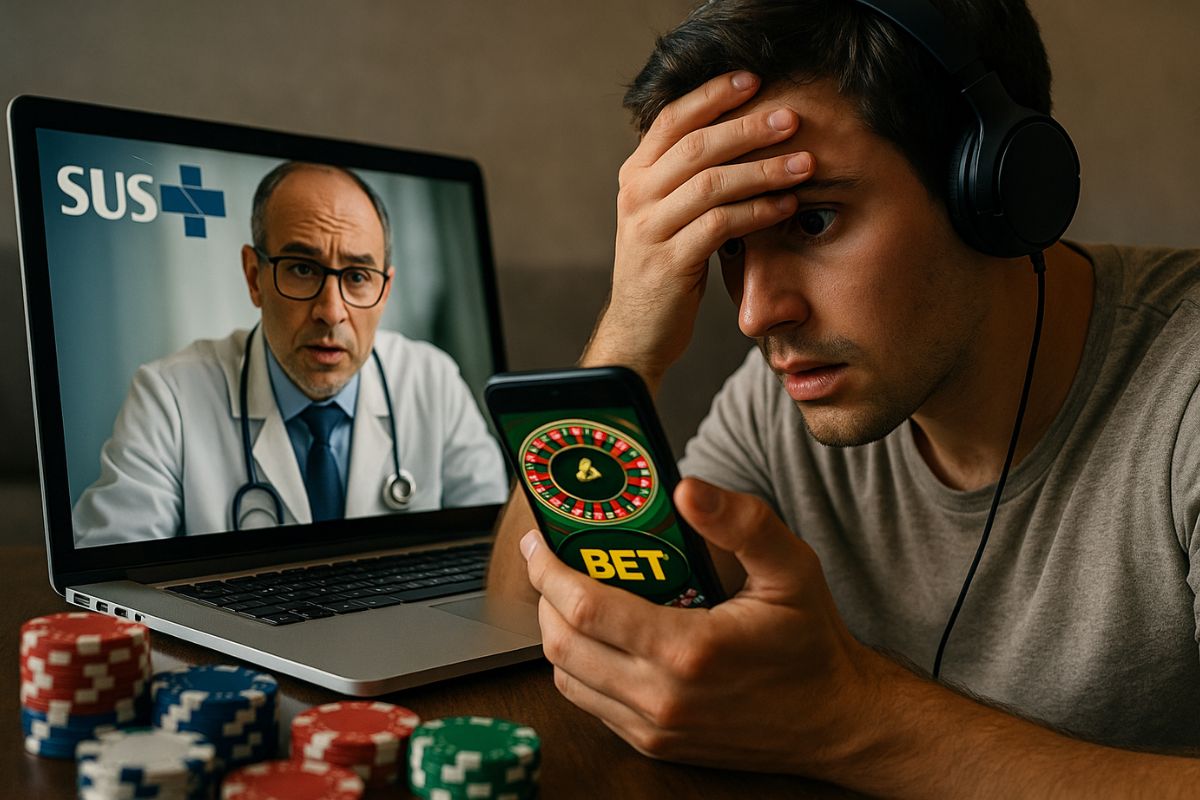
New SUS Service In Partnership With Sírio-Libanês Will Offer 450 Monthly Online Consultations To Treat Gambling Addiction, While Farm Platform Allows CPF Locking, Removal Of Profiles On Bets, And Supports Active Search For More Vulnerable Players In The Public Network, Including Youth And Beneficiaries Of Social Programs At Risk.
The SUS will gain, starting in February 2026, a specific telemedicine service for people with issues related to gambling and betting, in partnership with the Sírio-Libanês Hospital. According to the Folha de S. Paulo, there will be at least 450 monthly consultations, conducted remotely, with a promise to integrate the service into the SUS network and refer the most severe cases to in-person services.
At the same time, the federal government is launching a self-exclusion platform for betting sites, linked to the Ministry of Finance, which allows users to lock their CPF, block access to bets, and stop receiving advertisements. The tool will be accessed via the Gov.br account, starting December 10, and is part of a broader strategy to cross-reference data from the Finance and Health ministries to locate and protect the most vulnerable players.
SUS Telemedicine Will Be Entry Point For Treatment
According to the Ministry of Health, the SUS telemedicine service focused on gambling addiction will be the main entry point for those seeking help due to online gambling, including the so-called tigrinho game and sports bets.
-
Mothers and daughters come together, create an ‘express’ beauty salon and turn the idea into a network with 21 units, revenue of R$ 16.7 million and 12,000 subscribers.

-
End of the 6×1 schedule: how the reduction of hours can affect service companies, industry, and agribusiness.

-
Brazil Ignores Trump’s threats to BRICS, Buys 42 tons of gold and reduces the Dollar’s share by 6.45% in international reserves.

-
Havan buys historic football land in Blumenau for a million-dollar amount protected by a confidentiality clause and is already planning to change even the layout of streets to build a megastore in half-timbered style costing 80 million reais.


The service will operate in partnership with the Sírio-Libanês Hospital, which will be responsible for conducting remote consultations starting in February 2026.
The initial goal is to offer at least 450 consultations per month, a number that, according to Minister Alexandre Padilha, may increase with the participation of other hospitals that are already in negotiation with the government.
People served by the SUS telemedicine service will be referred, when necessary, to in-person services in the network, such as CAPS and other mental health facilities.
The idea is for the channel to be a point of quick and qualified support, preventing the problem from advancing into more serious issues of indebtedness, depression, and family breakdown.
From January to June 2025, the SUS already conducted 1,951 consultations for individuals with “gambling disorder”, practically what was recorded for the entire year of 2024, when there were 3,490 consultations.
The data shows an acceleration in the demand for care linked directly to the explosion of online gambling in the country.
Self-Exclusion Platform Locks CPF And Cuts Betting Advertising
Alongside the SUS telemedicine service, the Ministry of Finance launched a new self-exclusion platform for betting sites, accessed through the Gov.br account. On it, the bettor can choose how long and for what reason they want to stay away from gambling platforms.
During the selected period, the CPF will be blocked for access to bets, new registrations, and the receipt of marketing communications, advertisements, or promotions.
The system will issue a self-exclusion record, which will serve as the basis for betting companies to halt their relationship with that user.
Today, the Finance ministry already maintains a platform that allows users to block their profile at each betting house separately, and about 950,000 people have already requested exclusion from at least one company.
The novelty is that the new system will allow blocking across all bets at once, reinforcing protection for those trying to distance themselves from gambling.
According to the Ministry of Health, the tool will also disclose points of SUS care, directing users to Meu SUS Digital and the SUS Ombudsman. The intention is to connect the decision to self-exclude from gambling with a concrete point of care in the public health network.
Government Will Cross Data From Finance And Health To Map Risk
The measures were announced in Brasília by Ministers Alexandre Padilha (Health) and Fernando Haddad (Finance), who signed an agreement for data sharing on gambling. From this flow of information, the government aims to identify the profile of individuals with gambling-related issues and better understand the impact of betting on families’ health and income.
The Brazil Health and Electronic Gambling Observatory has been created, which will start cross-referencing data from the Finance ministry, such as amounts wagered and time spent on bets, with SUS records on treatments and gambling-related disorders.
With this, the public network will be able to conduct “active searches” for gamblers in more critical situations, rather than waiting for them to reach out to the service spontaneously.
Haddad stated that the Finance ministry already stores data on gambling, including how much each person bets and how much time they spend on the sites, which allows for the identification of more concerning cases, both in the criminal sphere and in terms of addiction.
Padilha, in turn, emphasized that the SUS needs to prepare for a public health issue that is growing at a rapid pace, especially among the younger population.
Explosion Of Betting Affects Youth And Beneficiaries Of Social Programs
Online betting began its operations in Brazil starting in 2018, at the end of Michel Temer’s government, and grew in a gray area of legislation until the market was regulated under Lula’s government. During this period, access to betting sites and apps spread throughout the country.
A Datafolha survey from 2023 indicates that 15% of the population has already engaged in betting, with a strong concentration among youth and a significant presence of beneficiaries of the Bolsa Família program.
The combination of easy access, promises of quick gains, and aggressive advertising campaigns has heightened experts’ concerns about indebtedness, depression, and loss of income among vulnerable families.
In November, the Supreme Federal Court ruled that the federal government create mechanisms to prevent beneficiaries of social programs from using assistance resources for electronic gambling.
The new initiatives involving the SUS and the platform from the Finance ministry fit into this context of pressure for the state to act both in the economic regulation of the sector and in the protection of the mental health of the population.
SUS Network Will Play Central Role In Protecting Vulnerable Gamblers
With the specialized telemedicine service, the gambling observatory, and the self-exclusion platform, the government aims to transform the SUS into a central axis of prevention and care policy regarding gambling addiction. The idea is for information about risky gambling to serve to activate the health network before damage becomes irreversible.
According to the Ministry of Health, assistance will operate in an integrated manner within the SUS network, allowing users who self-exclude from gambling to be referred for psychological, psychiatric, or social follow-up.
When necessary, these patients should be guided to in-person care, increasing the chances of breaking the cycle of addiction.
The government is betting on three combined fronts: information, blocking, and care. Information through the observatory and cross-referenced data; blocking with CPF locking and advertising restrictions; and care with telemedicine and in-person SUS services.
The challenge now will be to transform these tools into quick and effective responses for those who have already lost control over gambling.
And you, do you think that the SUS and the new self-exclusion platform will really protect the most vulnerable gamblers or is there still some important measure missing to curb gambling addiction in Brazil?









Seja o primeiro a reagir!