





 Portuguese
  English
  Spanish
  4 min of reading


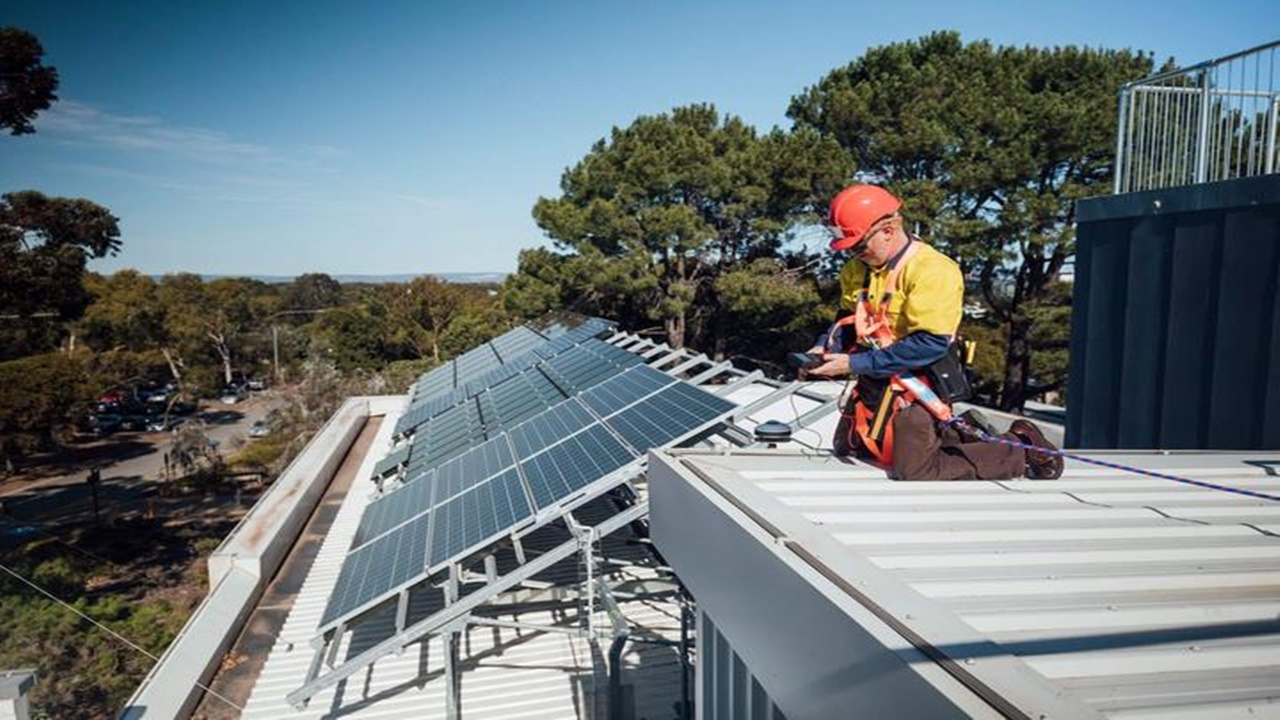
There Is No Doubt That The Pandemic Changed Our Perspective Of The World Forever, Forcing Us To Re-examine Our Vulnerability To Natural Phenomena.
Many are attributing the impact of the pandemic to the combination of urbanization, globalization, and population density. Another consequence of these combined realities is the increase in CO2 emissions and other negative environmental effects. Despite the need to focus on immediate circumstances, fundamental priorities have not changed. The main challenge of our generation remains climate change. Because behind this wave of Covid-19 is a tsunami of climate change heading our way.
Also Read
- Gol Opened Home Office Positions To Work Comfortably From Home; There Is No Age Limit, No Higher Education Required, And You Can Apply Now!
- Multinational Sodexo Opens Job Vacancies At Fundamental, Technical And Higher Levels To Work In Rio de Janeiro, São Paulo, Macaé, Bahia And More, On This November 2nd
- Pecém Complex Seeks Business Opportunities With Investors In Europe For New Business Opportunities In Shipbuilding, Maintenance And Repair, Propulsion, Dredging, Navigation, Electronics And Services
The good news is that we are the generation that knows this. We are the generation, and probably the only generation, that can change the trajectory of carbon emissions and, therefore, climate change. At a time when some people see ecology and technology as opposites, the reality is that technology allows us to unite progress and sustainability, leading to stronger resilience. There are two main technologies that help solve the climate change equation: digital and electricity.
The First Technology Transforming Humanity Is Digital
The first technology transforming humanity is digital. Think about how digital technologies revolutionized the way we work and live together. The first episode of the internet was about connecting people with people. The next will be about revolutionizing the way we live and connect with the environment. It will be a matter of machine to machine and people to machines. This is made possible by the combination of the Internet of Things (IoT), which connects everything around us, and Big Data, which involves collecting, aggregating, and analyzing large amounts of information in data centers to provide important insights. And today, the ability to train machines and algorithms to extract meaning from all this data is virtually unlimited.
-
Renewable energy advances over protected areas in Brazil, and a survey by the Energy Transition Observatory reveals silent impacts that challenge environmental conservation and pressure sensitive traditional territories.

-
Rio Grande do Sul accelerates energy transition: State invests in renewable technologies and consolidates decarbonization strategies and pathways to attract billions in new industrial investments.

-
With 160,000 m² of collectors, an area larger than 20 football fields, Silkeborg, in Denmark, hosts a solar thermal plant that heats 19,500 homes and could become the largest solar heating plant in the world.

-
A study reveals the expansion of renewable energy procurement in Brazil and shows how companies are taking advantage of opportunities to reduce expenses, ensure energy efficiency, and strengthen strategic environmental commitments.


Digitization is already creating a more desirable future – a human-centered existence with smart homes and buildings, smart manufacturing, smart infrastructure, and smart cities. These innovations use data and digital technologies to help us better share and conserve the resources we are consuming.
A Green Future: Four Keys To Sustainability
The second technology, which is probably less intuitive because it has been around for many years, is green electricity. Think of solar energy, microgrids, net-zero buildings, and electric vehicles. Electricity is the only way to decarbonize energy. So, prepare for a world that will be much more electric. But from now on, it will not be the same electricity. It will be renewable electricity. The future is green.
“At Schneider Electric, we have been working with many expert groups and other companies to find the equation that takes us from where we are to the sustainable and resilient future we need,” said Carlos Urbano, Director of Industrial Automation at Schneider Electric Brazil.
We see four simple variables in the equation:
- Digital: we can be much more efficient everywhere, thanks to digital technology. By applying it, whether in smart buildings, smart manufacturing, or smart cities, we can achieve significant efficiency changes compared to what we are today.
- Circular: it is about ensuring that everything we do cultivates a more circular economy than the one we have.
- Electric: in the coming years, the share of electricity in everything will double. We talk a lot about electricity, but it currently represents only about 20% of the energy we consume. In 20 years, it will double to 40%.
- Renewable: today, electricity is only 6% renewable. Soon, it will be 40%.
And it is not about waiting for one of these variables to become present to start focusing on another. We must work with all of them in parallel. We cannot wait, because everything we build today will be here for many years. If we want to face climate change, we must implement all these changes now.
Sustainability Creates Resilience
Both the pandemic crisis and climate change are major threats to society. Now, more than ever, we need our world to be sustainable. We need humanity to be resilient. And we need to keep our focus on accelerating the momentum that was already underway to create a resilient and sustainable future.
Covid-19 did not change the fundamental. Instead, it emphasized the need for agility and adaptation. In a pressured economy, in a weakened world, it is a call for awareness, efficiency, and sustainability. All companies can do better and be more sustainable in how they conduct their business.
by – Carlos Urbano, Director of Industrial Automation at Schneider Electric Brazil










Seja o primeiro a reagir!