





 Portuguese
  English
  Spanish
  6 min of reading
  3 comments





In The Midst Of 13 Consecutive Months Of Declining International Prices, Suzano Began To Speak Of Global Collapse Of Pulp, Claiming That Current Prices Are Economically Unsustainable And That A Significant Part Of Global Production Capacity Is Already Operating Below Cash Cost, Especially In Europe
Suzano’s reading of the industry’s moment is straightforward: the combination of weaker demand in some regions, excess capacity, and rising input costs has created the conditions for a Global Collapse Of Pulp manifested in compressed margins and intense pressure on producers with less efficient structures. In its assessment, about 15% of global short fiber capacity is already operating below cash cost, meaning it is systematically producing at a loss.
At the same time that it describes a prolonged stress scenario in the market, with short fiber trading below $600 for more than a year, the company reinforces that the adjustment will come from supply, with shutdowns of less competitive factories, while it seeks to navigate the adverse cycle with financial discipline, structural cost reduction, and diversification into higher value-added businesses.
Why Suzano Talks About Global Collapse Of Pulp
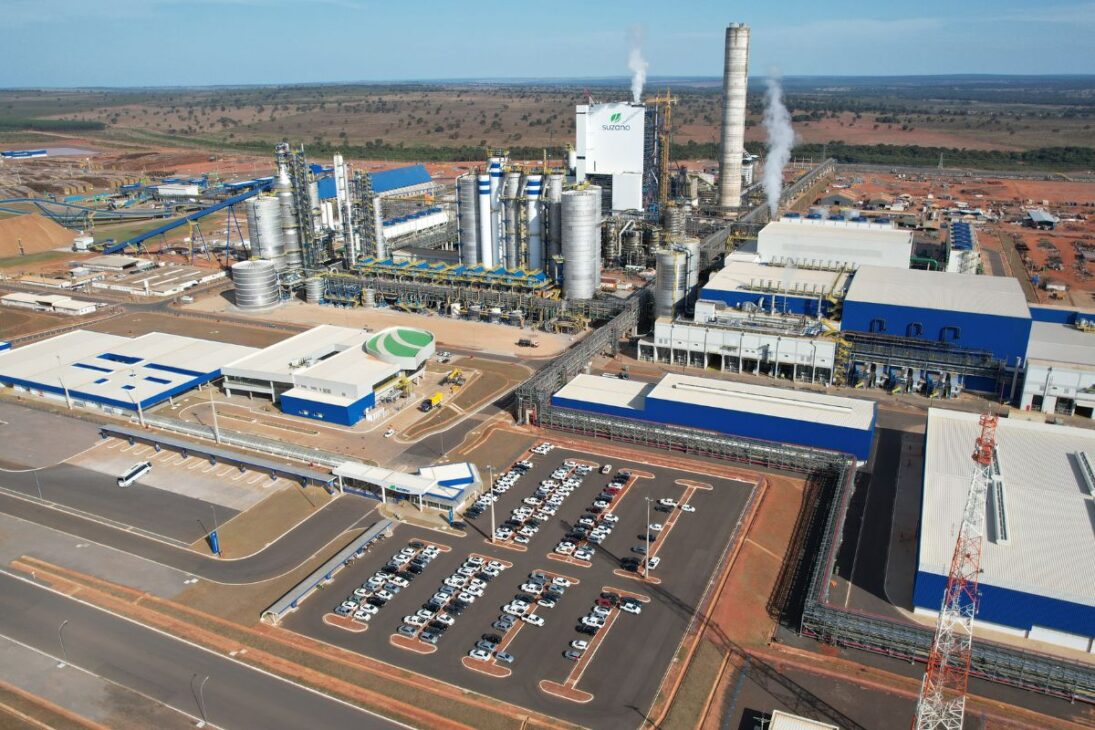
When Suzano uses the term Global Collapse Of Pulp, the focus is not on a physical rupture of the chain, but on an economic collapse of part of the industry.
-
Brazilian city bets on the business environment to generate jobs and attract investments in the energy sector — secretary reveals strategy at Macaé Energy 2026.

-
50 viaducts, 4 tunnels, 28 bridges, and 40 kilometers of bike paths: BR-262 in Espírito Santo will receive 8.6 billion reais for the largest engineering project in the state’s history, inspired by the Immigrant Highway in São Paulo.

-
Brazil produces too much clean energy and doesn’t know what to do with it: over 20% of solar and wind capacity was wasted in 2025 while investors flee and 509 renewable generation projects were abandoned in the last year.

-
Piauí will produce a new fuel that replaces diesel without needing to change anything in the truck’s engine and reduces pollutant gas emissions by half: truck drivers from all over the Northeast are already celebrating the news that will arrive later this decade.

Prices below $600 per ton of short fiber for 13 consecutive months have compressed margins to a point where several factories are now operating below cash cost, a clear signal that the business model in these units has become unsustainable in the short term.
This imbalance reflects a mismatch between supply and demand on a global scale.
On one side, the sector has experienced years of capacity expansion in different regions.
On the other, the economic slowdown in developed markets, consumption adjustments, and regulatory changes in countries like China have reduced the pace of pulp absorption.
The result is an environment in which the most efficient producers can navigate the cycle, while the less competitive approach forced shutdowns.
Unsustainable Prices And Regional Impact
The company classifies current prices as completely unsustainable, especially when considering the European reality.
In some regions, rising energy, logistics, and raw material costs have pushed expenses to a level that erodes any residual margin.
Internal estimates suggest that up to a quarter of pulp production capacity in Europe has already become economically unviable, reinforcing the risk of decommissioning entire lines or units.
In Asia, the picture is different, but not less challenging. The recent rise in the price of wood chips in China, in the range of $25 to $40 additional per ton, pressures the cost structure of local factories and players that depend on this input.
At the same time, new restrictions on the use of recycled fibers in specific applications increase the demand for virgin pulp, creating an environment in which supply needs to be adjusted in a coordinated way to avoid exacerbating the Global Collapse Of Pulp.
Supply Adjustments As A Response To The Decline Cycle
In the face of 13 consecutive months of depressed prices, Suzano’s assessment is that the necessary adjustment will primarily occur on the supply side.
The company projects significant capacity cuts in the coming quarters, whether through temporary shutdowns or permanent closures of factories that cannot compete on cost.
The logic is clear: if a portion of the sector sells below cash cost, that portion is likely to exit the market.
This movement is expected to be more intense in regions where structural costs are higher and production scale is smaller.
Operations with limited access to high productivity forests, expensive logistics, or old and less efficient assets are the first candidates for production reductions.
Ultimately, the adjustment process itself, over time, may alleviate the situation of Global Collapse Of Pulp, paving the way for a gradual recovery of prices at levels more compatible with the economic sustainability of the industry.
Cost Strategy: How Suzano Seeks To Navigate The Cycle
While describing an adverse environment for the entire sector, Suzano emphasizes that it has been working to maintain its position among the lowest-cost producers in the world.
In the third quarter, cash cost dropped by about 4 percent to 801 reais per ton, now sitting below 800 reais in the fourth quarter, at the lowest level in years.
Cost reduction, in this context of global collapse of pulp, becomes as strategic as any price recovery.
This result was driven by lower wood and energy costs, logistical gains, and savings in the use of chemical inputs.
The company also signed a new wood supply contract with Eldorado, which is expected to reduce consumption per ton by approximately 4 percent starting in 2026.
The stated goal is to keep costs structurally low until 2027, consolidating a resilient position against competitors more pressured by regional costs.
Financial Discipline Amidst Price Pressure
In the financial arena, Suzano’s strategy is coupled with caution.
The company registered an increase in leverage to about 3.3 times Ebitda, a direct reflection of the decline in international pulp prices, but maintained stable net debt and delivered positive free cash flow, even after about 1 billion reais in extraordinary expenses related to operations with Eldorado and early bond redemptions.
The company issued $1 billion in ten-year bonds, with the lowest spread in its history, extending the average debt maturity to around 80 months at a cost of about 5 percent per year.
Additionally, the foreign exchange hedge portfolio has the potential to generate up to 2.5 billion reais in cash gains by 2026.
In an environment described as a global collapse of pulp, extending maturities, reducing financing costs, and preserving liquidity becomes an essential part of the survival plan and positioning for the next cycle.
Packaging And Diversification Beyond Market Pulp
An important front to reduce direct exposure to the Global Collapse Of Pulp is diversification into higher value-added businesses.
The packaging unit recorded its first positive Ebitda, reaching 542 million reais, an increase of 11 percent compared to the previous quarter.
The Pine Bluff plant in the United States became profitable for the first time, marking a turning point in the strategy of internationalizing its portfolio.
Executives indicate that the packaging division should continue to expand margins and production in 2026, supported by increasing domestic demand and operational improvements at the Mucuri unit in Bahia.
In the United States, the intention is to expand the presence in papers aimed at the food sector, reducing reliance on the liquid packaging segment.
By building a revenue base less tied exclusively to market pulp prices, Suzano is trying to cushion the effects of the negative cycle and capture value in chains closer to the end consumer.
Focus On Previously Contracted Projects And Limitation Of New Investments
Despite maintaining a long-term plan for the business, the company has taken a cautious tone regarding new projects.
The declared priority is to extract value from investments already made, including operations in Aracruz, Espírito Santo, the partnership with Kimberly Clark, and packaging units in the United States.
The company does not intend to launch large ventures in the short term, avoiding capacity expansion at a time when the dominant discourse is of a Global Collapse Of Pulp and the need for supply cuts.
In the dissolving pulp segment, Suzano indicates that its stake in the Austrian company Lenzing will remain at around 15 percent amid margins compressed by oversupply in Asia.
The expectation is that the company will present a strategic update at its Investor Day, detailing cost reduction goals, leverage plans, and integration plans for the joint venture with Kimberly Clark, always emphasizing capital discipline.
What The Global Collapse Of Pulp Indicates For The Next Years
The alert about a Global Collapse Of Pulp issued by Suzano serves as a stress thermometer for the entire chain, from fiber producers to the paper, packaging, and hygiene industries.
If the diagnosis is correct, the next period should be marked by the closure of capacity in high-cost regions, the consolidation of more efficient players, and a gradual rebalancing between supply and demand, possibly accompanied by a slow recovery of prices to more sustainable levels.
For investors, industrial customers, and policymakers, the scenario described by the world’s largest producer of eucalyptus pulp indicates that the current phase is not just an outlier, but a cycle that requires medium-term decisions.
Operational efficiency, financial discipline, and diversification appear as key responses to this environment of strong pressure on margins.
In light of this, in your view, does the diagnosis of a global collapse of pulp tend to accelerate a healthy consolidation of the sector or could it also generate risks of disorganization in supply and a chain impact on paper, packaging, and hygiene product prices in the coming years?










Fui diagnosticada com doença de Parkinson há quatro anos. Por mais de dois anos, dependi da levodopa e de vários outros medicamentos, mas, infelizmente, os sintomas continuaram piorando. Os tremores se tornaram mais perceptíveis e meu equilíbrio e mobilidade começaram a declinar rapidamente. No ano passado, por desespero e esperança, decidi experimentar um programa de tratamento à base de ervas da NaturePath Herbal Clinic.Sinceramente, eu estava cética no início, mas, poucos meses após o início do tratamento, comecei a notar mudanças reais. Meus movimentos ficaram mais suaves, os tremores diminuíram e me senti mais firme ao caminhar. Incrivelmente, também recuperei grande parte da minha energia e confiança. Tem sido uma experiência transformadora. Me sinto mais eu mesma novamente, melhor do que me sentia há anos. Se você ou um ente querido está lutando contra a doença de Parkinson, recomendo muito que você considere a abordagem natural deles. Você pode visitar o site deles em www. naturepathherbalclinic .com
Tamara que com esta noticia a Suzano e seus concorrentes votem freios nos seus projetos de expansão de produção de celulose e plantio de eucalipto acabando com os biomas originais e naturais do pais, contando com financiamentos subsidiados e altamente favoráveis do sistema BNDES.
Com essa tendência de queda nos preços como é que ainda tem uns bilhões sendo investidos no MS nesse ramo sabendo da tendência de queda!!??.. 😫👎