





 Portuguese
  English
  Spanish
  4 min of reading
  0 comments


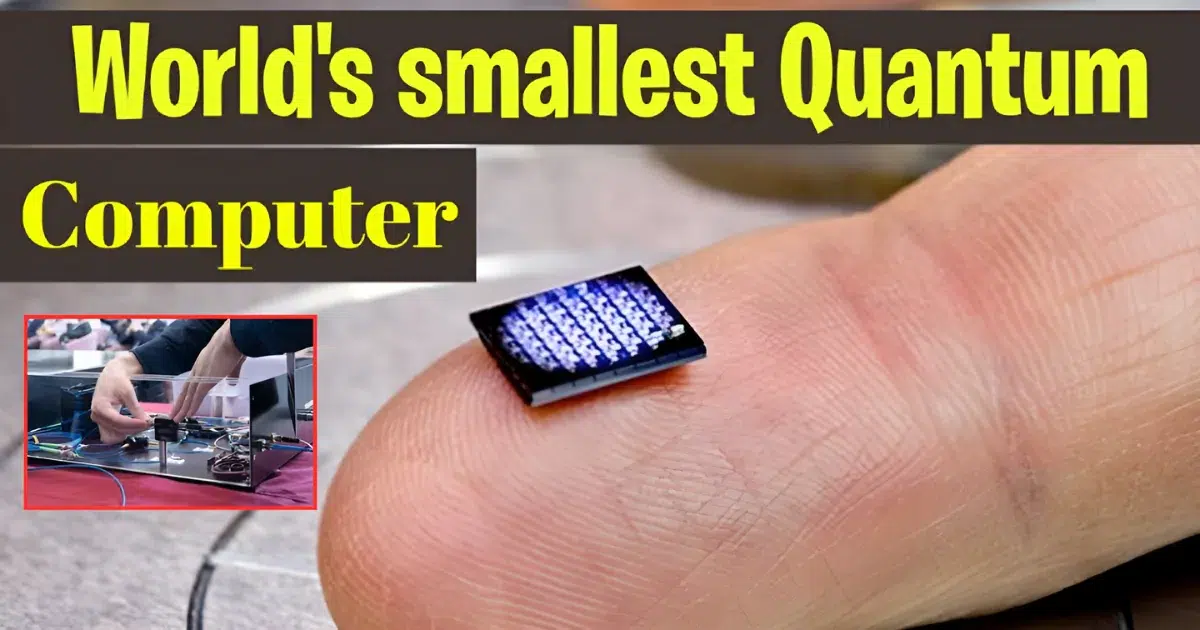
NTHU: The Smallest Quantum Computer in the World, Using a Single Photon (A Tiny Particle of Light) and Operating at Room Temperature
Quantum computing, which once seemed a distant promise, is beginning to become a transformative reality. For decades, experts have predicted that it would revolutionize entire industries, from artificial intelligence to cybersecurity.
However, traditional quantum computers, which require extreme updates and bulky infrastructure, limit their applicability.
This changed with the innovation from National Tsing Hua University (NTHU) in Taiwan, which developed the smallest quantum computer in the world, capable of operating with a single photon.
-
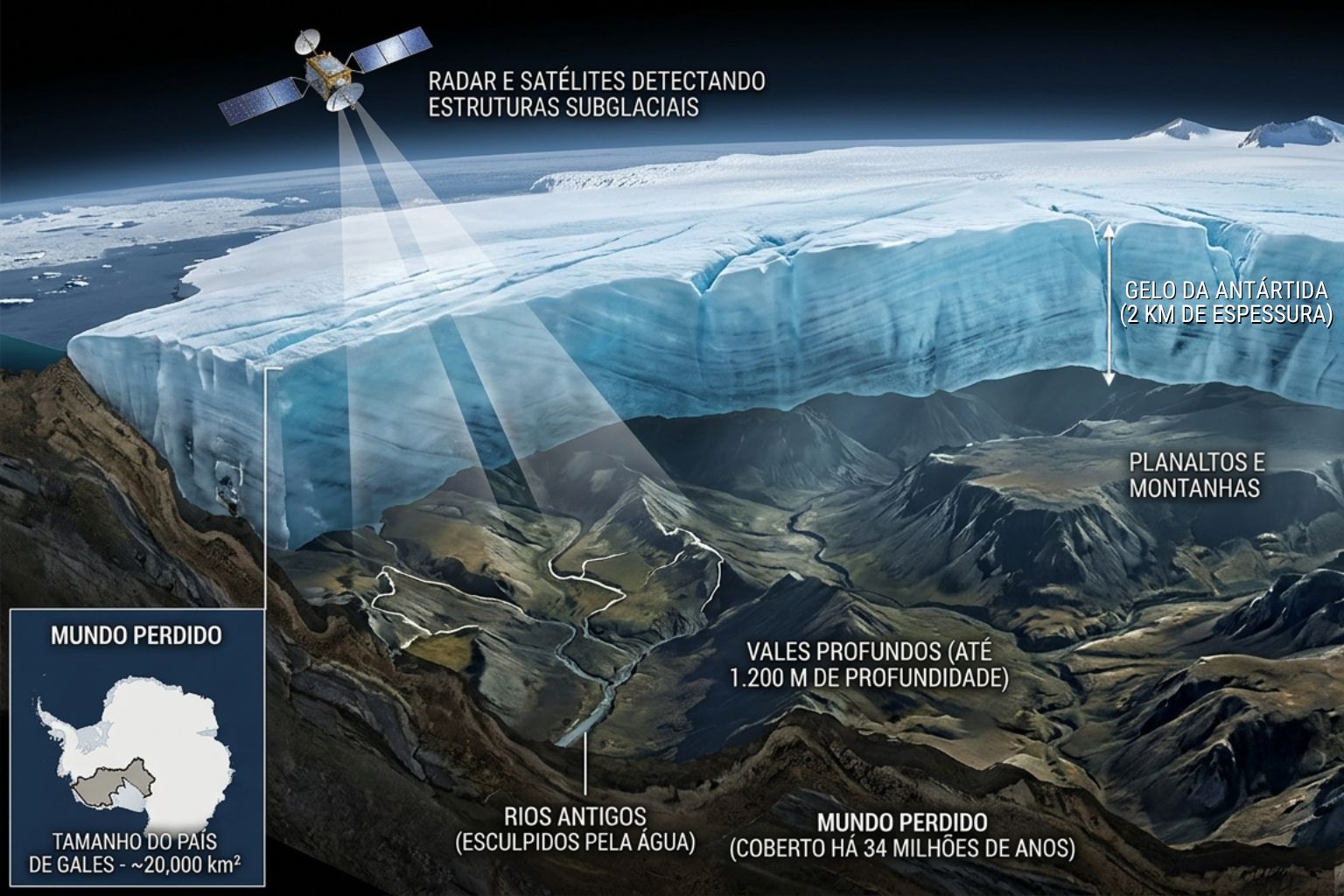
Satellites and radars revealed, beneath 2 kilometers of ice in Antarctica, a lost world the size of Wales, with rivers, valleys 1,200 meters deep, and plateaus sculpted by water, frozen for 34 million years, when the continent had temperate forests and was part of a supercontinent that included South America.
-
A 2 kg exoskeleton with an 800-watt motor and artificial intelligence that predicts movements in 2 milliseconds reduces the load on the legs by up to 30 kg, increases strength by 40%, and allowed an 84-year-old woman to climb mountains without falling behind.

-
The Senna Tower in Balneário Camboriú is using stakes considered unique in the world that go down 40 meters and are driven 5 meters into the hardest rock on the planet, with technology approved by the same engineer who designed the Burj Khalifa.

-
The drought may be pushing a much larger crisis than just a lack of water; in addition to affecting crops, reservoirs, and cities, it can also help strengthen bacteria that no longer respond well to antibiotics.


The Innovation that Defies the Limits
The quantum computer developed by NTHU is a technological milestone. Unlike conventional quantum systems that use multiple qubits to process information, the NTHU model uses just one photon, the smallest known particle of light.
This approach brings several advantages that could transform the future of quantum computing. Photons are extremely indirect and immune to external interferences, making them ideal for precise and long-lasting calculations.
Additionally, the NTHU quantum computer does not require the extremely low temperatures allowed for the operation of traditional models.
Most quantum computers need to be cooled to temperatures close to absolute zero (-273°C), which requires expensive and complex cryogenic cooling systems.
The NTHU model, however, operates at room temperature, which drastically reduces costs and complexity, making the technology more accessible.
Another notable aspect is the compact size of the machine. While quantum computers typically take up large spaces and block massive infrastructure, the NTHU quantum computer is small enough to fit on a desk.
This opens doors for commercial use and the scalability of quantum computing, with potential applications in various fields such as artificial intelligence, cybersecurity, finance, and even drug discovery.
How the Single Photon Quantum Computer Works
To understand how this innovation works, it’s essential first to grasp some concepts of quantum mechanics. Quantum computing is based on two fundamental principles: superposition and entanglement.
Superposition allows a quantum bit (qubit) to exist in multiple states at once, unlike traditional bits that are limited to a value of 0 or 1.
Entanglement, in turn, is a property that allows qubits to interact with each other, even over large distances, increasing processing speed.
In the case of the NTHU computer, the photon acts solely as the qubit, enabling calculations with extreme precision and reliability.
The fact that it does not require cryogenic cooling is one of the main innovations, making the system much more efficient and faster compared to traditional quantum computers.
Transformative Applications for Various Industries
Quantum computing has the potential to revolutionize various fields. Among the most promising applications are cybersecurity, artificial intelligence, and drug discovery.
In cybersecurity, quantum computers could break traditional encryptions, but they also have the capability to create unbreakable encryption systems.
This could ensure much more robust protection against cyberattacks.
In the field of artificial intelligence, quantum computing can accelerate the training of models, making them faster and more efficient.
This would have a direct impact on areas like machine learning, where large volumes of data need to be processed quickly.
Another area where quantum computing can make a significant difference is in drug discovery.
The ability to simulate molecular interactions more accurately and quickly can accelerate the development of new treatments and therapies, which is a crucial advancement in the pharmaceutical industry.
The Role of Taiwan in the Quantum Race
Taiwan, a hub of semiconductor innovation, has increasingly become an important player in quantum research.
The NTHU, with its development, places the country at the forefront of quantum computing, competing with giants like Google, IBM, and even China.
The Taiwanese government has heavily invested in research and development in the field of quantum computing, creating a favorable environment for technological innovations.
As a result, the country not only strengthens its position in global science but also enhances its competitiveness in the high-tech market.
Challenges and Future Prospects
Although NTHU’s exclusive single photon quantum computer is a significant advance, quantum computing still faces considerable challenges.
The high development costs and issues related to “quantum decoherence”—where errors can corrupt data—are obstacles that need to be overcome.
Additionally, the scalability of the technology, or the ability to enhance computational power without increasing size or cost, remains a question to be solved.
Nevertheless, the development of a functional quantum computer at room temperature is a crucial step towards overcoming these barriers.
In the coming years, improvements in error correction and energy efficiency may pave the way for large-scale commercialization of this technology.
The Future of Quantum Computing
NTHU’s exclusive photon computer represents a significant leap in the field of quantum computing.
By eliminating the need for cryogenic cooling and being compact enough for commercial uses, it opens new possibilities for the implementation of this technology.
With transformative applications across various sectors, this innovation positions Taiwan as a leader in global quantum research, further solidifying its role in technological advancement.
With information from Engineerine.





Seja o primeiro a reagir!