





 Portuguese
  English
  Spanish
  6 min of reading
  8 comments


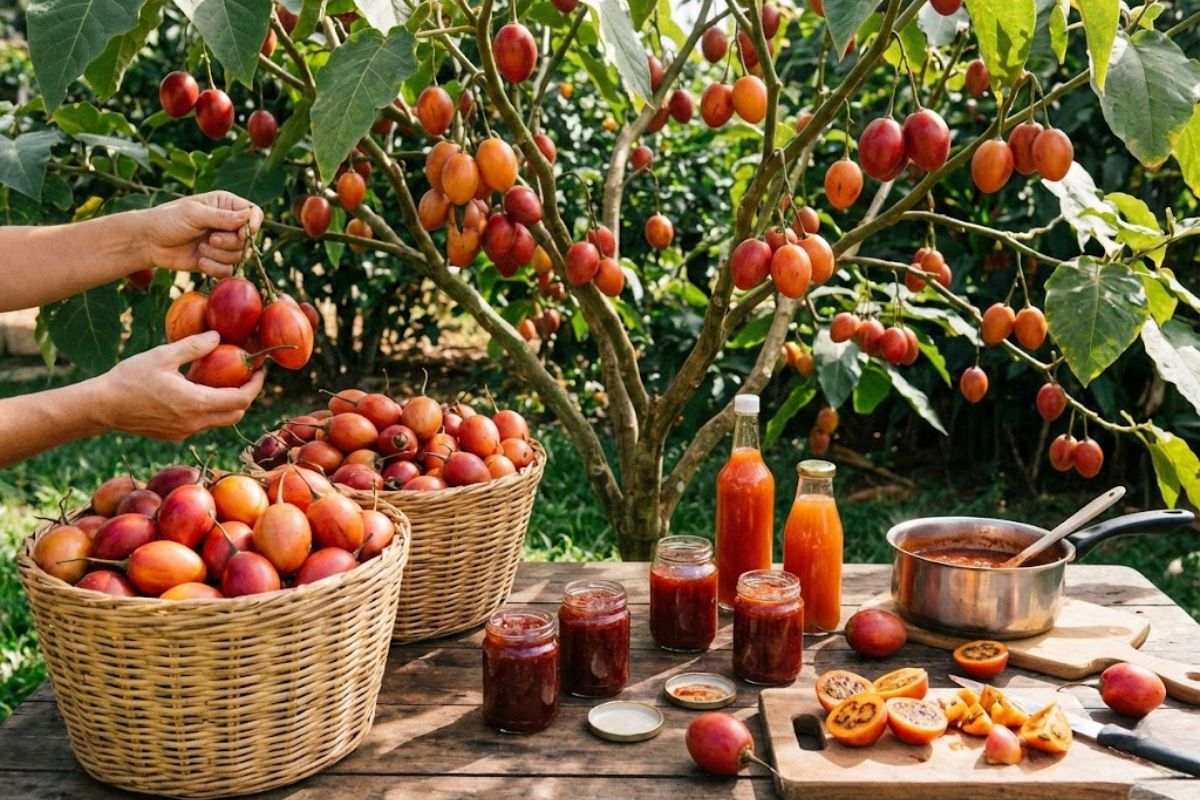


Almost Forgotten in Brazil, the Tamarillo, Called Tree Tomato, Returns to Backyards for Producing for Up to Two Decades, Yielding 20 to 40 kg Per Year, Outlasting Vegetables, and Turning into Sauce, Juice, Vinaigrette, and Jelly.
Almost forgotten in Brazil, the tamarillo was once a common presence in estates and backyards, known as tree tomato, French tomato, or Japanese tomato, reaching nearly 4 meters and remaining sturdy when the common tomato plant suffered from weather, pests, and constant replanting.
While the traditional tomato plant requires staking, tying, frequent attention, can suffer from rain or strong sun, and completes production quickly, the tamarillo delivers repeated harvests for years, with an annual yield of dozens of kilos and the advantage of serving for both savory and sweet recipes.
What Is Tamarillo and Why Does It Seem “Too Good”

The tamarillo is described as a tree tomato: woody trunk, larger than the sprawling tomato plant, and a long production cycle. It is not a plant that produces fruit and dies soon after. The central idea is simple yet powerful: plant once and harvest for a long time.
-
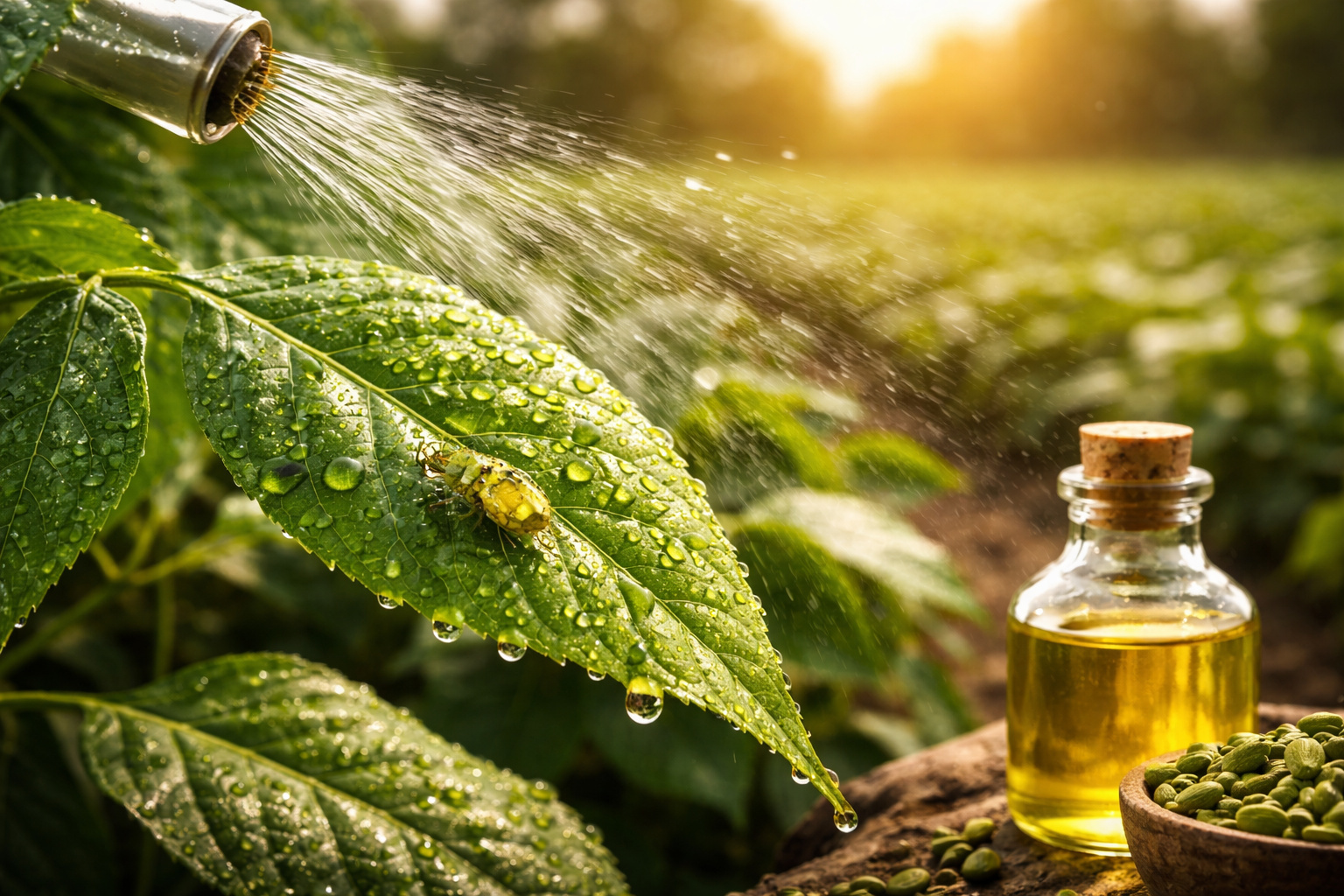
An Indian tree that grows in the Brazilian Northeast produces an oil capable of acting against more than 200 species of pests and interrupting the insect cycle, gaining ground as a natural alternative in soybean, cotton, and vegetable crops.
-
The rise in oil prices in the Middle East is already affecting Brazilian sugar: mills in the Central-South are seeing their margins shrink just as ethanol gains strength.

-
Rain gains strength in April, potentially exceeding 150 mm, placing the North, Northeast, and the coasts of the South and Southeast at the center of the heaviest forecast of the week.

-
A fish that survives out of water, crawls on land until it finds another river, and whose female lays 80,000 eggs at once is infesting rivers and lakes in Brazil, and no one can stop this invasion.


Instead of living on replanting, the tamarillo becomes a kind of “backyard asset,” maintaining production over the years and securing supply when other crops become expensive.
Production That Humiliates Common Vegetables at the Grocery Store

The comparison with the common tomato plant appears as practical mathematics. On one side, the traditional tomato delivers something in the range of 5 to 10 kg of fruit and ends the cycle. On the other, the tamarillo can yield 20, 30, and even 40 kg per year, repeating this year after year.
When you look at the productive lifespan mentioned, the scale becomes absurd: a lifespan that can exceed 12 productive years, with estimates suggesting hundreds of kilos of fruit over that period, coming from a single plant that you do not need to restart from scratch every season.
The Fruit That Doesn’t Force You to Rush to the Market Every Week
One of the most striking points about the tamarillo is its durability outside the refrigerator. Instead of “dying” in the fruit bowl in a few days, it can last weeks when kept in a cool place, especially when harvested with the stem.
The explanation presented is the firm and bitter skin, rich in tannins, serving as a natural protection for the pulp. In practice, this becomes a direct domestic advantage: you harvest and do not panic to consume everything immediately.
Flavor and Use in the Kitchen: It’s Not Common Tomato and That’s Where the Charm Lies
The tamarillo is not “tomato in disguise.” The flavor is described as complex, mixing notes of tomato, passion fruit, and guava, with a sweet-and-sour profile.
There’s a crucial detail that changes everything: the skin can be bitter, and the recommendation is not to eat the skin. Consumption comes in two simple ways: cut it in half and eat with a spoon, or remove the skin with hot water, as done with tomatoes for sauce.
In the kitchen, it is treated like a wildcard: it goes into the vinaigrette for barbecue, becomes pasta sauce, makes sweeter seasoned juice, and also turns into jelly. It is “one of the few plants” cited as useful in both main dishes and desserts.
Nutrients and the Appeal of “Food That Makes Sense” in Daily Life
The tamarillo is described as a powerhouse of antioxidants, with red or purple color associated with anthocyanins and phenolic compounds. The promise is of high antioxidant activity, along with a strong packet of vitamins: vitamin A, vitamin C, vitamin E, and B6.
Another strong argument is the mineral content: high potassium and low sodium. This is linked to blood pressure, in a direct comparison with industrialized sauce “full of salt,” suggesting that a homemade tamarillo sauce not only changes the flavor but also the quality of what you put on your plate.
Why the Tamarillo Disappeared and Became a Rarity in the “Gourmet” Market
The story presents the tamarillo as a victim of a system that prefers short-cycle plants, because short cycles force repurchase.
The logic is presented as “planned obsolescence” in agriculture: the faster the plant dies, the more it drives seed and input sales.
The result of this erasure would be practical: today you find many types of hybrid tomato seeds, but hardly see tamarillo seedlings easily available.
And what was once backyard food, described as “free,” now appears as exotic fruit in luxury markets, with prices cited above R$ 30 per kilo.
Climate: The Sensitive Point That Decides Whether Tamarillo Will Thrive or Suffer
The tamarillo is described as coming from the Andes and loving mild climates. Its Achilles’ heel is quite direct: it hates extreme heat and frosty conditions.
For those living in frost-prone areas, the proposed solution is a protection strategy: plant in a pot to shelter it in winter or use a microclimate, placing it against a wall that receives sunlight.
For very hot regions, the guidance is to avoid placing it in midday sun: half shade, under a larger tree, because it is presented as an understory plant in nature.
Soil and Water: It Can Be Rustic, but It Can’t Be Waterlogged
The tamarillo is described as having shallow roots and an absolute “no” for wet feet. The warning is that if water collects, the root rots quickly.
The recipe for soil is quite objective: loose, rich in organic matter, and well-drained. This is the kind of point that separates “a plant that produces a lot of fruit” from “a plant that fails for no reason.”
The Pruning That Becomes the Secret to Productivity
This is where the procedure that transforms the tamarillo into a harvesting machine comes in: when it reaches about 80 cm to 1 meter, the recommendation is to cut the tip to encourage lateral branches.
The logic is structural: without this, it grows like a long, weak stick and can break in the wind. With pruning, you form a robust crown, capable of supporting a high load of fruits, reaching the example of bearing up to 40 kg without breaking.
Seed or Cutting: The Shortcut to Harvesting Faster
The tamarillo can be planted from seed, with easy germination, but the time to fruit is longer, cited as around two years.
To speed things up, you have the cutting: taking a branch from a productive plant. The cutting is described as faster, potentially yielding fruit in less than a year, while also maintaining the characteristics of the mother plant, ensuring identical fruit.
Tamarillo in the Backyard Today: More Than Just Planting Fruit, It’s Planting Autonomy
The final message is that each tamarillo plant in the backyard reduces dependence on expensive and fragile tomatoes, and keeping seeds and passing them on recovers knowledge that may have been erased in just a few generations.
The idea is to treat the tamarillo as practical, durable, versatile, and productive food, something that once again makes sense for those who want sauce, juice, and jelly without being hostage to market prices and supermarket turnover.
Would you have the courage to trade part of your backyard for a tamarillo plant that produces for years and still gives you sauce, juice, and jelly without drama?









Sim , eu teria coragem de tro5.
Nunca tinha ouvido falar desse tipo de tomate
Tenho no quintal
Ana, vc pode me informar onde conseguiu a nuda? Grata
Sou da cidade de Miracatu – SP
Quando eu era criança tinha essa fruta na minha casa, nunca gostei do sabor, mas a folha dela era muito boa pra secar furúnculo.