





 Portuguese
  English
  Spanish
  3 min of reading
  97 comments


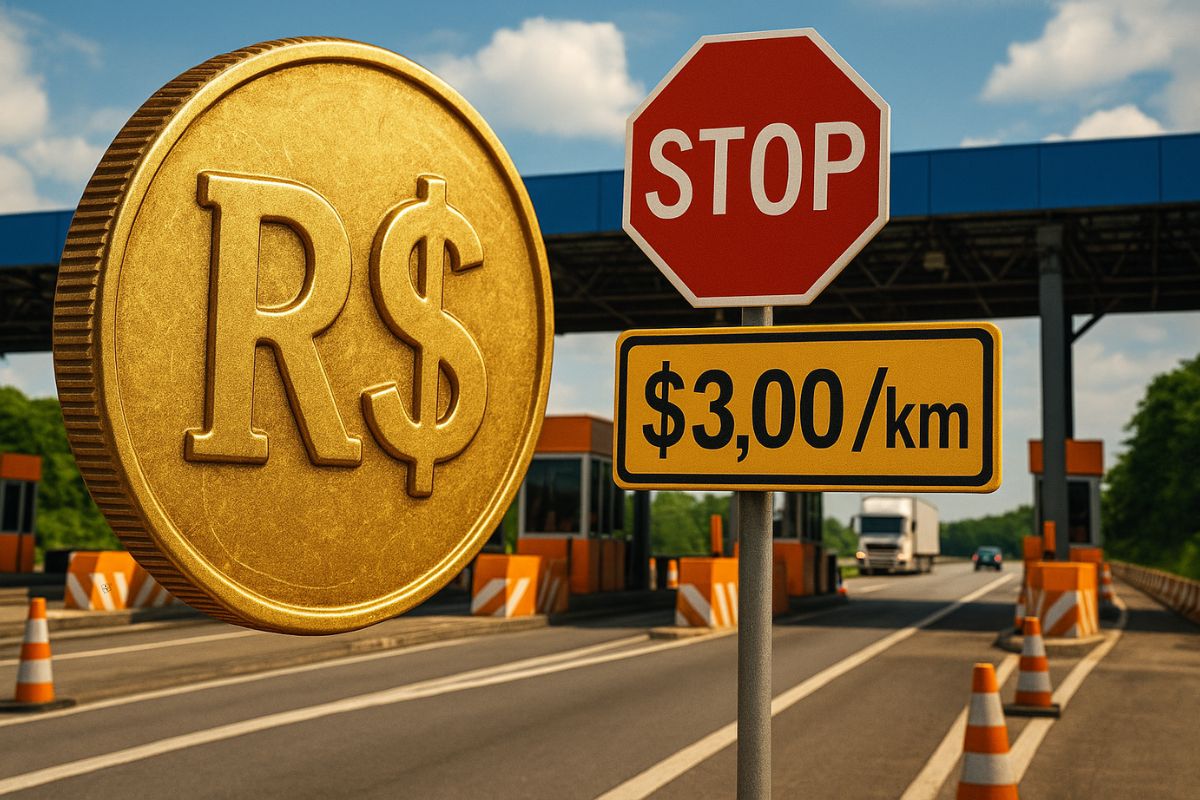


Implementation of 11 Electronic Toll Gates on SP-55 Causes Pressure from Deputies and Residents of the Southern Coast
The governor of São Paulo, Tarcísio de Freitas, faces growing resistance in light of the creation of tolls on state roads, specifically on the Padre Manoel da Nóbrega Highway (SP-55). The measure provides for 11 charging points in “free flow” mode, which has generated criticism even from allies and strong reactions from residents of coastal cities such as Mongaguá, Itanhaém, and Peruíbe.
According to a report from the newspaper O Globo, the electronic toll gates will be implemented on a section privatized in 2023 and will start operating in November. The government’s justification is that the new system will charge proportionally to the distance traveled, with fees between R$ 1 and R$ 3. However, local leaders argue that the charge may hinder the daily commute for residents and harm regional tourism.
Where Will the New Tolls Be Installed?
The Padre Manoel da Nóbrega Highway, which cuts through several municipalities on the southern coast and in the Vale do Ribeira, will be the main axis affected. The section granted to the Consórcio Novo Litoral connects Praia Grande to Miracatu and sees about 72 thousand vehicles per day. In total, there will be 11 electronic toll gates along the route, while neighboring highways — such as Rio-Santos and Cônego Domênico Rangoni — will have only two fixed points for traditional charging.
-
Larger than entire cities in Brazil: BYD is building a 4.6 km² complex in Bahia with a capacity for 600,000 vehicles per year, but the discovery of 163 workers in conditions analogous to slavery has shaken the entire project.

-
With an investment of R$ 612 million, a capacity to process 1.2 million liters of milk per day, Piracanjuba inaugurates a mega cheese factory that increases national production, reduces dependence on imports, and repositions Brazil on the global dairy map.

-
Brazilian city gains industrial hub for 85 companies that is equivalent to 55 football fields.

-
Peugeot and Citroën factory in Argentina cuts production by half and opens a layoff program for more than 2,000 employees after Brazil drastically reduced purchases of Argentine vehicles.


The “free flow” system provides for the driver to be charged per kilometer traveled, based on automatic plate reading, eliminating physical booths.
Who Is Against the Tolls?
Opposition to the measure comes from both the base and the opposition. State deputies like Solange Freitas (União Brasil) and Tenente Coimbra (PL), both allies of the governor, demand changes to the model or exemptions for local residents. Solange has submitted a bill proposing total toll exemption for three years for residents of affected cities, but the proposal still has no scheduled voting date.
Meanwhile, deputy Caio França (PSB), from the opposition, participated in protests organized in Praia Grande and claims that the project is “a strategic mistake for a tourist region that needs encouragement, not economic barriers.”
Why Does the Government Insist on Implementation?
The position of the Palácio dos Bandeirantes is clear: the tolls are irreversible. The governor argues that the population will perceive the benefits as investments are delivered. The concession contract provides for the application of R$ 3 billion over the next 30 years, including the renovation of 108.5 km of marginal roads, duplication of sections, and improvement of sidewalks, signaling, and lighting.
“In the beginning, there is resistance, but later the results convince,” stated Tarcísio during an event in the Baixada Santista in June, citing previous experiences such as the Castello Branco Highway, which now has both automatic and manual tolls.
Is It Worth Implementing Tolls on Urban Sections?
Experts point out that the electronic toll model can be effective in balancing the funding of road infrastructure, but should not penalize those who use the road as the only option for local commuting. The major criticism is precisely the impact on residents of areas where the SP-55 functions as a central avenue — forcing low-income families to pay daily to access work, school, or essential services.
The lack of adequate alternative routes also exacerbates the problem. The concessionaire plans renovations on the marginal roads, but the work has not yet begun. Meanwhile, public pressure is increasing, and the government will need to reconcile signed contracts with the political and social appeal of its base.
Do you live in the region? Do you think it’s fair to pay a toll to travel within your city? We want to hear your opinion on this measure. Do you believe that the “free flow” model is really fair or represents a new burden on the population? Leave your comment and participate in the debate.







Uma vergonha. E ainda querem este **** como presidente.
As Rodovias são públicas e estratégicas. Não deveriam ser privadas, para evitar a ameaça do Capitalismo. Isso é uma das causas, que contribui indiretamente, para aumento do preço do frete, dos produtos e passagens, perdendo o Poder Público a sua soberania no controle sobre a Inflação dos preços, em geral, e sua perda da estabilidade da Economia, nesse sentido. Já pagamos IPVA.
Acho um absurdo esse tipo de cobrança uma vez que o próprio morador rural vai pagar pela sua ida ao trabalho diário que é o meu caso. Moro em Peruíbe e tenho sítio em Pedro de Toledo. Como vou conseguir manter o meu ganha- pão bem como minha sobrinha que é professora e faz o mesmo trajeto?! Além disso não temos benefício nenhum com a estrada toda mal infra estruturada.