





 English
  Francês
  Alemão
  Italiano
  Japonês
  Norueguês
  Portuguese
  Spanish
  5 min of reading
  9 comments


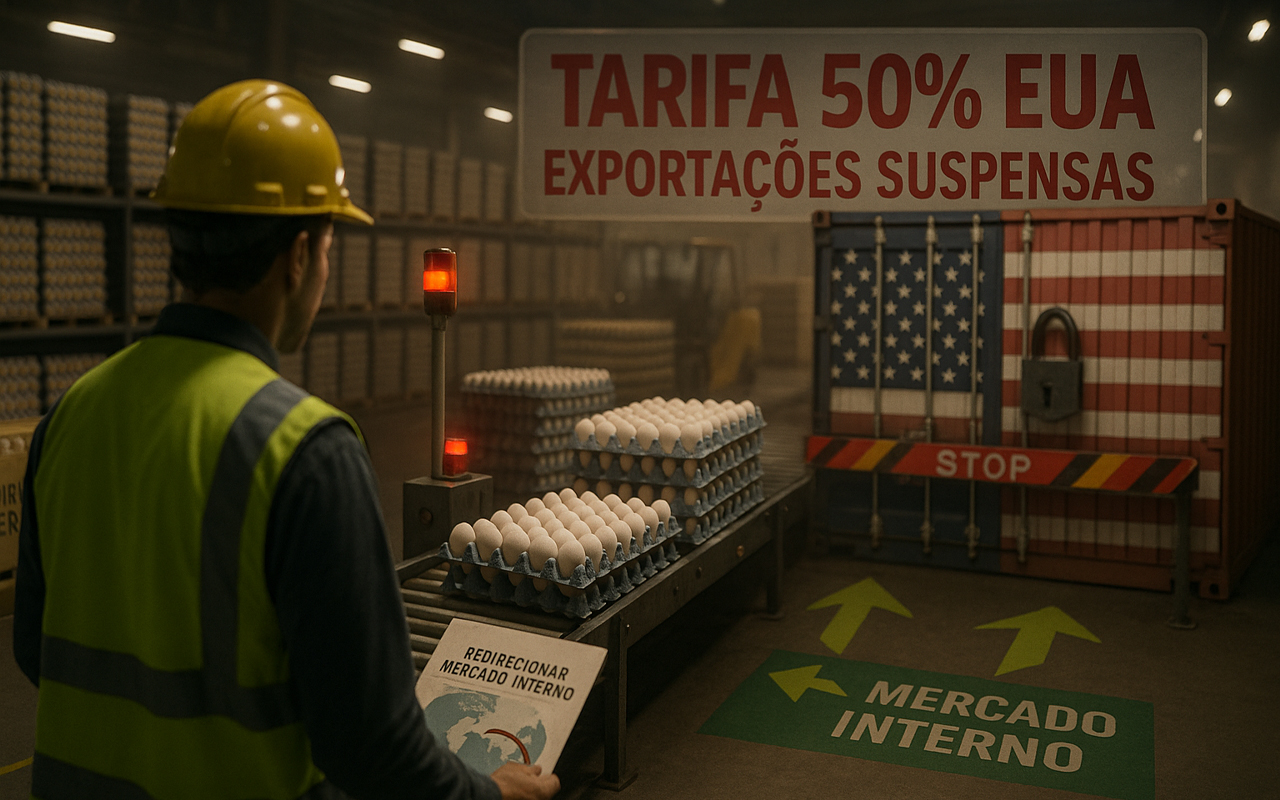


With the 50% Tariff in the US, Exporting Eggs from Brazil Became Unfeasible, Says Ricardo Faria, the “Egg King.” Global Eggs Suspended Shipments and Will Reinforce the Domestic Market
The United States has formalized a 50 percent additional tariff on a significant portion of Brazilian products. The executive order was signed on July 30, 2025, and came into effect on August 6, 2025, citing national emergency.
In practical terms, the combined rate for the affected items rose to 50 percent, abruptly increasing the cost of access to the American market. According to the Brazilian government and specialized outlets, the measure does not affect all goods but targets a significant portion of exports.
Import tariff is a tax levied by the importing country upon the entry of goods. When a tariff suddenly increases, the exporter’s profit margin tends to reduce drastically. If the exporter cannot pass the cost onto the buyer, the sale becomes economically unfeasible. This is precisely the calculation that several Brazilian sectors have started to make since the beginning of August.
-
Unemployment rises again to 5.8% at the beginning of 2026, raising alarms about the end of temporary positions and its impact on the Brazilian job market.

-
Document organization can cut invisible costs in small businesses, a simple step that prevents waste, rework, and losses in daily operations.

-
Chinese giant worth nearly R$ 4 billion that manufactures cables for electric cars, solar energy, and robotics wants to open a factory in SC.
-
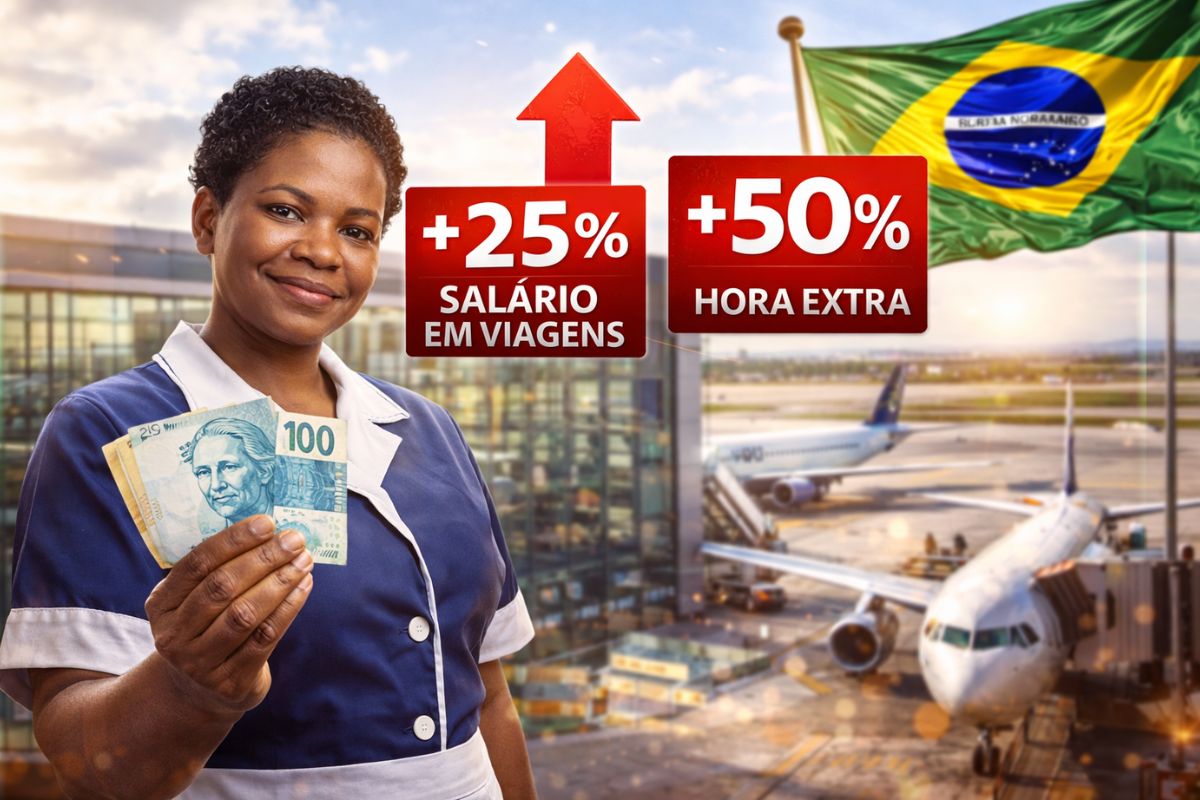
Many employers do not know, but the law guarantees domestic workers a 25% increase in salary during trips, 50% for overtime, 20% for night shifts, and 17 additional benefits that can lead to labor lawsuits if not paid.

In response, the Brazilian government announced a 30 billion reais support package in credit and tax measures for affected companies, prioritizing job retention, market reorientation, and public purchases of affected products. The strategy aims to mitigate the shock while negotiations for adjustments with Washington are underway.
Egg King Suspends Exports to the US: Why It Became Unfeasible
In this new scenario, Ricardo Faria, an entrepreneur known as the Egg King and controlling Global Eggs abroad and Granja Faria in Brazil, has suspended egg exports to the United States. In a reported statement, Faria was direct: “unfeasible with this tariff”. The Brazilian operation, which has been gaining traction in the American market, will be redirected to domestic sales and other destinations, while the company adjusts its logistics and prices.
The decision does not occur in a vacuum. Until July, the US was the main destination for Brazilian egg exports in 2025, driven by an internal supply crisis in the US due to avian influenza. With the extra rate, the math has changed: international freight, combined with the exchange rate and the 50 percent tariff, eats into the margin and makes Brazilian shipments less competitive than producing and selling locally on American soil.
To avoid supply disruption for American customers, the holding relies on production within the US. This way, the company maintains a commercial presence in the market but takes pressure off the exporting plant in Brazil until there is predictability in costs.
Egg Exports on the Rise Before the Tariff: ABPA Data
The numbers help understand the shift in the scenario. According to ABPA, Brazilian egg exports soared in July, and by that month, the United States was the main destination with 18,976 tons, an increase of 1,419 percent, totaling nearly 41 million dollars in revenue. The jump occurred because avian influenza reduced supply and drove prices in the American market, opening space for Brazilian products. In just a few days, however, the 50 percent tariff changed the equation.
When a destination concentrates demand and suddenly becomes more expensive to sell to, companies need to redistribute volumes. Part of what was going to the US is likely to supply the domestic market, which may provide momentary relief to domestic prices, at least until the new logistics and alternative contracts stabilize.
This adjustment is not automatic. It takes weeks to redirect containers, renegotiate deadlines, and finalize certifications in new markets. In the meantime, the sector observes the credit package and the public purchases announced by the government as a bridge for liquidity.
Global Eggs and Hillandale: The Plan B to Maintain Margins
Global Eggs completed the acquisition of American Hillandale Farms for 1.1 billion dollars in May 2025. In practice, this creates an operational cushion: when exporting from Brazil loses appeal, producing in the US becomes the way to retain customers and preserve margins, as there is no tariff for production done within the country. Additionally, the holding has accelerated movements in Europe, diversifying geographic risk.
The strategic outline, in simple terms, is this: where total costs are lower, produce; where demand pays better, sell. With Hillandale in-house, Global Eggs balances the tariff shock with a network of plants in different countries. This is the same logic that other agro groups have been adopting when facing trade barriers.
In the short term, the company also indicated that part of the volume previously exported will be absorbed by the Brazilian market and other destinations, reducing the impact on operations. This relocation tends to stabilize prices in Brazil, although regional effects may vary according to logistics.
Who Is Ricardo Faria and the Weight of Granja Faria
Ricardo Castellar de Faria is among the leading names in the national agribusiness. In 2025, he appeared in Forbes Brasil with an estimated fortune of R$ 17.45 billion. Granja Faria, founded in 2006, is noted as the largest producer of commercial eggs, fertile eggs, and one-day-old chicks in the country, with a presence in dozens of units and daily production in the range of tens of millions of eggs. The historical headquarters is located in Lauro Müller, Santa Catarina, from where the group expanded to other regions and countries.
In addition to the egg business, Faria has structured investments in agribusiness and capital, creating an ecosystem that explains how quickly Global Eggs has grown abroad. This history helps to understand why, in the face of the tariff, the company reacts rapidly, adjusting its supply chain and markets.
It is worth noting that the industrial profile of Granja Faria allows for routing changes without halting production. This reduces the risk of unemployment and shortages, but requires fine management of contracts and stocks.
Impacts for the Consumer and Next Steps for the Government
In the short term, the increased domestic supply resulting from the redirection may hold or soften egg prices in some markets, especially where logistics favor rapid flow. In the medium term, however, costs for feed, energy, and transportation, combined with the reorganization of destinations, may offset part of this relief. Monitoring IPCA food and sector reports helps to verify how much of this effect will reach the shelf.
From the perspective of Brasília, the 30 billion reais credit and tax exemption package aims to buy time for companies to re-contract markets, while bilateral negotiations proceed. The government is also signaling public purchases for schools and hospitals, reducing stocks and helping stabilize prices. The final design of the plan involves infralegal acts and approval in Congress.
For those following the foreign trade agenda, three points deserve attention: potential revision of lists of affected products, the evolution of avian influenza in the US that affects local demand for eggs, and the appetite of Europe and Asia for Brazilian eggs. These vectors will determine whether the suspension will be temporary or part of a definitive repositioning of Brazil’s egg chain.








Impressionante e tendenciosa! Não é possível venda de ovos para os EUA, Europa e China.
Quem sabe agora abaixa o preço do café, ovos entre outros aqui no Brasil, e a qualidade dos produtos aumentem já que deixam as sobras pra nós e os produtos de boa qualidade vai tudo pro exterior, bem feito…
Ou eu estou vendo ghosts ou o resto do mjndo é cego! Os brasileiros pagam o preço pela produção de tudo o quê é produzido aqui no Brasil e tudo fica inacessível pq fica caro pq a ganância quer mandar 100% pro estrangeiro. Enriquecem os produtores e a brasileirada fica sem saber o gosto das cousas pq só alguns vão ter dinheiro pra pagar A SOBRA!!!. Parabéns “ao peito” do governo americano!!! Ao menos assim brasileiros pagarão o justo pelo ôvo ao menos por um tempo. Que outros países negociem pra que o peso da produção, incluindo crimes ambientais passando ao largo, que NÃO IMPONHA SOFRIMENTO AO POVO BRASILEIRO E AO PAÍS!
A ganância não é só produtor a ganância e do governo que fica com a metade sem fazer nada