





 Portuguese
  English
  Spanish
  3 min of reading
  0 comments


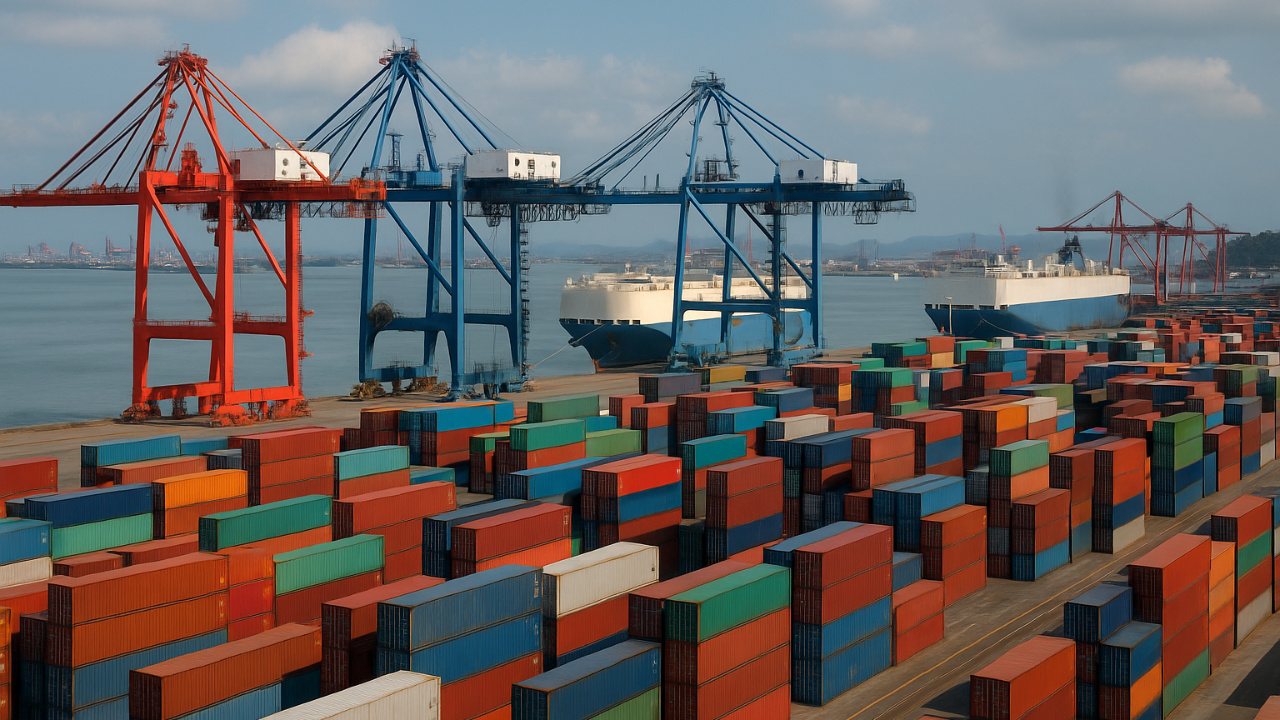
New Tariffs From Mexico on Brazil Increase International Trade Tension and Affect Strategic Exports.
The tariff increase from Mexico, approved this Wednesday (10) by the country’s Senate, foresees an increase in import tariffs of up to 50% for products from 11 nations, including Brazil, starting in January 2026.
This measure, which directly affects exports to Mexico, occurs at a time of international trade tension, reigniting concerns in Brazilian foreign trade, especially after recent signs of relief from the United States.
Mexico’s Tariff Increase Contrasts With U.S. Tariff Relief
While Mexico advances in tightening its trade policy, the United States has moved in the opposite direction in recent weeks.
-
Middle East War Hits Fertilizers and Transportation and May Strain Brazilian Wallets
-
Russia Considers Suspending Gas to Europe After Surge in Energy Prices
-
How A War Thousands of Miles From Brazil Started Disrupting Global Shipping Routes, Raising Container Costs, and Putting Up to 40% of Brazilian Beef Exports at Risk
-
Iran-U.S. War Drives Up Oil Prices and Pressures Global Financial Markets

At the end of November, the White House announced the removal of the 40% tariff on over 200 Brazilian products.
Among the items benefiting from this are beef, coffee, cocoa, and açaí, which are now part of a list of nearly 700 exceptions to the U.S. tariff increase.
This measure took effect for goods arriving since November 13.
This move was interpreted by exporters as a partial relief, reducing costs and opening space for a regain of competitiveness in the American market.
However, the increase in tariffs on Brazil from Mexico brings back some insecurity to the external scenario.
Mexican Senate Approves Tariffs on Brazil and Other Countries
The Senate of Mexico approved the tariff increase with 76 votes in favor and 5 against, affecting Brazil, China, and nine other countries that do not have a trade agreement with the country.
The proposal was submitted by President Claudia Sheinbaum.
According to the approved text, the new tariffs are set to take effect on January 1, 2026, following official publication. In total, 1,463 tariff classifications will be affected.
The impacted sectors include automotive, textile, clothing, steel, plastics, appliances, furniture, and footwear. Most of the surcharges range between 20% and 35%, but can reach up to 50%.
Impact on Exports to Mexico Still Generates Uncertainty
In Brazil, the government and industry are cautiously assessing the effects of Mexico’s tariff increase.
One of the main points of concern is the automotive sector, historically significant in the trade flow between the two countries.
Since 2003, the Brazil–Mexico bilateral agreement has provided for free trade of vehicles, auto parts, and agricultural machinery.
Anfavea believes that this pact should protect the Brazilian automotive sector from the new tariffs.
If this interpretation is confirmed, the surcharge imposed on Chinese products may open up competitive space for exports to Mexico originating from Brazil.
Data Shows Recent Decline, But Possible Window of Opportunity
Between January and October of this year, Brazil exported 66,474 vehicles to Mexico.
This volume represents a 17.3% decrease compared to the same period in 2024, according to Anfavea data.
Despite this downturn, experts believe that the restriction on Chinese vehicles could reposition Brazil in the Mexican market.
Thus, Mexico’s tariff increase, while concerning, may generate positive indirect effects in specific niches.
Political Pressure and International Trade Tension
The vote in the Mexican Senate was not unanimous. In total, 35 senators abstained, criticizing the expedited processing of the bill and the lack of studies on inflationary impacts.
Thus, part of the opposition associated the measure with pressure from former U.S. President Donald Trump, who seeks to reduce the entry of Chinese products into the American market via Mexico.
Government lawmakers, on the other hand, defended the initiative as a strategy to strengthen the national industry, attract investment, and expand internal production chains.
Brazilian Foreign Trade Enters New Phase of Caution
The increase in tariffs on Brazil reinforces the scenario of international trade tension, requiring greater attention from exporters and economic policymakers.
Brazilian foreign trade is beginning to operate in a more volatile environment, marked by unilateral decisions and geopolitical disputes.
In this context, Brazilian companies are monitoring the developments of Mexico’s tariff increase, while the government evaluates diplomatic and commercial measures to mitigate impacts and preserve strategic markets.









Seja o primeiro a reagir!