





 Portuguese
  English
  Spanish
  5 min of reading
  0 comments


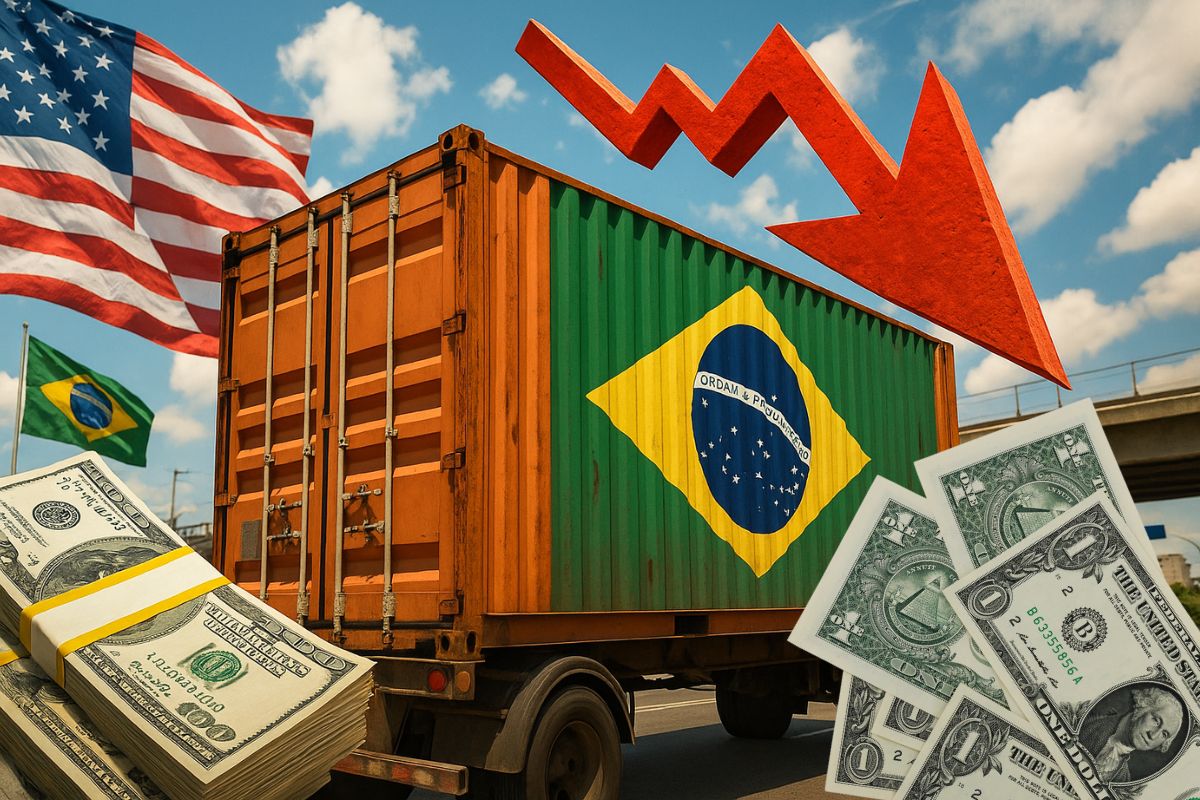
50% Tariff Imposed by Trump Administration Impacts Key Sectors of the Economy and Forces Companies to Seek Alternatives in Europe and Asia, While Foreign Ministry Seeks a Diplomatic Solution.
A 50% tariff imposed by the United States has stalled a significant portion of Brazilian exports, creating a deadlock that President Lula’s administration is trying to reverse in a crucial negotiation this Thursday (16). According to the G1 portal, despite a recent rapprochement between Presidents Luiz Inácio Lula da Silva and Donald Trump, the effects of the measure, which has lasted over two months, continue to pressure the economy. The hope of the productive sector and the Foreign Ministry rests on the meeting between Foreign Minister Mauro Vieira and U.S. Secretary of State Marco Rubio.
The impact of the tariff barrier is already a reality for the national industry. In Ceará, factories have been forced to cut expenses while seeking new customers in Europe and Asia to sell their production. In Minas Gerais, producers have lost important contracts with U.S. companies and are now sending samples to Norway and Dubai. The scenario reveals the urgency of a solution and exposes the complexity of redirecting established trade flows, with products like lobsters, traditionally sold to the U.S., now stockpiled waiting for buyers in China.
The Impact of Tariffs on the Trade Balance
The United States is Brazil’s second-largest trading partner, surpassed only by China, but the trade relationship was already unfavorable for Brazil even before the new tariffs.
-
Oil surged to $115 a barrel due to the war in the Middle East, and diesel in Brazil has already risen to R$ 7.45 per liter, while the United States…
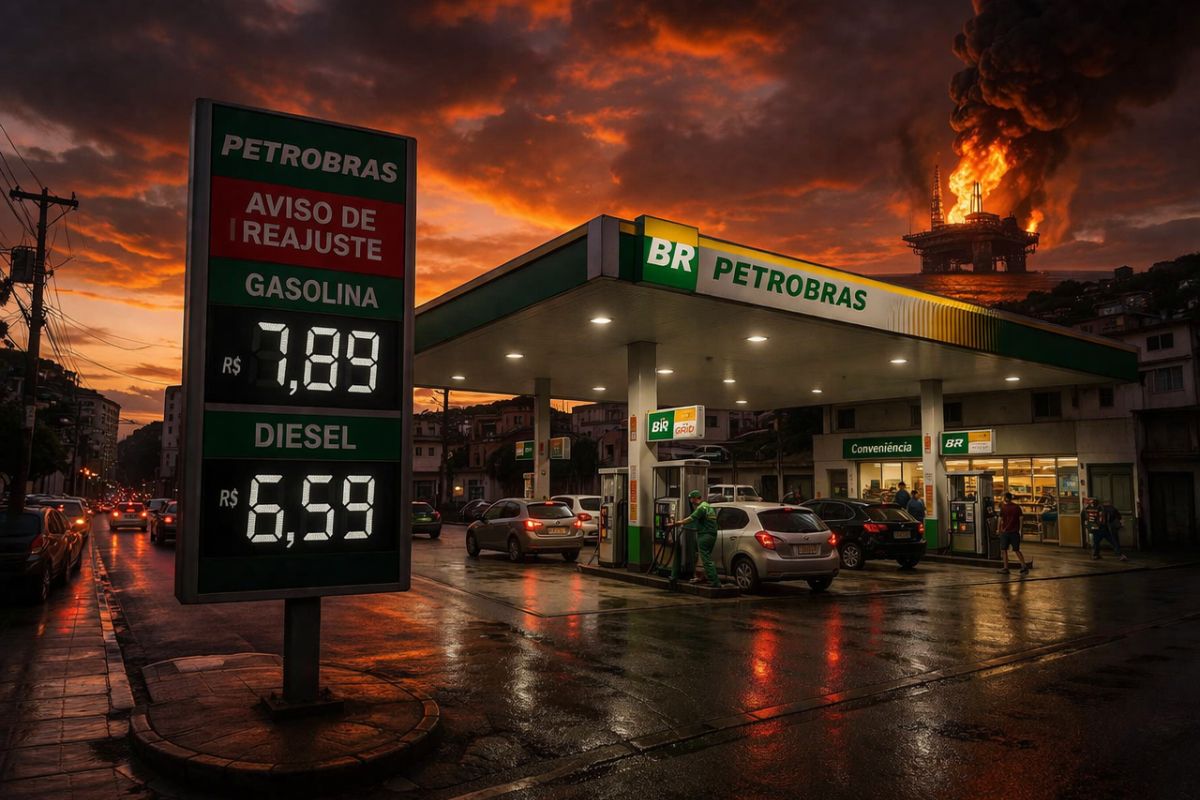
-
Brazilian city bets on the business environment to generate jobs and attract investments in the energy sector — secretary reveals strategy at Macaé Energy 2026.

-
50 viaducts, 4 tunnels, 28 bridges, and 40 kilometers of bike paths: BR-262 in Espírito Santo will receive 8.6 billion reais for the largest engineering project in the state’s history, inspired by the Immigrant Highway in São Paulo.

-
Brazil produces too much clean energy and doesn’t know what to do with it: over 20% of solar and wind capacity was wasted in 2025 while investors flee and 509 renewable generation projects were abandoned in the last year.


Data from September 2025 indicates that Brazil accumulated a deficit of approximately US$ 1.8 billion, marking the ninth consecutive month of negative balance.
The situation worsened with a 20% drop in Brazilian exports to the U.S., which fell from US$ 3.23 billion in September 2024 to US$ 2.58 billion in the same month this year, according to the Ministry of Development, Industry, Commerce, and Services (MDIC).
The products affected by the taxation represent about 55% of all that Brazil sells to the U.S., an amount equivalent to US$ 22 billion.
The list includes high-value items for the economy, such as coffee, beef, iron, steel, footwear, machinery, and manufactured goods.
Strategic sectors such as steelmaking, timber, and livestock have been directly affected, showing how dependence on a single market can become a significant vulnerability when rules change abruptly.
Why Is It So Difficult to Find New Markets?
Redirecting Brazilian exports to other destinations is not a simple task, and experts point out that Brazil’s own trade model creates obstacles.
The country follows Mercosur policies, which establish a Common External Tariff (CET) considered high, averaging 12%.
In comparison, the U.S. average tariff before the increase was only 3%. This more protectionist profile, according to analysts, diminishes the competitiveness of Brazilian products abroad, as companies get used to competing only in the domestic market.
According to Sandra Rios, director of the Center for Integration and Development Studies (Cindes), the high degree of protection for domestic production hinders greater integration of Brazil into the global market.
In addition, the country has a limited network of trade agreements, putting us at a competitive disadvantage.
In practice, the search for new partners requires a lengthy process involving demand studies, logistics costs, adaptation to new tax norms, and even cultural differences, an even greater challenge for small and medium enterprises without established international structures.
The Negotiation in Washington: BRICS and Rare Earths on the Table
This Thursday’s meeting between Mauro Vieira and Marco Rubio is seen as the most concrete attempt to reverse the scenario.
According to Murillo Oliveira, an international trade expert, negotiations should go beyond tariffs and address two sensitive geopolitical points: Brazil’s distancing from the BRICS and access to rare earths.
“Trump directly mentioned the BRICS again and made it clear that he wants to see Brazil distancing itself from the group”, says Oliveira, indicating that this could be a central demand from the U.S.
Brazil enters the negotiation with a strategic card up its sleeve: the country has the second-largest reserve of rare earths in the world, minerals essential for the semiconductor and defense industries.
With China, the world leader, restricting its exports, the U.S. sees Brazil as a vital supplier.
“It is likely that the U.S. will push for some type of preference in access to Brazilian resources”, explains the expert.
The outcome of the conversation may depend on the Brazilian government’s ability to balance its trade interests and geopolitical alliances.
What to Expect in the Future and the Role of WTO
Although Brazil has good arguments to contest the tariffs at the World Trade Organization (WTO), experts warn that the process is slow and the outcome uncertain.
“Even if the decision favors Brazil, there is no guarantee of reversing the tariffs”, points out Stefânia Ladeira, manager at Saygo Comex.
According to José Roselino, a professor at UFSCar, a dispute at the WTO could take years, making diplomatic negotiation the most viable path in the short term.
The market’s expectation for today’s meeting is one of cautious optimism. The overall assessment is that a complete reversal of tariffs is unlikely, but a partial agreement could be reached.
“I find it difficult to return to the previous level, but it is possible to reach a middle ground around a 25% tariff.
It is a typical Trump strategy: raises tariffs to force the counterpart to the negotiation table“, analyzes Murillo Oliveira.
The crisis, however, leaves a lesson: Brazil urgently needs to diversify its partners and promote internal reforms to strengthen its Brazilian exports.
The crisis with the U.S. exposes a fragility of Brazil or is it just a temporary obstacle? Is the solution to diversify partners or to yield to American pressures? Share your analysis in the comments.






Seja o primeiro a reagir!