





 Portuguese
  English
  Spanish
  3 min of reading
  0 comments


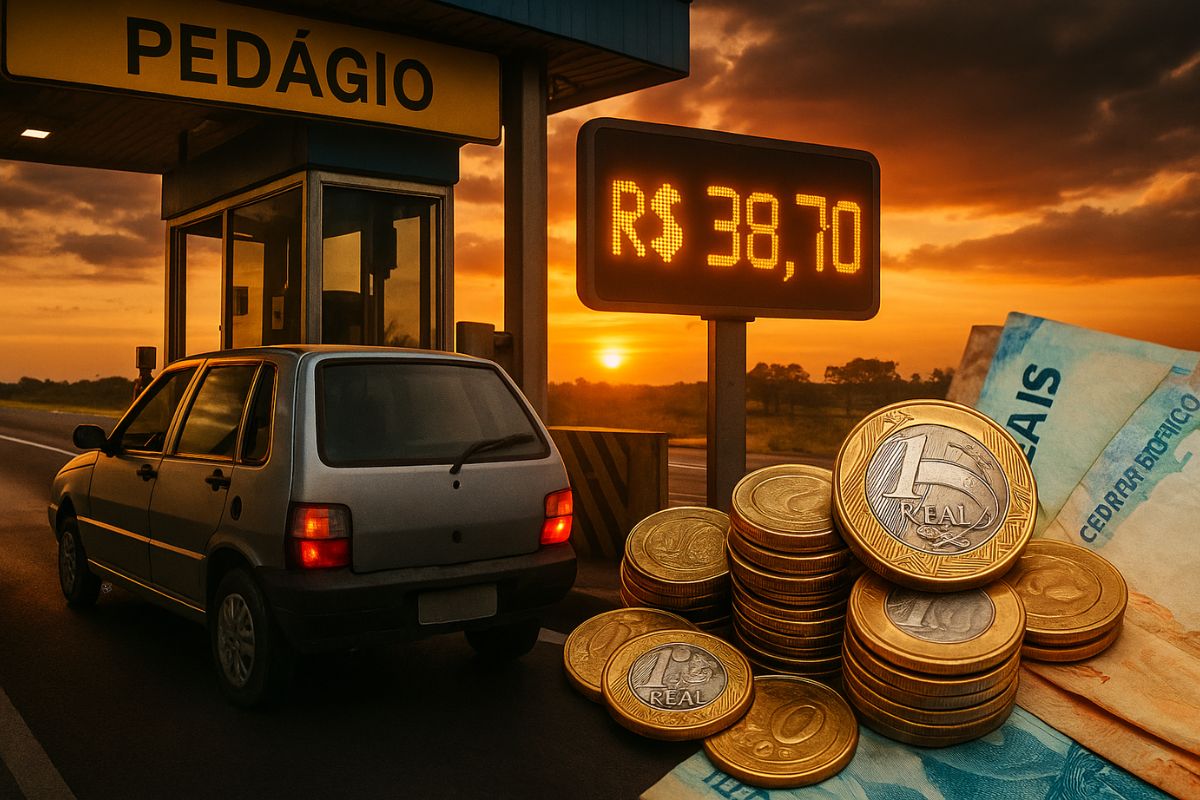
The “Expensive” Comes from Income, Not from the Kilometer: Per Km Brazil Does Not Lead, But Weighs More on the Wallet Than Wealthy Countries (Ipea).
The idea that tolls in Brazil are “among the most expensive in the world” circulates strongly on social media, but it stems from a flawed comparison. According to surveys by the TCU (Tribunal de Contas da União) and the Ipea (Instituto de Pesquisa Econômica Aplicada), the correct metric is the cost per kilometer traveled, not the isolated price at a toll plaza. By this measure, Brazil charges between R$ 0.16 and R$ 0.23/km, a figure lower than premium roads in Canada and comparable to European countries.
Still, the perception of “expensive” tolls remains because some plazas charge high absolute values per crossing, such as the Anchieta-Imigrantes System in São Paulo, which since July 1, 2025, charges R$ 38.70 per car, after annual adjustment by the IPCA.
How Much Is the Toll Per Kilometer
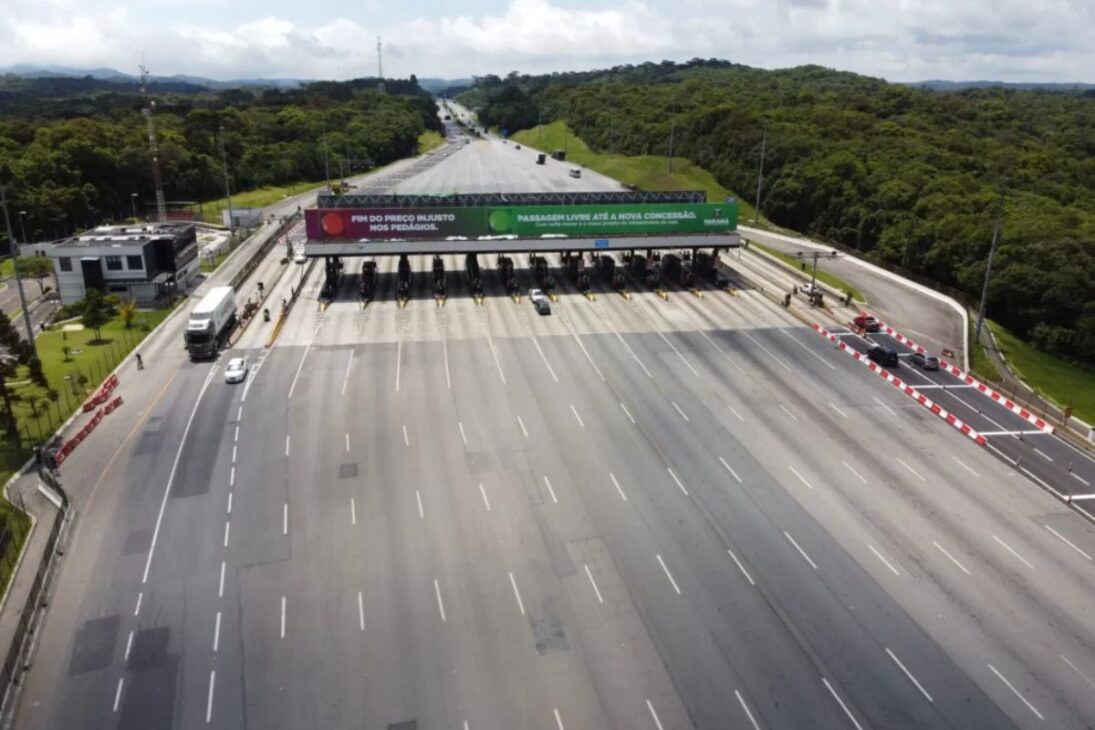
Examples: in Paraná, the reference cost is R$ 16.38/100 km on single lane and R$ 22.93/100 km on dual lane.
-
The government puts R$ 8.6 billion on the table to change the highway (BR) with 50 overpasses, 28 bridges, 4 tunnels, and 40 km of bike lanes in 180 km of historic duplication.
-
BRL 20.1 Million Bridge Project Kicks Off: 200-Meter Construction to Improve Access in Three Cities in Minas Gerais

-
‘Endless Road’ In Brazil Is One of The Largest In The World: 145 Km Stretch On An Important Highway (BR) Crosses The West Of Bahia And Had 135.9 Km Revitalized With R$ 35.3 Million

-
Engineer From ITA Who Worked at Embraer Leads Free Flow Expansion With National Artificial Intelligence and Technology for Toll Without Barriers in Brazil


On BR-060/364 (GO-MT), initial concession values were set at R$ 0.16270/km (single) and R$ 0.21151/km (dual).
Abroad, there are urban roads that are much more expensive. The 407 ETR in Toronto (Canada) can reach 0.34 Canadian dollars per km during peak hours.
In Europe, the average for cars is € 0.095/km in France and € 0.09/km in Italy, with Portugal around € 0.08/km.
In the United States, turnpikes like the Ohio Turnpike charge about US$ 0.044/km, while others, like the Pennsylvania Turnpike, reach higher rates.
Why the Feeling of Expensive Tolls in Brazil?
The burden of tolls in Brazil is linked to the income of the population.
The Ipea analyzed road accessibility and showed that 100 km of tolls can consume up to 16.2% of median income in stretches like the Autopista Fluminense.
In comparable French roads, the impact was around 8.9% of local income. In other words, the price per km may be lower, but it weighs more on the wallets of Brazilians.
Additionally, unit toll plazas with high values reinforce this perception.
The ViaLagos (RJ-124) charges R$ 30.60 per axle on holidays and R$ 18.40 on weekdays, amounts considered high even by international standards.
These isolated points feed the narrative that Brazil has the most expensive tolls in the world.
Quality and Oversight of Concessions
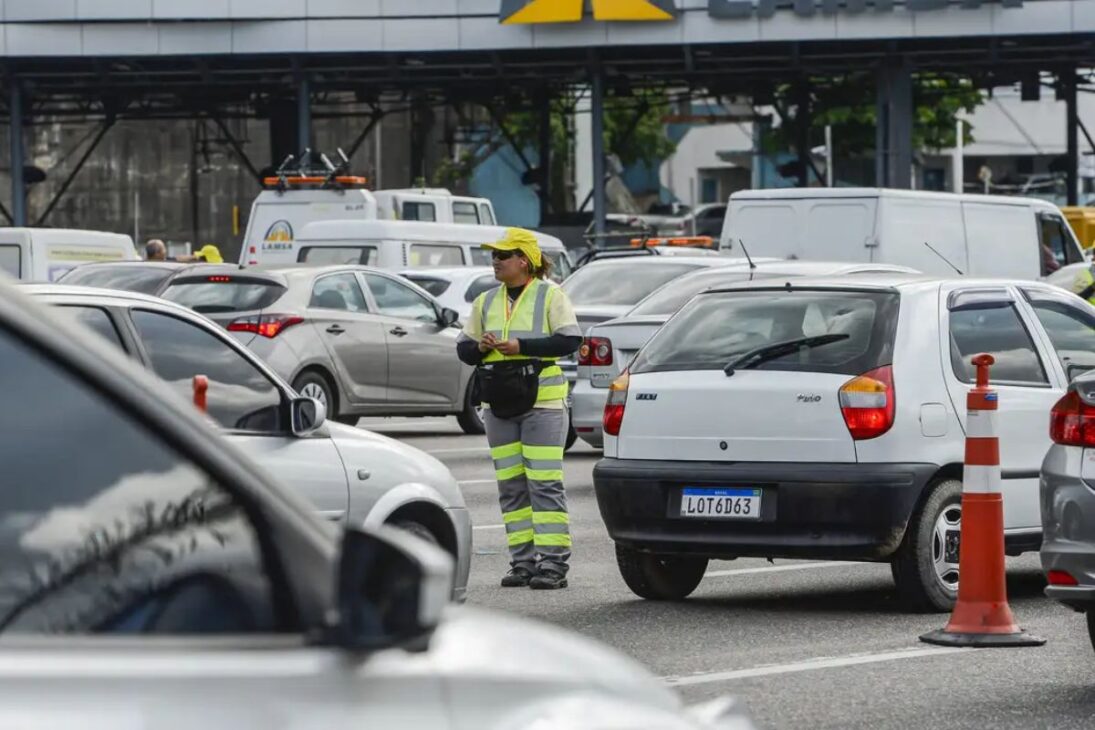
The CNT Road Survey 2024 revealed that 9 of the 10 best roads in Brazil are in São Paulo, and most of them are tolled.
This indicates that tolls can indeed finance better pavement, towing services, and mechanical support.
However, there are concessions that do not deliver the promised standard, and in those cases, the oversight by ANTT, ARTESP, and TCU is crucial to ensure a balance between rate and service.
Claiming that tolls in Brazil are the most expensive in the world does not hold when analyzing the cost per kilometer.
The myth falls apart in the face of data from TCU and Ipea. But the real problem lies in equity: with lower income, Brazilians feel the impact of each toll much more.
This structural difference explains the outrage on the highways, even when international numbers show a different reality.
And you, have you ever avoided traveling or changed your route due to the toll prices in Brazil? Do you think the quality of the roads justifies the price paid? Share your opinion in the comments — we want to hear about your experience in practice.






-

Uma pessoa reagiu a isso.