





 Portuguese
  English
  Spanish
  5 min of reading
  2 comments


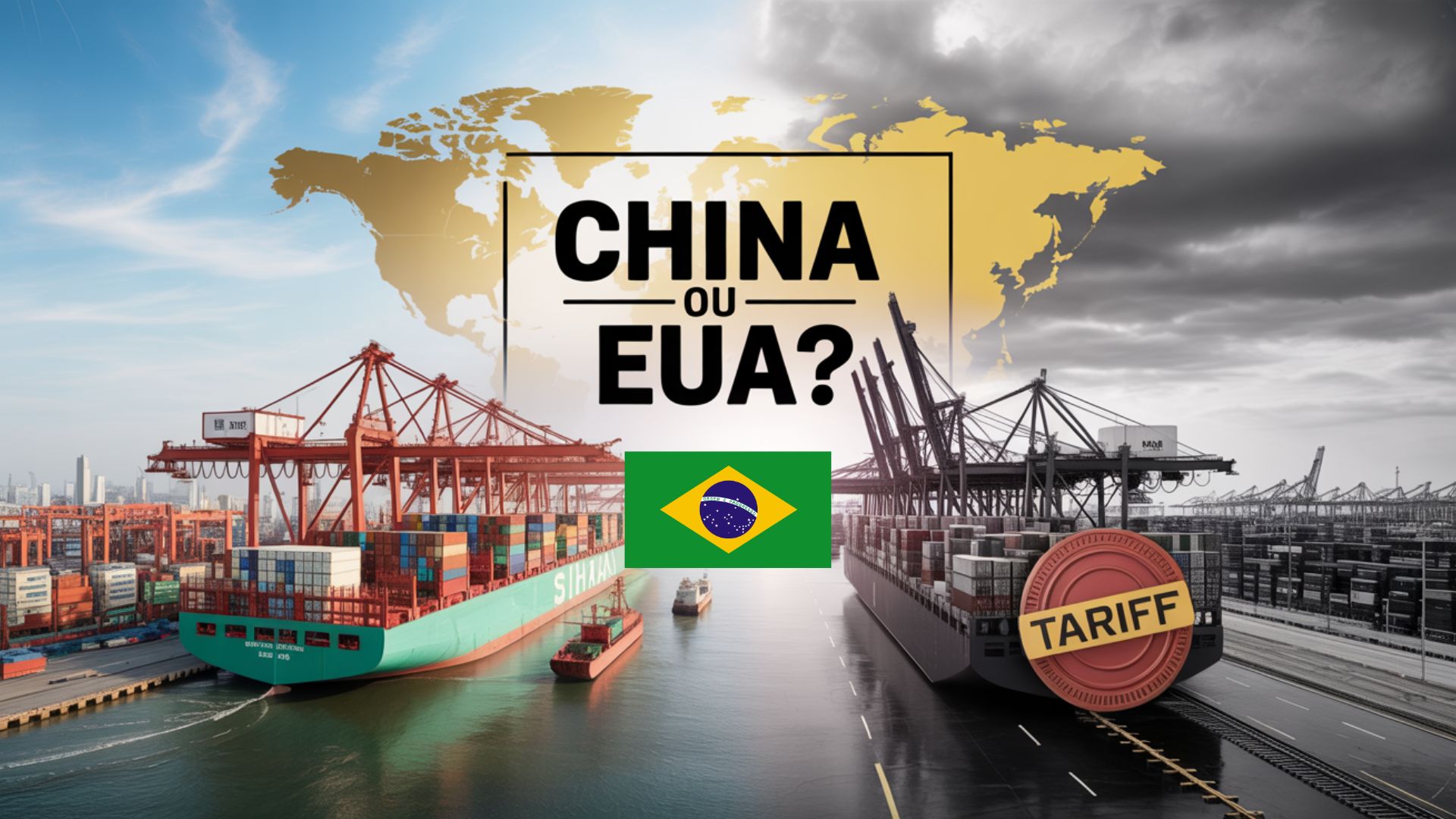


In the Midst of Trade Tension With the United States, Simone Tebet Reiterates That Asia Leads Brazilian Trade Relations and Announces Biocenical Railway Project to Speed Up Exports and Imports Between Brazil and Asian Countries.
The Planning Minister, Simone Tebet, stated this Friday (8) that although Brazil maintains strategic relations with the United States, China and Asia are now the main destination and source of Brazilian trade, reinforcing the Brazil-China trade partnership as the central axis of the country’s foreign economic policy.
The declaration was made during an agenda in Rondônia, alongside President Luiz Inácio Lula da Silva, amid the crisis caused by the announcement of tariff increases by the U.S. government on Brazilian products — a measure classified by authorities in Brasília as unilateral and outside international trade standards.
While the Planalto seeks to build a negotiated exit, Tebet emphasized that the priority is to expand routes and logistical efficiency for the Asian market.
-
The government requests the Federal Revenue Service for a new system to automate the income tax declaration, reducing errors, time, and bureaucracy for millions of Brazilians.

-
Pix in installments, international Pix, and contactless payment without internet: the Central Bank revealed the new features coming to the tool that is already used by almost every adult in Brazil.

-
Mercado Livre has just started selling medications with delivery in up to three hours to your door, and this move could completely change the way Brazilians buy medicines on a daily basis.

-
In Dubai, rising tensions from the war in the Middle East are causing super-rich individuals to leave the Gulf and direct their fortunes to a new financial refuge in Asia.


“At a time when multilateralism is being threatened, we do need to respect the United States. We need the U.S. as trade partners. But the United States cannot deceive themselves: our biggest trade partner today is China, it is Asia,” said the minister, highlighting that Brazil will continue to diversify markets and strengthen Brazil-China trade relations.

Logistical Integration Project With the Pacific
In her speech, Tebet also presented the design of a biocenical railway that aims to connect the Atlantic to the Pacific, linking already existing stretches and new investments.
According to her, the line would start from Bahia, crossing Goiás, Mato Grosso, Rondônia, and Acre, until reaching the port of Chancay in Peru, a project that involves participation from Chinese groups.
The goal is to reduce transport times and costs, allowing Brazilian products to arrive more quickly at Asian ports and enabling inputs from Asia to land in the country with less bureaucracy and competitive freight — a step seen by the government as essential to deepen the Brazil-China trade partnership.
“China will be a partner of Brazil in a project that will integrate the railway that will be the first to connect two oceans, to ensure that our products reach Asia faster and bring products from Asia here,” she stated.
The layout, according to the minister, would be coordinated with ongoing integration works and additional economic and environmental feasibility studies.
Crisis With the U.S. and Negotiation Efforts
Tebet’s statement comes after the announcement of a tariff increase by the United States on Brazilian items, which raised alarms in exporting sectors and the economic team.
Government members assess the measure as a step that disrupts predictability, raises costs, and goes against dialogue principles in multilateral forums.
So far, there is no complete public detailing of timelines and the scope of ongoing negotiations; what is known is that Brazilian diplomacy is attempting to open technical and political channels to mitigate effects and preserve trade flow with Washington, without losing sight of expanding Brazil-China trade relations.
How to reconcile the U.S. tariff escalation with the need to keep open bridges with two relevant partners?
For the economic team, the answer lies in logistics, regulatory agenda, and new markets, prioritizing the Asian axis — a narrative that reinforces the centrality of the Brazil-China trade partnership in the medium and long term strategy.
Weight of Asia in Foreign Trade
Asia, particularly China, holds a significant portion of global demand for agricultural and mineral commodities, as well as components and capital goods that feed Brazilian production chains.
In this context, the government sees an opportunity to add value to exports, expand the agenda beyond basic products, and increase bilateral investments, recurring themes in agendas with Beijing.
The Brazil-China trade partnership is cited by the economic sector as a driving force for energy transition projects, green industry, infrastructure, and digitalization — fronts that can attract resources and technology.
At the same time, maintaining a stable channel with the U.S. is treated as a permanent interest, whether due to the presence of American companies in the country or technological complementarity.
The political message, however, was clear: Brazil-China trade relations hold a dominant weight in the short term, which is why logistical corridor initiatives to the Pacific have gained prominence in official discourse.
What Changes With the Biocenical Railway
If realized as proposed, the railway connection from the Atlantic to the Pacific is likely to shorten transit times compared to traditional maritime routes that depart from the Southeast and South to the Panama Canal.
Integration by rail allows for greater predictability, reduces road bottlenecks, and increases the competitiveness of bulk and containerized cargo.
For Central-West producers, the corridor may open new shipping windows and reduce dependence on specific ports, favoring logistical diversification.
On the Peruvian side, the port of Chancay — identified as the corridor’s destination — was designed to accommodate large vessels, aligning with Brazil’s ambition to increase the scale of outflow to Asia and deepen Brazil-China trade relations.
The government’s thesis is that modern infrastructure, competitive financing, and clear regulatory frameworks form the tripod capable of consolidating the Brazil-China trade partnership at a more sophisticated level.
Relationship With Washington Remains Strategic
Despite the firm tone, the minister emphasized that the United States remains a relevant partner and that the guidance is to negotiate.
By stating that “we need the U.S. as trade partners,” Tebet indicated that Brasília seeks to preserve cooperation in areas such as innovation, climate, and investments, even amidst recent impasses.
The directive is to avoid escalation and preserve predictability for American and Brazilian companies operating in both markets, without relinquishing focus on Asia.
At the same time, the trade policy will continue to pursue access, tariff revisions, and sectorial agreements that facilitate the movement of goods and services, maintaining the competitiveness of the country and underpinning the Brazil-China trade partnership and Brazil-China trade relations.
Repercussions and Next Institutional Steps
In the business community, the message of logistical priority for Asia tends to resonate among exporters of grains, meats, minerals, and cellulose, as well as manufacturers who import industrial inputs.
However, sectors with a strong presence in the U.S. are watching the dispute with caution and calling for predictability.
On the governmental side, the guidance is to advance studies and modeling for the railway corridor, paying attention to environmental licensing, construction schedules, and financing matrices — necessary points to ensure that the project does not remain just on paper.
Regarding the U.S. tariff increase, Brazilian authorities have reiterated that they are seeking negotiable solutions and that any potential reaction will follow the parameters of legislation and international forums.
So far, there has been no official announcement of specific countermeasures.
In light of the political signal given by Tebet and the more tense international landscape, will Brazil be able to transform the debate around logistics and tariffs into gains in competitiveness and employment, balancing relations with Washington and deepening the partnership with China?








Viva o BRICS
Palnoku do trump e do bozoladron.