





 Portuguese
  English
  Spanish
  4 min of reading
  0 comments


Patented Brazilian Tool Bets on Early Screening to Accelerate Care and Expand Access for Vulnerable Families
A technology developed at the Federal Fluminense University, UFF, has opened a new front in screening for signs of autism spectrum disorder, ASD, even in the first months of life. The proposal is to identify behavioral indications in babies from 4 months old, using a low-cost kit based on observing the child’s gaze in response to visual stimuli.
The innovation gained momentum after the patent registration and can help tackle one of the main barriers to autism in Brazil, the delay in diagnosis, especially among children from low-income families. The test does not provide a diagnosis but serves as a support tool to anticipate interventions and accelerate referrals.
The project was developed during the doctoral studies in Science and Biotechnology by researcher Gisele Soares do Nascimento. The guidance involved participation from professor Diana Negrão, who details the functioning of the tool and its potential for use outside clinical settings.
-
Known as konjac, a root used for centuries in Asia creates foods that have virtually no calories, absorb water, form gel in the body, and are being used to replace pasta, rice, and even desserts.

-
The habit of drinking hot water in the morning is going viral on social media: experts explain how this ancient practice can influence digestion and well-being.

-
Brazil is also investing in plants for space and turning the lunar race into a real solution for producing food that grows in increasingly extreme climates.

-
Without aerospace training, a student designed a VTOL drone on his own in just 90 days, featuring a 3D-printed structure and a range of up to 3 hours, capable of covering about 130 miles and demonstrating how far independent engineering can go outside of traditional industry.
How the Kit Observes the Baby’s Gaze and Detects Patterns That May Indicate Less Interest in Human Interactions
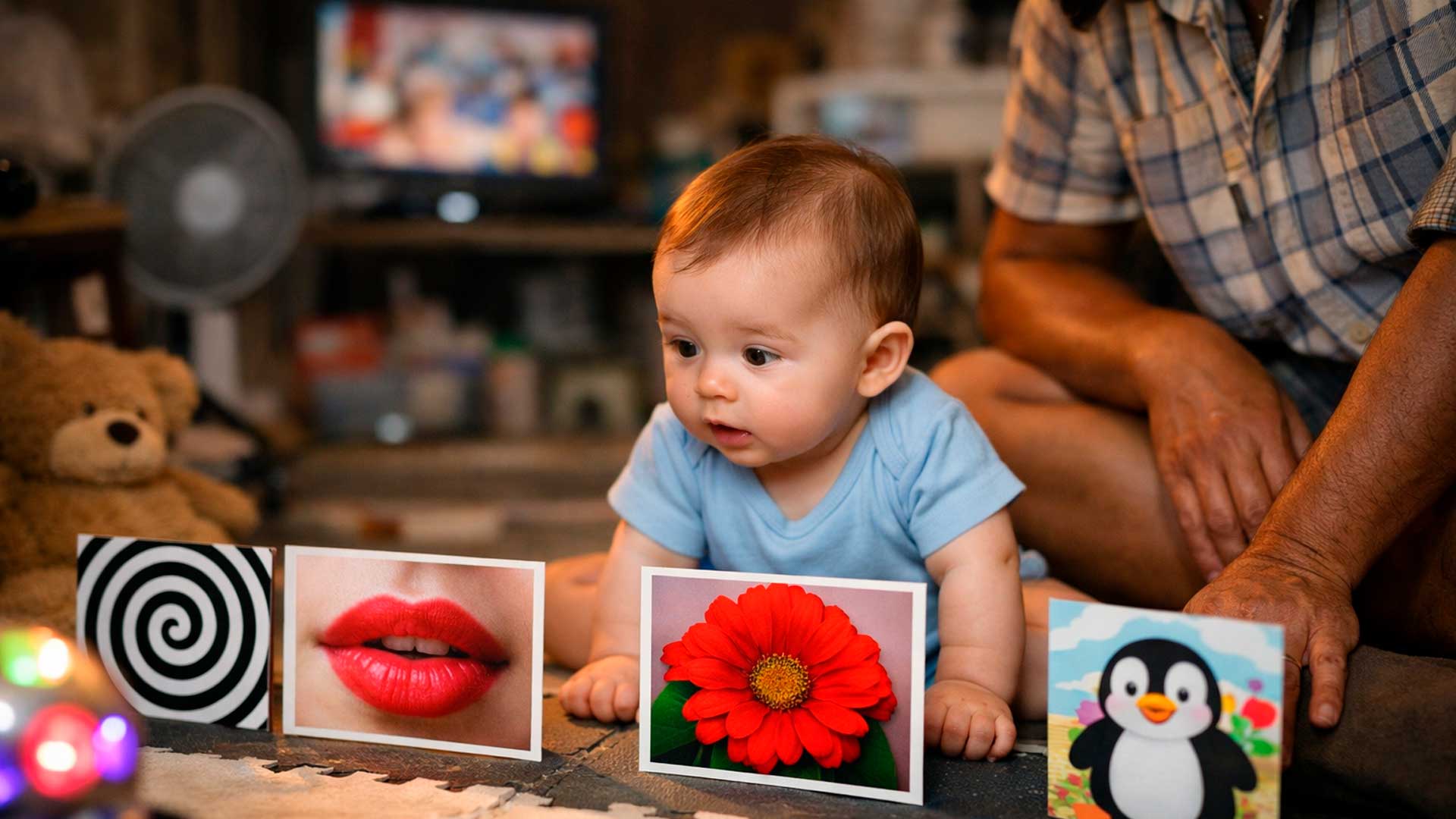
The test presents the baby with two images of similar contexts, always in a dual format. The logic is to measure which stimulus the child focuses on for a longer time and with greater intensity of visual interaction.
In practice, the system compares images with similar elements but with important differences in the presence of human social signals. One of the examples cited in the development of the tool contrasts the color red in a human mouth with the same color in a flower.
In this type of situation, the expected tendency in a baby with traits compatible with the spectrum is greater fixation on an element with less human interaction. This pattern of visual response serves as the basis for early screening, without relying on complex procedures or high-cost equipment.
Use in Daycares and Schools Can Expand the Reach of Screening and Reduce Barriers for Families That Cannot Access Specialists Quickly
One of the main differentiators of the technology is that it was not designed for exclusive use by doctors or therapists. This paves the way for application in educational environments, such as daycares, where developmental changes can be noticed very early.
With simplified training, the kit can help teams identify potential deficits and refer the child for a more comprehensive clinical evaluation. The advantage lies precisely in the lower cost and the possibility of use in contexts where access to specialized professionals is still limited.
This characteristic is especially relevant for socially vulnerable populations. In many cases, the wait for specialized care prolongs the start of important interventions, which can exacerbate developmental setbacks.
In the educational field, screening can also support adaptations and pedagogical strategies even before the issuance of a formal report. This allows for quicker responses during a critical phase of the baby’s and young child’s development.
Tool Does Not Replace Clinical Diagnosis, But Can Anticipate Interventions and Prevent Important Losses in Child Development
The team involved in the project emphasizes that the kit is an auxiliary diagnostic tool. The clinical diagnosis of autism still depends on a comprehensive evaluation, including family reports and analysis by multiple professionals.
Even so, early screening can make a concrete difference. When signs are perceived earlier, there is a greater chance of initiating interventions during the early stages of development, which can help reduce comorbidities and future impacts.
This point is directly related to the trajectory of the researcher Gisele Soares do Nascimento, who is a person with autism and received her diagnosis around the age of 10. Her personal experience with the delay in recognition of her condition was one of the driving forces behind the creation of the technology.
The goal, therefore, is not to label babies but to create an accessible and safe screening process to raise awareness of signs that need attention. In many areas, this first step can be decisive in shortening the path between initial suspicion and specialized care.
Patent Opens New Stage of Validation for the Technology and UFF Seeks Partners to Take the Kit Beyond the Academic Environment
With the patent already received, UFF is now preparing a new phase for the technology. The plan is to validate the kit on a larger sample and also outside the academic environment, to test its performance in contexts closer to real-world usage.
This stage will be important to measure the consistency of the results and adjust application protocols. The university also intends to seek partners to enable the commercialization of the product and expand access to the tool.
If this transition progresses, Brazil could have a national solution aimed at early screening of autism in babies, with the potential for impact on health and education. Institutional information from the service letter helps locate public channels related to communication on the topic.
The debate on early screening for autism still raises doubts, expectations, and divergences among families and professionals. Do you think tools like this should first reach public daycares, health clinics, or private practices? Leave your comment and join the discussion.







Seja o primeiro a reagir!