





 English
  Francês
  Alemão
  Italiano
  Japonês
  Norueguês
  Portuguese
  Spanish
  4 min of reading
  0 comments


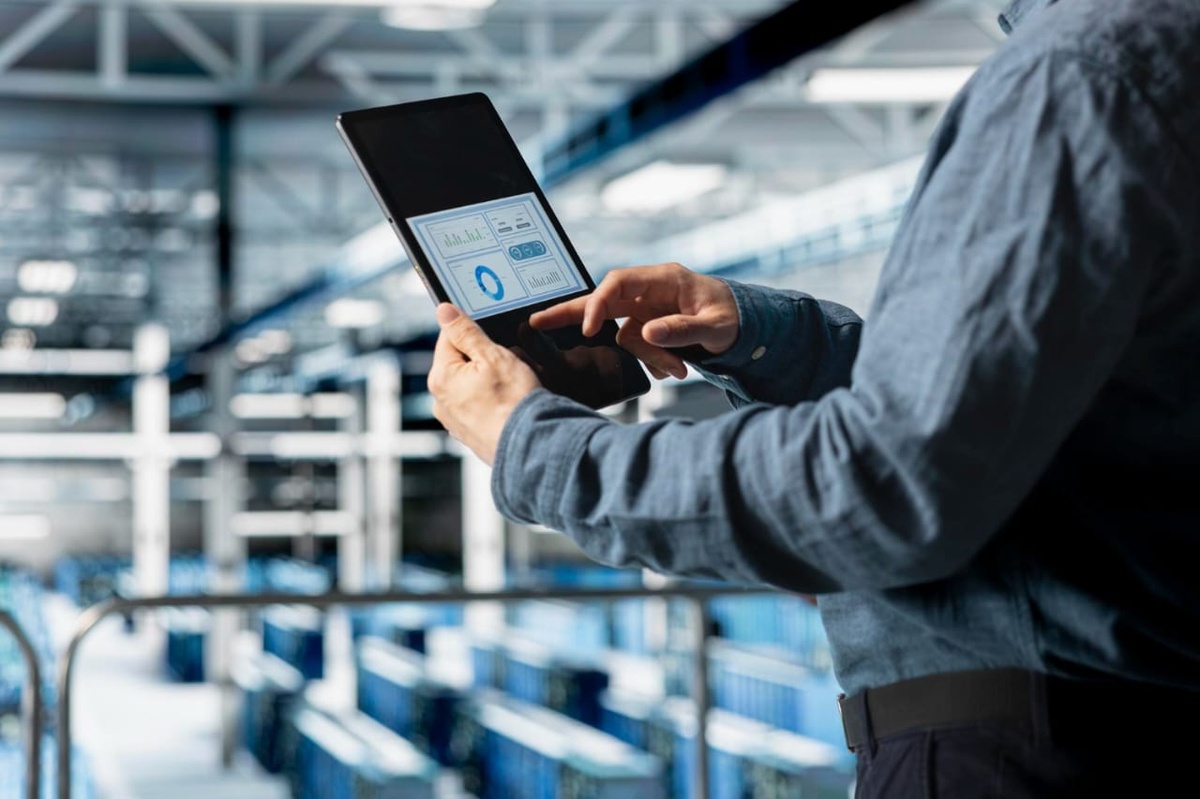
Brazilian Analytical Instrumentation Company Modernizes Internal Processes, Replaces Manual Spreadsheets with Specialized ERP and Gains Tax Agility, Sales Integration and Product Traceability.
Initially, TechWater announced significant results after implementing Nomus’s ERP, a company specialized in the development of industrial software.
Thus, the time to issue import invoices decreased from about an hour to less than 10 minutes.
Moreover, the digital solution replaced manual controls and reorganized the company’s operational processes.
-
350-year mystery may have been solved: remains of a soldier who inspired the hero of The Three Musketeers found beneath a church in the Netherlands.

-
NASA photographed a nearly perfect square with 3 km sides on Mars, 13 times larger than the Great Pyramid of Giza, but the official explanation is natural erosion; still, no one has explained why the four sides have almost identical lengths.

-
Starlink breaks the barrier of 10,000 satellites in orbit and takes its expansion to an unprecedented level, with a direct impact on global internet, technological competition, and the race for space.

-
Japan finds an alternative to oil amid rising prices by transforming ocean balance into electricity with a new technology that maintains efficiency even when the sea changes.

According to information released in January 2026, the change was applied in tax, commercial, and inventory management.
Consequently, the company began to operate with greater data integration and increased operational predictability.
Operational Transformation Drives Administrative Efficiency
Before adopting the system, many TechWater processes were conducted using manual spreadsheets.
Thus, inventory control, purchase orders, and import management were performed manually.
As a result, this model increased the risk of data entry errors and operational inconsistencies.
In addition, the tax process required great effort from the team.
According to Ariane Silva Mota, TechWater’s sales engineer, the previous system made routine tasks difficult.
According to the executive, each field of the invoices had to be filled out manually.
Therefore, tax issuance became slow and inefficient.
Consequently, the import process consumed time and resources from the administrative teams.
Search for Technology Led to the Choice of Industrial ERP
Subsequently, the company began to search for more integrated technological solutions.
Additionally, the company also needed a CRM capable of organizing the complete sales cycle.
In this context, TechWater learned about Nomus’s software through a recommendation from a business partner.
Thus, the company identified that a specialized ERP in the industrial sector could better meet its operational demands.
According to Rafael Netto, CEO of Nomus, process integration is essential for modern industrial management.
According to the executive, manual controls can generate operational and financial risks.
Moreover, integrating the ERP transforms scattered data into reliable information for decision-making.
System Integration Brought Immediate Gains to the Company
With the implementation of the platform, several processes began to operate in an integrated manner.
Thus, the company registered immediate gains in different operational areas.
Among the main advances are:
- Commercial Integration: the ERP now includes a native tool for managing the sales cycle. Thus, orders and invoicing are managed in a single interface.
- Tax Agility: updated tax rules automatically sped up the issuance of incoming and outgoing invoices.
- Product Traceability: the system allows for equipment identification by serial number, increasing operational control and reliability.
Consequently, the tax department began to issue documents more quickly and accurately.
In addition, the company started to reduce errors associated with manual entries.
Traceability and Organization Strengthen Customer Relationships
Besides tax efficiency, the platform also brought benefits to commercial management.
According to Ariane Silva Mota, the issuance of commercial proposals became clearer for clients.
Thus, the layout of the proposals began to present technical information and deadlines in a more comprehensible manner.
Additionally, traceability by serial number also strengthened customer support.
According to the engineer, any problem can be identified and resolved more quickly.
Consequently, the company’s credibility with clients increased, also contributing to sales expansion.
Technological Expansion is Planned for the Coming Years
Currently, the project between TechWater and Nomus continues to evolve.
According to Rafael Netto, the case of TechWater is considered an example of growth supported by industrial technology.
Thus, the ERP can evolve as the company’s operations expand.
In this context, TechWater plans to expand the use of the system to the quality and shipping modules.
This way, the company aims to deepen the digitalization of its industrial processes.
Trajectory of Companies in the Industrial Sector
Founded in 2005, Nomus develops ERP and PCP systems aimed at the Brazilian industrial sector.
Additionally, the company was created by production engineers.
Thus, the systems were designed with production engineering concepts and web technology.
Currently, the company is headquartered in Rio de Janeiro and operates throughout the national territory.
On the other hand, TechWater was founded in 2016, initially as a consultancy in analytical instrumentation.
Over time, the company expanded its portfolio and began to operate as an importer and distributor of process and laboratory analyzers.
Today, headquartered in São Paulo, the company maintains local stock and 24-hour technical support.
Thus, the company seeks to serve the Brazilian industrial sector with analytical solutions for water treatment and industrial processes.
In light of this technological transformation scenario, the integration between industrial management and digital systems will continue to be crucial for the growth of companies in the Brazilian industrial sector.







Seja o primeiro a reagir!