





 Português
  Inglês
  Espanhol
  5 min de leitura


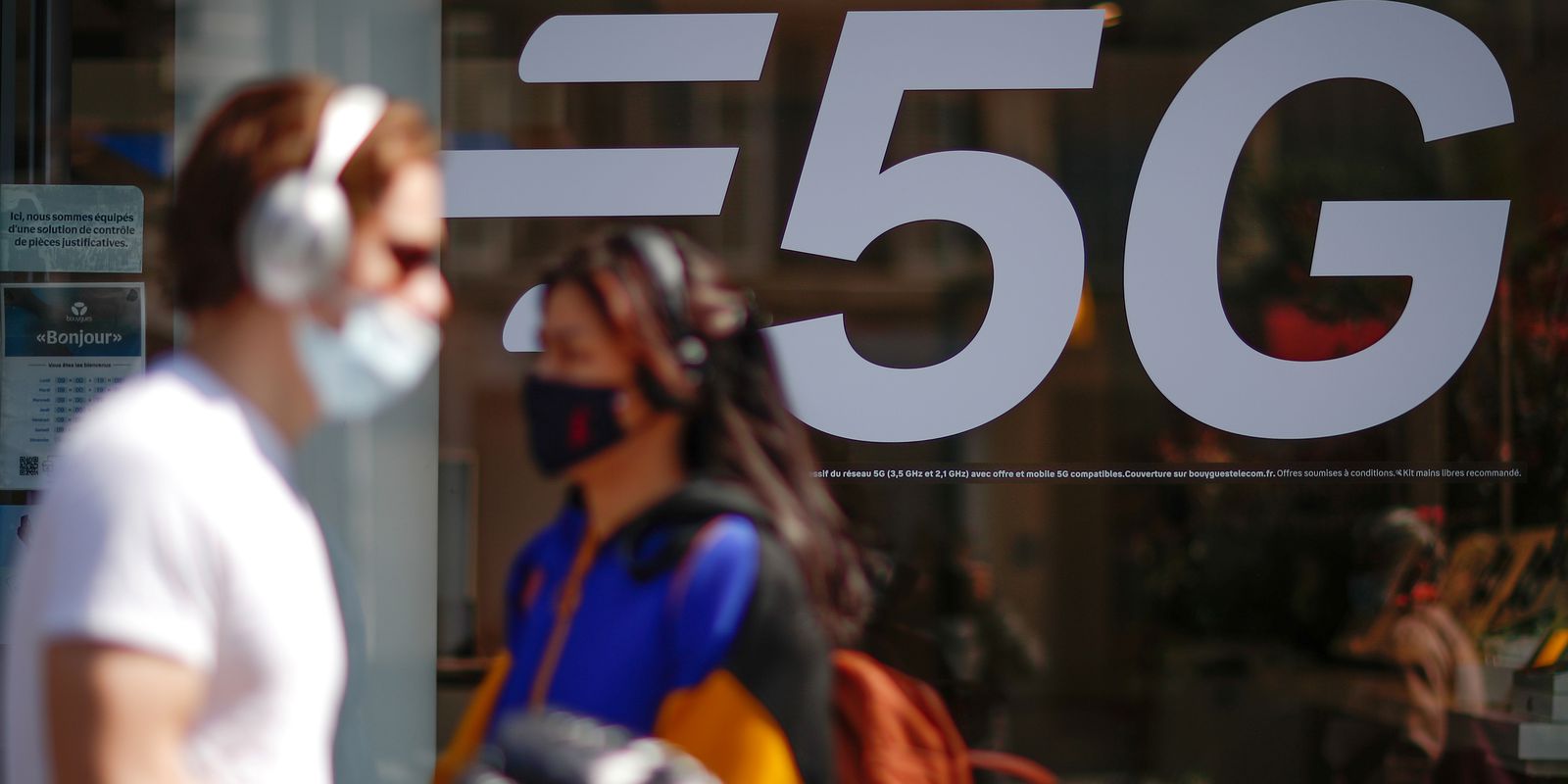
The Goal for the Start of 5G Operations Was Quite Ambitious: Making the Technology Available in All Brazilian Capitals by July of This Year!
At the beginning of 2022, IDC released the research Predictions Brazil 2022, which points out the main technology trends in the country for this year. According to the consultancy, 5G, the new generation of internet, will generate around US$ 25.5 billion in Brazil by 2025.
In the Brazilian market, the first milestone was the auction held in November 2021, which represented the commitment of the winning operators to invest around R$ 42 billion in 5G infrastructure, with an additional R$ 5 billion allocated to the Ministry of Economy. The frequencies auctioned were 700 MHz, 2.5 GHz, 3.5 GHz, and 26 GHz.
This auction will benefit Brazilian connectivity on other fronts, as the operators made several commitments, such as guaranteeing 4G internet on Brazilian highways and mobile internet in public primary education schools.
-
Found in one of the most radioactive places on Earth, this Chernobyl fungus may be doing something with radiation that no one has been able to explain to this day.

-
A bright yellow mushroom imported from Asia escaped from a cultivation farm in the United States in 2010 and is now aggressively spreading across 25 states, destroying entire communities of native fungi in American forests.

-
Buried under China, a colossal machine weighing 20,000 tons began operating as the largest neutrino detector on the planet and, in just 59 days, surpassed results that science took half a century to achieve.

-
Iran enters the center of a climate alert after the war emitted 5.6 million tons of CO2 in two weeks, surpassing the annual pollution of entire countries.

Some Cities Will Need to Change the Laws Regarding the Installation of Telecommunications Antennas to Receive 5G.
The goal for the start of 5G operations was quite ambitious: making the technology available in all Brazilian capitals by July of this year and in all cities with more than 30,000 inhabitants by 2028, in the standalone format, which requires the implementation of a network independent of 4G. However, all deadlines will need to be reassessed, as there are capitals and Brazilian cities that need to invest in infrastructure, and the global semiconductor crisis is still ongoing, a complicating factor that affects projects in many countries.
For now, we already have Brasília (DF) as the first city with 80% of its territory covered by this high-speed connection, launched on July 6. According to Anatel, the next cities to receive the signal will be São Paulo (SP), Belo Horizonte (MG), Porto Alegre (RS), and João Pessoa (PB). This is another very important milestone that we should celebrate.
This expansion also faces other challenges: in the state of São Paulo alone, InvestSP (São Paulo Agency for Investment Promotion and Competitiveness) reported that over 600 São Paulo municipalities will need to change laws regarding the installation of telecommunications antennas to receive 5G. This is a reality that thousands of municipalities in Brazil will have to face, and we hope that legislative changes will not take too long, as we have already seen in the debate over the Antenna Law. According to the Antene-se Movement, 11 capitals have already updated their legislation on the subject.
Thus, Brazil faces the challenge of turning the potential of 5G into reality, especially to accelerate the implementation of IoT projects in the sectors prioritized by the National IoT Plan (PNIoT): health, smart cities, industry, and agriculture.
The World Is in the Process of Implementing 5G, and Brazil Is Not as Behind as Some May Assume.
When I had the privilege of being invited to participate in the Qualcomm 5G Summit last May in San Diego (USA), I heard several implementation case studies. I verified that the ongoing pilot projects in Brazil, which bring together various actors from the ecosystem, are very welcome and vital. The world is in the process of implementing 5G, and Brazil is not as behind as some may assume.
At this event, I was particularly struck by the ongoing case studies of projects in the above 71GHz range, which showcases the beauty of 5G and indicates how the technology’s maturity is being accelerated, bringing more speed, effectiveness, and efficiency.
Pilot projects are initiatives that deserve visibility, and we hope that the knowledge gained from these actions is widely shared so that 5G advances as desired while the infrastructure is being implemented.
One noteworthy project is OpenCare 5G, an initiative by InovaHC, the innovation center of the Hospital das Clínicas of the University of São Paulo (HCFMUSP), involving telecommunications companies, the government, universities, and financial institutions to test the private 5G network and Open RAN, assisting with the performance of ultrasound exams in remote areas.
In the Agro sector, Huawei, the Itaipu Technological Park (PTI), and Coopavel (Cascavel Agro-industrial Cooperative) have initiated the development of an important open innovation project for agribusiness by utilizing a 5G network, including the involvement of startups. The goal is to create and test innovative applications, such as real-time monitoring and transmission of high-definition images for remote oversight, more autonomous and intelligent operation of tractors, harvesters, planters, seeders, and sprayers, as well as precise information about weather conditions and the behavior and health of animals.
Regarding the realm of Smart Cities, we have the Conecta 5G Program, which will allow the implementation of smart 5G networks in Brazilian municipalities. The project results from an agreement between ABDI and the São José dos Campos Technological Park (PQTEC SJC) and foresees practical tests of the use of urban furniture (smart lamps developed by Nokia and Juganu) with integrated 5G antennas and Qualcomm chipsets.
Sales of 5G-Compatible Smartphones Grew 230% in Brazil Between January and May 2022
Universities are also playing their role. The 5G Smart Campus Facens project, in the city of Sorocaba (SP), implemented fifth-generation technology to foster new research, projects, and the development of digital solutions for other segments such as automotive, Industry 4.0, smart cities, telemedicine, and education. We also have the Interdisciplinary Center for Interactive Technologies (Citi) of the Polytechnic School (USP), which will create open platforms for mobility, security, and urban forests through Claro’s experimental 5G license.
On the consumer side, sales of 5G-compatible smartphones grew 230% in Brazil between January and May 2022 compared to the same period last year, according to a survey by consultancy GfK. Brazilians continue to stand out for their adoption as early adopters and are truly enthusiastic about new technologies.
By no means have I exhausted the mentions of ongoing initiatives in Brazil involving 5G in this article. I hope to soon discuss other actions, funding lines, partnerships, and projects that will leverage this technology, which has an incalculable disruptive impact.
by – Werter Padilha, CEO of Taggen IoT Solutions and Sawluz IT; Counselor of ABES – Brazilian Association of Software Companies








Seja o primeiro a reagir!