





 English
  Francês
  Alemão
  Italiano
  Japonês
  Norueguês
  Portuguese
  Spanish
 4 min of reading


35 Solar Power Plants That Will Be Built by EMGD in the Coming Years with Technology for Greater Efficiency and Cost Optimization
Technological advancements increase the yield in solar energy generation and transform Minas Gerais into a leader in the sector. EMGD is one of the companies at the forefront of major projects in the field for the coming years. Learn a bit more as you read through the article.
Even in prehistory, atmospheric discharge, popularly known as lightning, was one of the first contacts humans had with electricity. Since then, significant advancements have brought to the contemporary world a range of resources capable of enabling electric energy generation through various means, and in an increasingly efficient manner.
An important part of this advancement, the generation of energy through the photovoltaic effect, produced from the exposure of materials like Silicon to sunlight, has taken a prominent role among traditional energy matrices. Although it may seem simple, considering that the sun rises for everyone, the processes of capturing, generating, and distributing this energy source involve dedicated legislation, require high-tech equipment, and necessitate meticulous planning for structuring a power plant capable of achieving maximum possible yield.
-
A study reveals the expansion of renewable energy procurement in Brazil and shows how companies are taking advantage of opportunities to reduce expenses, ensure energy efficiency, and strengthen strategic environmental commitments.

-
Mato Grosso do Sul excels in the sugar-energy sector: the state reaches a milestone of 22 operating mills and accelerates the production of clean energy in MS with a focus on sustainability.

-
National energy dilemma: Brazilians support clean energy but reject increases in tariff costs to finance the sustainable transition.
-
Research indicates that Brazilians support clean energy and wish to advance in the energy transition, but reject paying more on their electricity bill, showing a direct conflict between cost and sustainability.


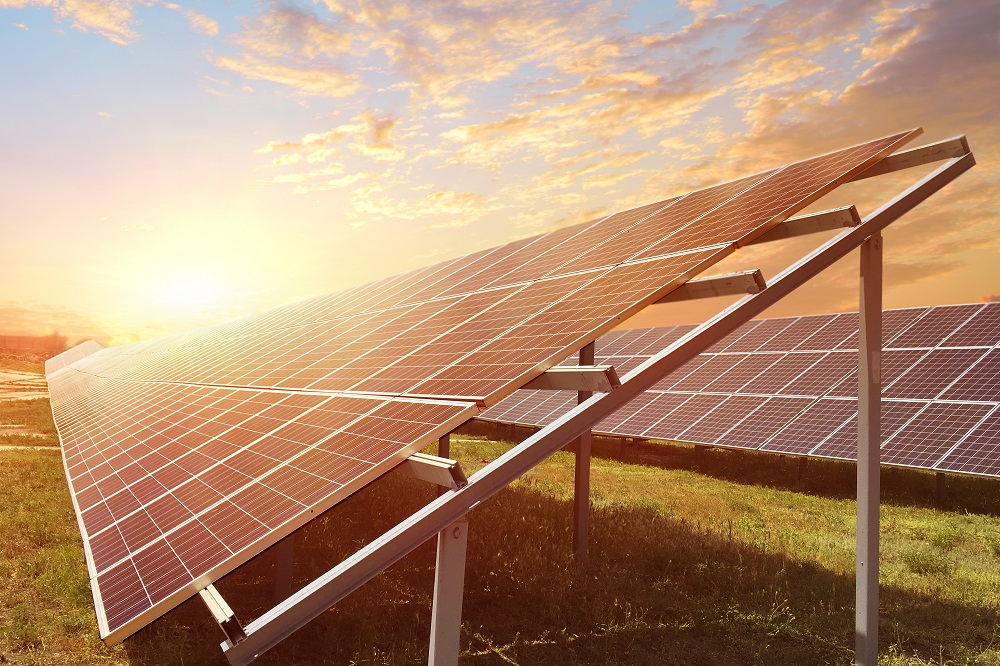
Recently connected in the city of Pirapora, Northern Minas region, the Corvina Photovoltaic Plant (UFV), the first project of the Minas Gerais Distributed Generation Company, was conceived and designed with the support of these advancements. One of the most significant of these is the trackers system, which acts as a solar follower, positioning the capturing panels at the optimal angle of inclination concerning solar irradiation incidence for each moment of the day. For this to happen, an algorithm integrated with a set of sensors controls a hydraulic system that moves the modules, increasing their yield by up to 25% compared to systems mounted with fixed structures.
Among the 35 solar power plants that will be built by EMGD in the coming years, another technology will also be utilized: bifacial modules, which, as the name implies, have the capacity to process light incidence on both sides, delivering even more efficiency for ground-mounted plants. Compared to monofacial modules, the new technology takes advantage of the amount of light reflected by the ground, utilizing the rear side of the equipment. The feasibility of using this technology considers factors such as ground height, angle of inclination, and the reflection coefficient of the terrain. Depending on the combination of these elements, performance gains from bifacial modules can reach up to 10% in energy generation compared to conventional modules.
Another key factor in the advancements of the segment is the accelerated evolution in the production of photovoltaic cells. In 2015, the highest power commercial modules were 300W to 320W. Currently, EMGD uses 440W modules that occupy practically the same area. However, it is energy storage that has emerged as a new frontier for exponential growth in the use of solar energy. Containers with stationary batteries are already being employed in some distribution projects across Brazil. Besides improving the quality of the supplied energy, this type of battery alleviates surges, failures, and demand peaks during high consumption periods. One of the key differentiators of this system is the possibility for Distributed Generation companies to offer compensation for consumption during times when the client incurs higher costs, or to provide part of the power demand required by them. These actions bring benefits not only to entrepreneurs, who start consuming cleaner energy at lower costs, but also for distributors, who will have support in supplying energy and power to consumers during peak overload times.
According to a survey by Bloomberg New Energy Finance – a team specialized in the availability of data, news, and analyses for the sector – the price of lithium-ion batteries fell by over 75% between 2010 and 2018, making it the second technology to decrease the most in the global electrical sector, behind only solar photovoltaics, which reduced by 83% in the same period. This sharp drop in prices is a confirmed trend, making the technology increasingly accessible and opening new opportunities for the advancement of solar energy.
In the political arena, some decisions also strengthen the path of solar energy in Brazil. Especially in Minas Gerais, where recently Governor Romeu Zema announced the construction of the world’s first lithium-sulfur battery cell factory in Juiz De Fora, a technology even more advanced than lithium-ion batteries. Their arrival is expected to significantly accelerate the energy transition from fossil sources to renewable sources, and the Minas Gerais Distributed Generation Company remains attentive and prepared for this moment.










Seja o primeiro a reagir!