





 Portuguese
  English
  Spanish
  3 min of reading
  0 comments


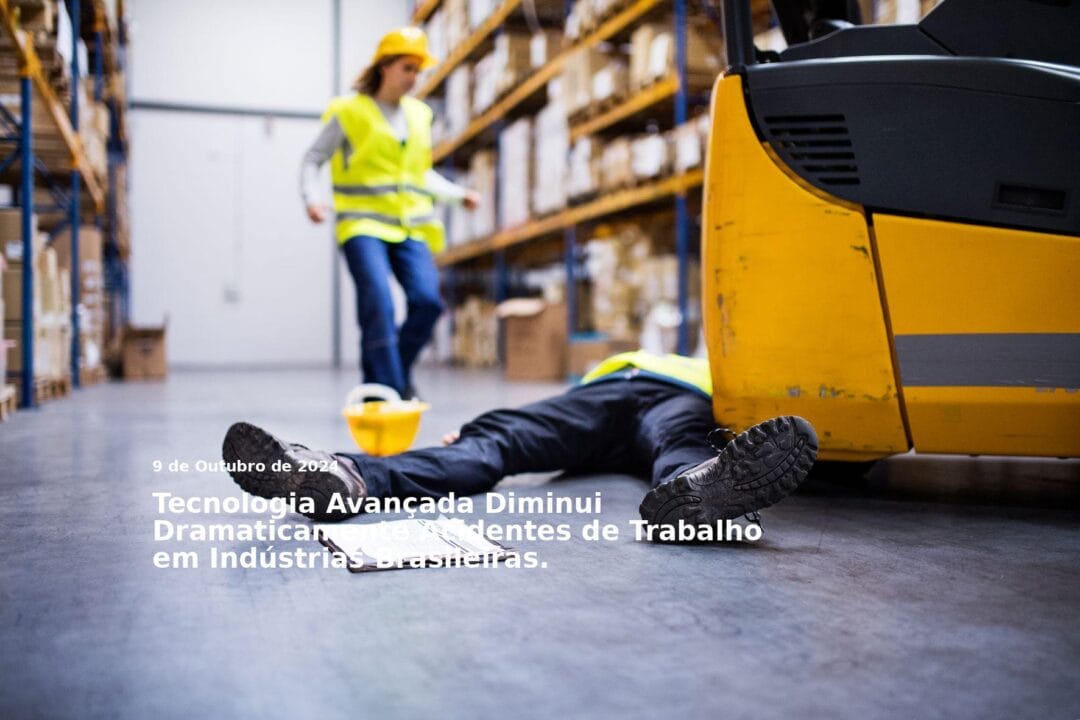
Sensors And Electromagnetic Waves Increase Safety In Industrial Yards, Preventing Work Accidents And Improving Productivity.
Advanced technologies, such as sensors and security systems, are implemented to reduce work accidents in industrial environments. These innovations have proven effective in alerting workers to potential hazards, resulting in safer environments and a decrease in risks. The adaptation of such systems is essential to promote a healthier workplace and ensure the physical integrity of employees.
Automation is another important ally in mitigating the effects of work accidents, minimizing the need for human intervention in dangerous tasks. Moreover, initiatives to raise awareness about occupational incidents are crucial. Companies that invest in training to prevent workplace incidents are reaping significant rewards. Workplace safety is not just an obligation, but a right of workers, ensuring that everyone returns home without injuries. In this way, productivity and safety are balanced in the occupational environment.
Fatalities In Work Accidents: A Persistent Problem
Last Monday, October 7th, a tragic work accident claimed the life of an engineer at one of the industrial yards of Petrobras, located in Macaé, in the state of Rio de Janeiro. She was fatally struck by heavy machinery, an event that underscores once again the importance of risk management in the workplace. The National Institute of Social Security (INSS) points out that a significant portion of workplace accidents occurring in Brazil is primarily caused by heavy machinery and equipment, transportation vehicles, and various impacts between people and objects. Together, these factors account for 30% of all workplace incidents in the country, according to statistics gathered by SmartLab.
-
Government enacts new law: paternity leave increases from 5 to 20 days with gradual increases until 2029, and Social Security pays the paternity salary; companies no longer bear the absence cost, estimated at R$ 5.4 billion.

-
End of the 1-hour lunch break in the CLT? Current labor law maintains the break, allows for negotiated reductions, and defines rules for working hours and home office in Brazil.

-
Employee Fired After Accumulating 114 Days of Medical Leave in One Year, Labor Court Upholds Company’s Decision

-
Employee Fired While Treating Depression Wins in Court and Vale Is Required to Rehire Him Following Decision Based on the CLT and INSS Benefits


Prevention And Safety Technology In Occupational Accidents
Currently, there are advanced technologies that have the potential to significantly reduce work accidents. The use of sensors in vehicles represents an innovation that can help detect the presence of pedestrians nearby, preventing occupational incidents before they occur. Among these technologies, one that shows promise is the device known as Hit Not. This equipment works by using electromagnetic waves to identify the presence of people in areas that are generally out of the operators’ line of sight. Afonso Moreira, CEO of AHM Solution, a company dedicated to risk management in industrial operations, explains that these sensors can identify pedestrians within a radius of up to 30 meters, even if they are hidden by walls or stacks of surrounding cargo.
Visual Alerts And The New Era Of Productivity And Safety
When a pedestrian is detected, the equipment initiates three different types of alerts for the machine operator: visual, auditory, and through vibrations on a PAD that is attached to the operator’s clothing. This variety of alerts allows the employee to quickly perceive the warning and take immediate action to stop the machine, thereby reducing the risk of workplace injuries. In practice, the application of Hit Not in a large lumber industry has virtually eliminated the risk of run-overs in areas where pedestrians move among logs. According to Moreira, the implementation of these technologies in factories has resulted in a more efficient operation with increased productivity and safety, allowing machines to operate continuously without the dangers of run-overs.
More information on how this technology works can be seen in a demonstration video available on YouTube. The video highlights the effectiveness of vehicle sensors in improving safety in industrial operations, bringing about a positive and vital change for reducing accidents in the workplace.
Source: © AHM SOLUTION Press










Seja o primeiro a reagir!