





 Portuguese
  English
  Spanish
  3 min of reading
  0 comments


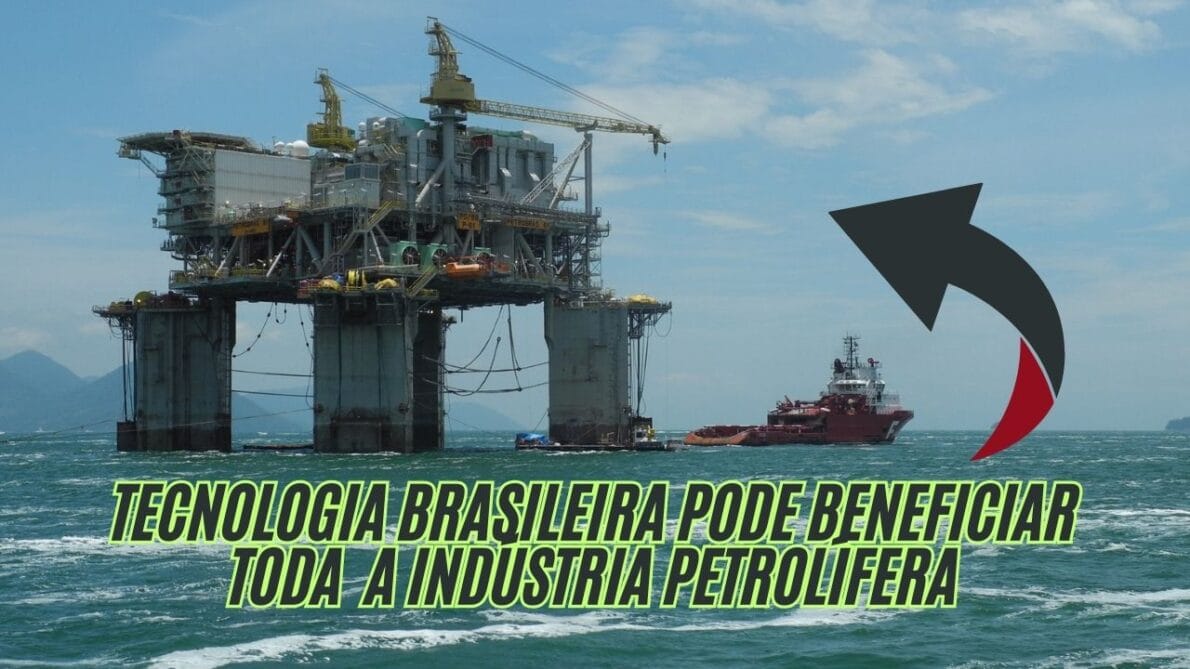
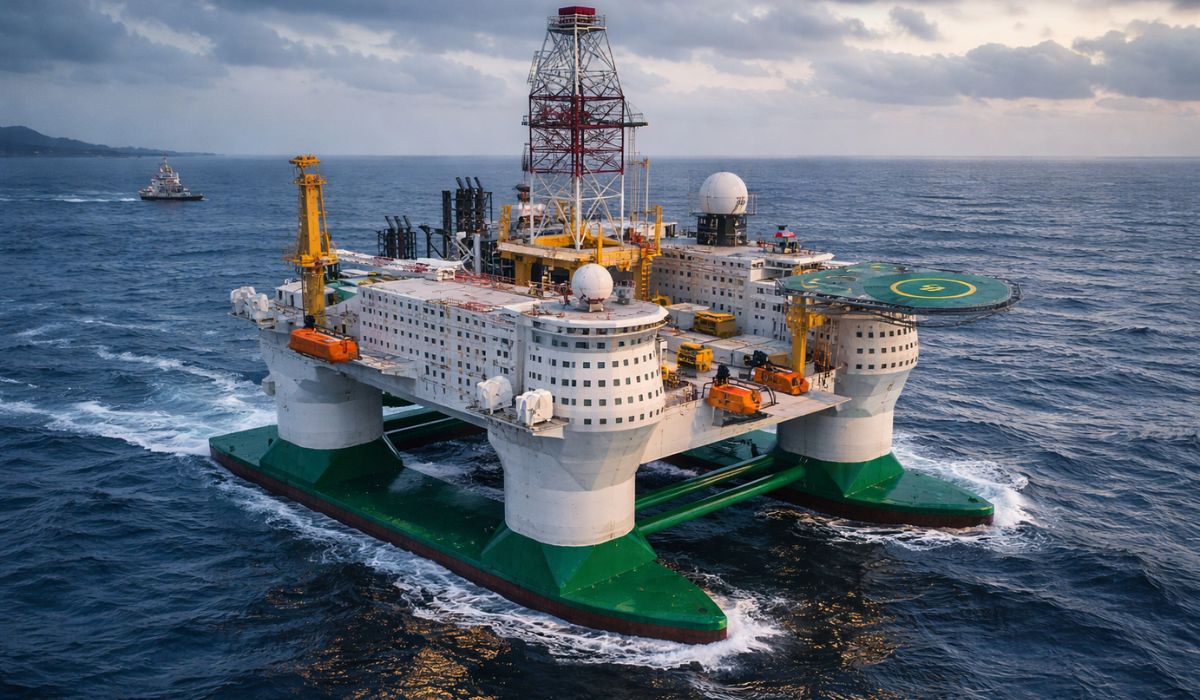
Just imagine, oil platforms the size of buildings, floating in the middle of the ocean, that can now be lighter and even more resistant! Sounds like science fiction? Well, that is exactly what a new Brazilian technology promises. Developed by the University of São Paulo (USP), this innovation has the potential to transform the oil industry by reducing billion-dollar costs in the construction of these platforms and even large projects like bridges.
Oil platforms and bridges are massive structures, weighing thousands of tons. In the case of platforms, this structure must withstand extreme conditions at sea, being resistant to both strong winds and waves as well as corrosion caused by the marine environment. This requires the use of large quantities of materials like steel, which significantly increases construction costs.
But now, thanks to topological optimization, a technique that allows simulating and finding the most efficient architecture for a construction, this reality can change. Renato Picelli, a professor at the Polytechnic School of USP, explains that the idea is to use this technique to create lighter oil platforms without compromising the necessary stiffness and resistance.
Cost and Material Reduction for Oil Platform Construction
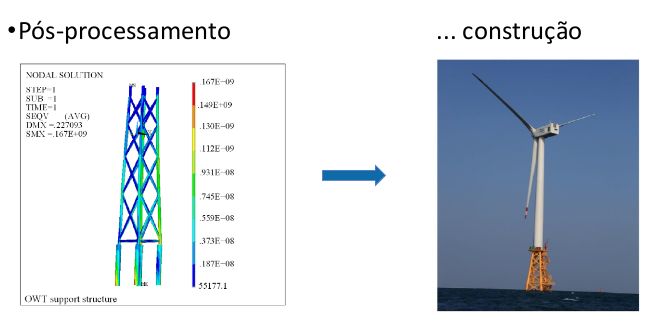
The concept is simple, but the impact is enormous: by using topological optimization, engineers can reduce the amount of material needed for construction while maintaining structural stability. Instead of simply following a standard design, they simulate different configurations until they find the most efficient one. This results in structures that are not only lighter but also cheaper to build.
-
Made from recycled plastic, plastic wood is gaining space in the construction industry because it does not rot, resists moisture, and reduces maintenance costs over the years.

-
Florianópolis will receive a million-dollar BRT that will begin construction in 2026 with nearly 400 million in funding from the federal government and the Inter-American Development Bank, and the map already shows the routes for the exclusive bus corridors.
-
Without a blueprint, without an engineer, and using scrap from the dump, a father spends 15 years building an 18-room castle for his daughter, featuring tram tracks, 13 fireplaces, and over 700 m², which may now be demolished.
-
A megaproject worth R$ 89 billion is advancing in Iraq and promises to change the game in global trade by creating a new corridor between Asia and Europe, reducing traditional routes and repositioning the country as a logistics powerhouse.


According to Picelli, this Brazilian technology can benefit not only the oil industry but also the construction of bridges and other large engineering projects. The reduction of materials and costs has the potential to revolutionize how these structures are built.
Offshore Structures and Brazil’s Role
Brazil, being a giant in underwater oil exploration, especially in the pre-salt area, has much to gain from this innovation. Floating oil platforms are essential for extracting the millions of barrels the country produces daily. In February 2024, for example, Brazil extracted 3.336 million barrels of oil per day, generating exports worth 2.7 billion dollars. This production volume is only possible thanks to the immense platforms operating at sea.
Offshore structures, built offshore, such as oil platforms and cargo transport ships, are crucial for this operation. And with USP’s new technology, these structures can be built even more efficiently and economically, keeping Brazil at the forefront of oil exploration.
Cutting-Edge Computing in Engineering
But how does this technology work? According to Professor Picelli, USP is developing a groundbreaking software that allows applying topological optimization in conjunction with fluid-structure interaction, something that does not yet exist in the market. “There are already commercial software to find the best structure, but not for fluid-structure interaction,” explains Picelli.
The development of this software places Brazilian scientific research in a prominent global position, allowing engineers to use this tool in the future to create even more advanced and efficient projects. “This is the science of business,” says the professor. “Creating methods that do not yet exist.”
The Revolution That Comes from Knowledge
This Brazilian technology is a great example of how academic research can transform reality outside universities. With the development of topological optimization for oil platforms and other structures, USP is at the forefront of a revolution in civil construction and naval engineering.
The future of these industries promises to be lighter, literally. With more efficient and economical structures, Brazil can continue as a power in oil exploration while saving billions in construction costs. And all of this, thanks to a technology that, soon, may be within reach of engineers around the world.








Seja o primeiro a reagir!