





 Portuguese
  English
  Spanish
  5 min of reading
  0 comments


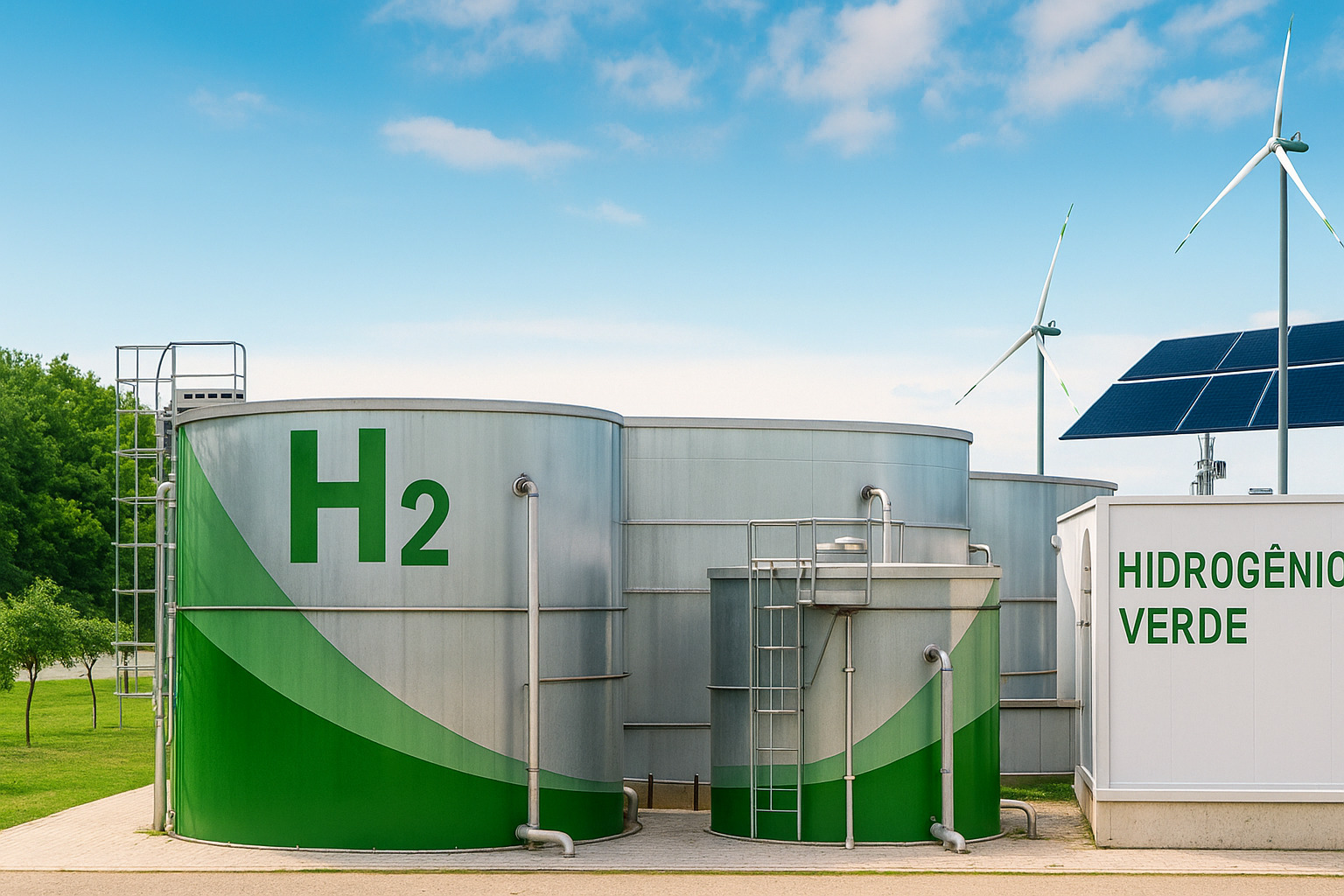
Discover How Brazilian Technology Uses Solar Energy to Optimize the Production of Green Hydrogen Sustainably and Economically.
Currently, the production of green hydrogen in Brazil and worldwide is undergoing a transformation, thanks to advanced technological developments.
For example, Brazilian researchers, especially at the National Center for Research in Energy and Materials (CNPEM) in Campinas, developed an innovative prototype that uses only solar energy and water to generate hydrogen, without relying on conventional electricity.
This innovation promises to make the process more sustainable, economical, and accessible, and could even be applied in remote locations.
-
Brazil accelerates hydrogen and biofuel projects to consolidate the fuel of the future and reduce dependence on oil by 2026.

-
CNPE strengthens policy and prevents imported biodiesel from being mixed with diesel, aiming to strengthen the Brazilian industry and protect jobs by reducing external dependence amid tensions in the global market.

-
Revolution in public transport: Goiânia puts into circulation the first articulated buses powered by biomethane in Brazil and promises to drastically reduce pollution on the Anhanguera Corridor.

-
From the field to the pipelines: Mato Grosso do Sul accelerates the energy transition and consolidates a new axis in renewable energy with the arrival of a giant biogas plant.

Historically, hydrogen is the most abundant chemical element on the planet, but it rarely appears in its pure form.
This is because it combines with other elements, forming molecules such as water (H₂O) and hydrocarbons found in fossil fuels.
Therefore, its production requires separation processes, which traditionally consume electricity from non-renewable sources, such as coal or natural gas, generating significant greenhouse gas emissions.
On the other hand, the concept of green hydrogen emerged as a clean and strategic alternative.
Unlike gray hydrogen, which uses fossil fuels, green hydrogen utilizes renewable energy, such as solar, and abundant resources like water, to separate hydrogen from oxygen without emitting pollutants.
Thus, this approach has gained prominence in industrial sectors, power plants, and urban mobility, significantly contributing to the global energy transition.
Moreover, the production of green hydrogen also creates economic opportunities.
With reduced production costs, new markets can emerge, creating jobs and stimulating investments in technological innovation.
In this way, companies and governments are beginning to see green hydrogen not just as an energy resource, but also as a strategy for the economy of the future, aligned with carbon neutrality goals and sustainable development.
How the Brazilian Prototype Works
In this context, the Brazilian prototype uses plates called photoelectrodes, made of hematite, a abundant and low-cost material.
To increase efficiency, the researchers reinforced these plates with aluminum and zirconium, better utilizing the available solar light.
Next, they assembled the plates in 3D printed modular reactors, creating a flexible and scalable system that functions like building blocks.
As a result, tests showed that the device maintained stability for over 120 hours in the lab and demonstrated consistent performance outdoors, even amidst the natural variations of sunlight.
Consequently, the impact of this innovation goes beyond the more efficient production of green hydrogen.
It also provides energy independence, eliminating the need for a connection to the traditional electrical grid.
Thus, it is possible to install the technology in isolated regions, rural communities, or industries far from large urban centers, expanding access to a clean and reliable energy source.
Additionally, the simplified process requires less infrastructure, releases substances within regulatory limits, and reduces production costs by up to 40% compared to traditional methods.
Since the beginning of the 21st century, concern about climate change and the pursuit of clean energy sources have intensified studies on green hydrogen.
Therefore, countries like Germany, Japan, and the United States have invested in research and development programs to expand the use of hydrogen in industry and mobility.
In Brazil, the abundance of natural resources, such as sunlight and water potential, creates ideal conditions to expand this technology.
Thus, the prototype developed in Campinas represents a significant step, combining technological innovation and sustainability.
Raw Materials and Applications of Green Hydrogen
Green hydrogen can be produced from water or from renewable raw materials such as ethanol, biogas, and vinasse, a byproduct of sugarcane mills.
Among these methods, extracting hydrogen directly from water proves to be the most promising alternative, as it is abundant and available in virtually any region.
Furthermore, large-scale production allows for diversified applications, from electricity generation to sustainable mobility.
Thus, hydrogen-powered cars, trucks, and buses help reduce dependence on fossil fuels and decrease pollutant emissions.
Another relevant aspect of green hydrogen production is its relationship with the steel industry and other heavy sectors.
By using hydrogen as a fuel or reducing agent, industries can produce green steel, which emits less carbon dioxide during the process.
Therefore, this represents an important advance for countries seeking to reduce industrial carbon footprints.
Consequently, the Brazilian technology based on solar energy can pave the way for the decarbonization of traditionally polluting sectors.
Moreover, research indicates that green hydrogen can complement other renewable energy sources, such as solar photovoltaic and wind, acting as a clean energy storage system.
Thus, during periods of low solar or wind energy production, the generated hydrogen can be converted back into electricity or used as fuel, ensuring continuity in energy supply.
In this way, this role of clean energy storage further enhances the importance of green hydrogen for the future of the global energy matrix.
Potential and Future of Solar Hydrogen
Researchers like Flávio Souza, coordinator of the hydrogen program at the National Laboratory of Nanotechnology (LNNano), highlight that the study demonstrates the possibility of transforming lab results into real solutions, bringing the production of green hydrogen closer to practical and industrial applications.
Additionally, Juliano Bonacin, a professor at the Institute of Chemistry at Unicamp, emphasizes that research aimed at domestic environments indicates that with the use of solar panels and 3D printed electrolyzers, the technology can become accessible to households, broadening the reach of the energy transition.
The expansion of green hydrogen has the potential to redefine energy, industrial, and environmental standards.
By reducing costs, eliminating emissions, and expanding access to energy, this technology contributes to a more sustainable and resilient energy model.
In Brazil, in particular, the combination of abundant natural resources, advanced scientific research, and technological innovation creates favorable conditions to establish the country as a protagonist in solar hydrogen production.
Moreover, the historical development of solar energy and hydrogen contextualizes even more the importance of this advancement.
From the first experiences with photovoltaic cells in the 20th century to the modern modular systems, each stage represented an effort to make clean energy more accessible and efficient.
Therefore, the incorporation of green hydrogen in this context shows how science, technology, and sustainability can converge to innovative solutions that positively impact the economy, the environment, and society.










Seja o primeiro a reagir!