





 Portuguese
  English
  Spanish
  3 min of reading


Company Uses NASA Technology to Develop Batteries That Last 30 Years. The Components Are Recyclable and Can Contribute to Sustainability in Several Sectors.
The search for more efficient and sustainable energy sources is one of the main challenges faced by society today. In this scenario, an innovative company emerges with a promising solution: the development of long-lasting batteries, using NASA technology.
These revolutionary batteries have the impressive capacity to last up to 30 years, far exceeding the lifespan of conventional batteries. In addition, the company prioritizes sustainability, using recyclable components in their manufacturing.
With this technological advancement, it is expected that these batteries will significantly contribute to the sustainability of various sectors, offering a viable and environmentally friendly alternative for energy storage.
-
The Moon holds billions of years of frozen water in dark craters that could provide fuel, oxygen, and drinking water for astronauts, and a new study finally explains how that ice got there.

-
Pirita, the “fool’s gold,” deceived prospectors for centuries and today helps science uncover the origin of Earth’s magma.

-
The largest volcanic event in Earth’s history may have changed everything beneath the Pacific: a study shows that eruptions 110 to 120 million years ago reshaped the oceanic plate of the Ontong Java Plateau, the largest oceanic plateau on the planet.

-
The world’s largest acid geyser awakens in Yellowstone and reaches record heights after years of dormancy.

NASA Technology Can Develop Batteries That Last 30 Years
A U.S. company is developing a new technology for sustainable and long-lasting batteries for Earth based on the chemistry and engineering that NASA has used for over 40 years to power the International Space Station, the Hubble Space Telescope, and much more.
The company believes that its advances can replace traditional batteries in the long term. According to Jorg Heinemann, CEO of EnerVenue, their technology is much safer than lithium-ion.
The idea behind the technology of the company comes from the work done by Stanford University professor Yi Cui, who is also the chairman and chief technology advisor of the startup. Cui discovered how to adapt NASA’s long-lasting nickel-hydrogen battery technology for viable use on Earth, using materials that will significantly reduce production costs.
The NASA nickel-hydrogen battery technology is suitable for space, as it can withstand the most adverse conditions, including rapidly changing extreme temperatures.
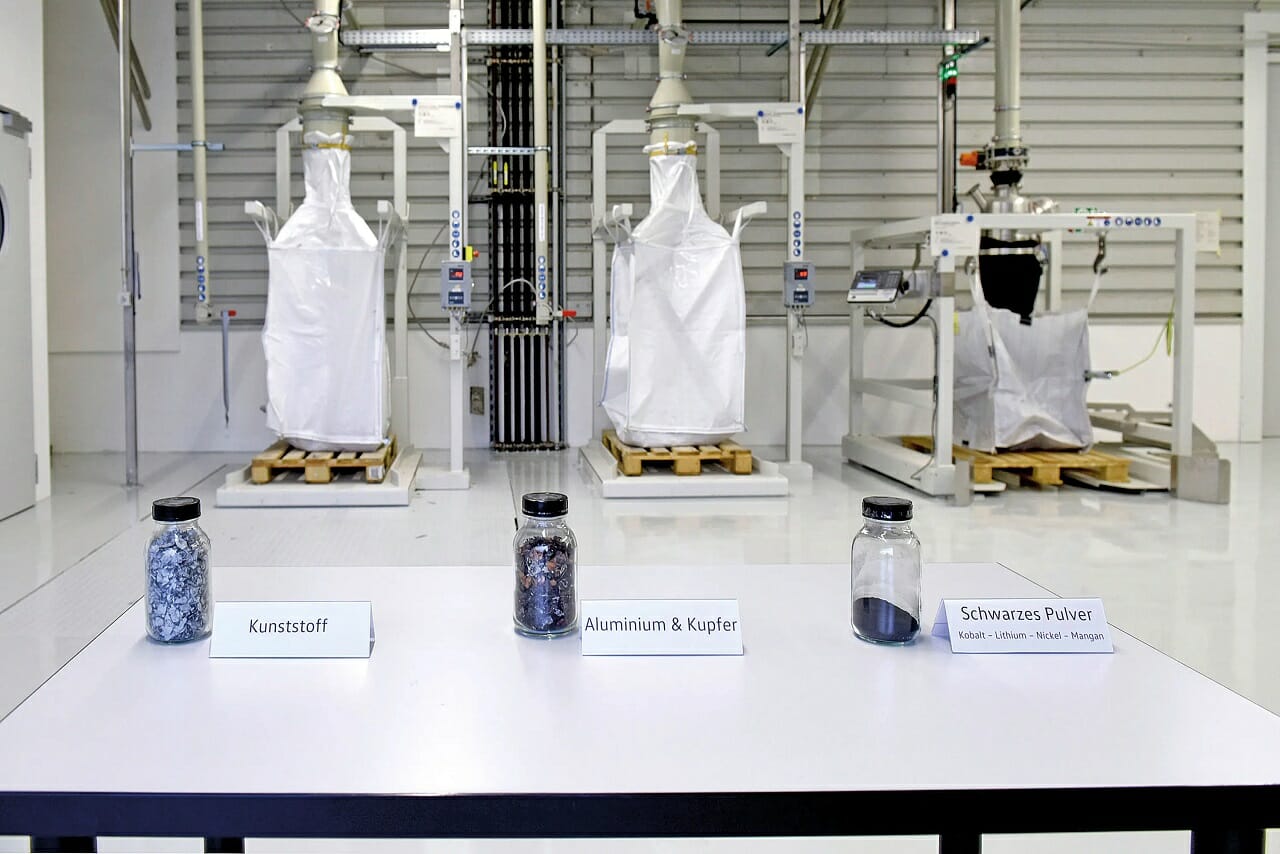
The batteries that last 30 years are extremely safe, according to the creator. They can also be fully recycled, producing no toxic waste, and their chemistry poses no fire risk.
EnerVenue Solves Challenges in Production
The only problem encountered with the 30-year batteries lies in bringing NASA technology to Earth, as the component is very expensive to produce. However, EnerVenue has created a method to produce metal-hydrogen batteries at a reduced cost and has met the high demand from utilities and energy providers. According to Heinemann, the company’s energy storage units are being installed at utility testing sites in the United States.
These sites serve to validate EnerVenue’s claims and are precursors to network-scale integration. Meanwhile, the company is reaching out to industrial markets, including customers for maritime operations, oil and gas, mining, and as a substitute for diesel in island-based applications.
The company also recently announced plans to open a 1 million square feet Gigafactory in the U.S. The executive states that the facility will produce its 30-year batteries with NASA technology for energy storage ships, capable of more than 30,000 charge cycles each. These can be stored on racks and can operate for up to 30 years.
Contribution with Solar and Wind Energy Usage
In the short term, EnerVenue sees its technology contributing to the deployment of intermittent renewable energy, including wind and solar. According to the executive, storage plays a crucial role in ensuring that excess generation is captured and used when needed, resulting in a less carbon-intensive energy mix and a more stable energy supply.
This strategy makes the company adopt an approach similar to Ad Astra, in Costa Rica, which also leverages the expertise of its founder, Franklin Chang Díaz, a former space shuttle astronaut.






Seja o primeiro a reagir!