





 Portuguese
  English
  Spanish
  3 min of reading
  0 comments


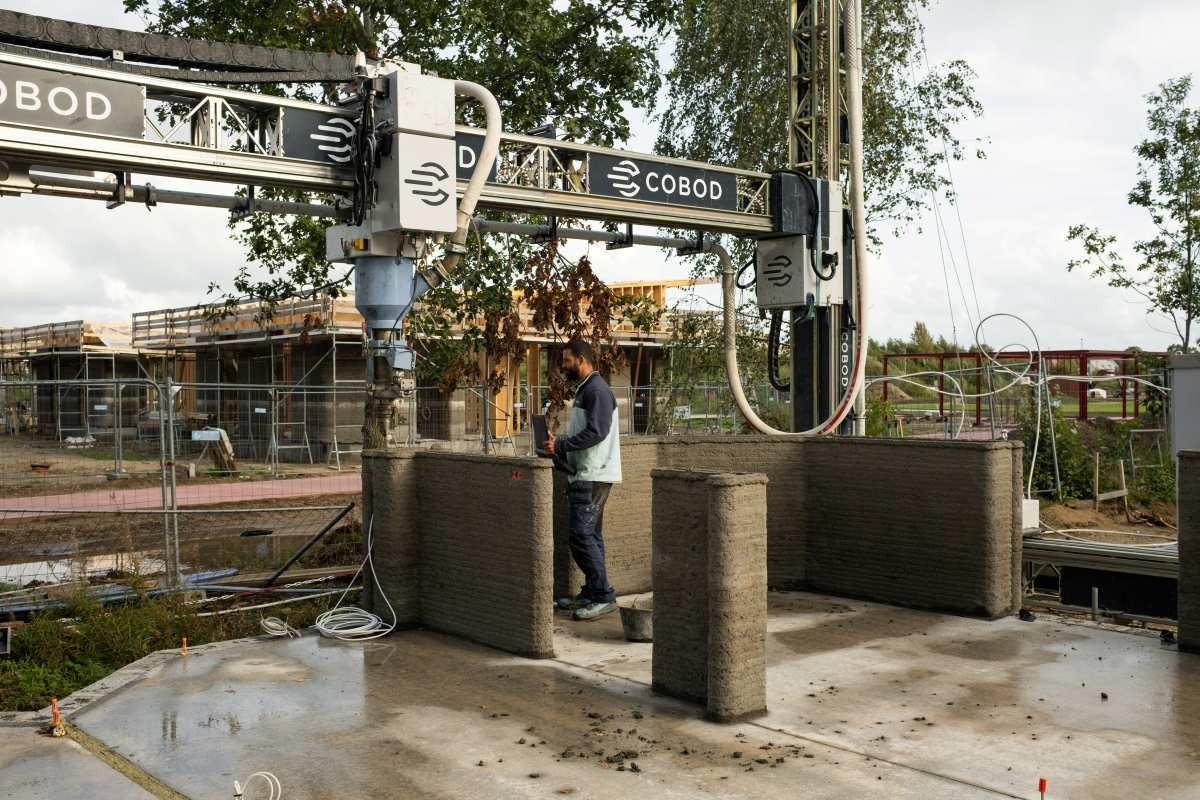
Largest 3D Printed Residential Project on the Continent Brings Together 36 Student Apartments Distributed Across Six Buildings, With Structures Built Layer by Layer, High Construction Precision, and Elimination of Traditional Forms
The largest 3D printed housing project in Europe is constructing 36 student apartments in Holstebro, Denmark, at a pace of over one unit per day, using on-site direct printing to reduce deadlines, materials, and traditional construction stages.
The Skovsporet project has become one of the most concrete examples of the practical application of 3D printing in construction, leaving the experimental phase and operating as a real, ongoing project aimed at student housing.
Described as the largest 3D printed residential complex on the continent, the set is being built directly on-site and will have 36 apartments distributed across six buildings, integrated into an environment designed for daily university life.
-
While the world looks at oil, the war with Iran is already disrupting helium supply from Qatar, affecting car and iPhone chips, threatening AI expansion, and putting pressure on aluminum packaging at the highest value in four years.

-
Global warming will expose a treasure hidden under the ice of Antarctica and may spark an international dispute over gold and valuable minerals.

-
A street vendor from Praia Grande built a robot made of scrap from scooters and washing machines that pulls his popcorn cart on the beach, emits sounds, and interacts with customers, becoming an attraction on the coast of São Paulo.

-
The specifications of the Xiaomi 18 Pro Max have been leaked, and the highlight is a dual 200 MP camera with a new 22-nanometer technology that promises to consume less energy and capture details in shadows and bright areas using LOFIC HDR.

The project was conceived by SAGA Space Architects, in collaboration with COBOD and 3DCP, and commissioned by the affordable housing cooperative NordVestBo, responsible for the project’s development in the Danish city.
3D Printing Accelerates Construction by Eliminating Intermediate Stages
The technological base of the project is the COBOD BOD3 printer, an evolution of the BOD2 model, previously used in large-scale constructions and adapted to operate in active construction sites.
The equipment extrudes a cementitious mixture layer by layer, following a pre-defined digital model, until the entire load-bearing structure of each building is completely erected.
During the printing phase, only three people were necessary on-site, highlighting the high level of automation in the process and the significant reduction in direct labor during the structural phase.
As the project advanced, the execution time was significantly reduced from weeks per building to just five days for the printing of six houses, resulting from an accelerated learning curve.
No traditional molds, disposable forms, or improvised adjustments are used, as each layer is deposited exactly where it should be, with the precise amount of material specified in the digital model.
This industrial precision applied to residential construction results in less waste of materials and greater control over the construction process, altering classic routines in the sector and reducing intermediate stages.
Apartments Between 40 and 50 m² Prioritize Functionality and Natural Light
Each housing unit has between 40 and 50 square meters and is designed with a functional layout, including a kitchen, study area, living room, bathroom, and bedroom with a double bed.
The architectural design avoids extravagant solutions and prioritizes everyday use, with large ceiling windows that ensure high natural light entry, a feature considered essential in northern European regions.
Inside, the project avoids the closed-off look often associated with concrete, opting for treated plywood and glass to soften the thermal and visual feel of the spaces.
The proposal does not seek to hide the technology employed but to allow it to coexist with architectural solutions aimed at comfort and habitability, keeping the structural nature of the building visible.
Technology Does Not Replace All Stages of Construction
Despite the speed and automation, 3D printing does not execute all phases of the project, requiring human intervention after the completion of the main structures.
This stage includes the installation of windows, electrical and plumbing systems, interior finishes, furniture, and complementary elements not carried out by the automated process.
In the surroundings of the buildings, the project provides for landscaped areas, walkways designated for pedestrians, and bicycle parking spaces, integrating the complex into the daily use of the student campus.
European Context Boosts Adoption of Printed Construction
The Skovsporet emerges in a context of seeking quick solutions for access to housing in Europe, especially for young people and students in cities where prices rise faster than wages.
3D printing offers speed, repeatability, and greater cost control, factors considered critical for large-scale public or semi-public housing.
By 2025, 3D printed construction began to integrate more consistently with regulations and certification processes, reducing the space for merely conceptual projects.
In this scenario, the Danish complex stands out as a completed example at an accelerated pace, demonstrating how technology can be applied in a practical, continuous, and replicable manner in new developments.








Seja o primeiro a reagir!